 Open Access



 Open access
 Check for updates


Abstract
Textile industry is one of the most energy intensive sectors due to large scale of production processes such as spinning, weaving, dyeing and finishing occur here. At the same time, it generates huge amounts of waste throughout its supply chain, thus creating environmental and disposals challenges. Reports say that 92 millions of tons of waste are produced globally in these industries. These waste streams are divided into two categories: pre and post consumer textile waste. This study examines the potentiality wastes to be converted to energy across textile value chain through calorific assessment with the objective of assessing their feasibility as alternative energy sources for the textile industry. The study adopts a comprehensive review and analytical approach based on secondary data analysis of existing literature, technical reports, and previous experimental studies including pyrolysis, torrefaction, gasification and combustion of textile waste materials to analyze the energy output and HHV (Higher Heating Value) within the context of textile industries. In addition, the study highlights the significance, rationale, and conceptual advancements of previous research on textile waste valorization and energy recovery. By analyzing the calorific value ranges of different wastes and conversion efficiency, the study showed if different types of textile wastes can serve as viable alternative energy feedstocks and can be turned into useful energy such as syngas, bio-oil, hydro char. The study contributes to both academic and practical knowledge by providing an understanding of the relationship between textile waste to energy recovery potential. The insights may assist researchers, waste management authorities, and textile industry stakeholders in improving sustainable waste management system and developing alternative source of energy within a circular textile economy.
Introduction
The textile industry is one of the most resource-intensive and waste-generating sectors in the global economy, with over 92 million tons of textile waste produced annually, much of which ends up in landfills or is incinerated, contributing to greenhouse gas emissions, soil and water contamination, and ecosystem harm [1]. More than 80% of clothing waste is discarded through landfilling or incineration, resulting in significant carbon footprint, energy, and raw material losses [2], while most valorization research to date has focused on post-industrial waste, leaving the more complex post-consumer textile stream comparatively underexplored. Textile waste originates from two key streams — pre-consumer waste generated during manufacturing and post-consumer waste discarded after use — with a global composition of approximately 65% synthetic fibers, 21% cotton, 8% cellulosic fibers, 1% wool, and 5% other types [3], a heterogeneous mix that makes conventional recycling difficult and energy recovery an increasingly attractive alternative. This study addresses these challenges by focusing on the valorization of pre- and post-consumer textile waste through thermochemical energy recovery techniques namely pyrolysis, gasification, and incineration with a specific emphasis on evaluating the Higher Heating Value (HHV) of various textile waste types as a key indicator of their energy potential, asking which waste types yield the highest energy outputs and which conversion methods best suit different fiber compositions. Thermochemical conversion methods have been identified as a critical pathway for energy recovery from textile waste [4], and by systematically linking waste composition to energy output, this research contributes to sustainable waste management while offering a structured analysis that moves from waste classification and methodology through HHV discussion to conversion technology recommendations. Although several recent reviews have examined textile waste management and thermochemical conversion technologies these studies primarily focus on individual conversion technologies, waste management strategies or circular economy perspectives. A comprehensive review that systematically integrates textile waste origin, fiber composition, Higher Heating Value (HHV), and thermochemical process selection within a single analytical framework remains lacking. This review addresses that gap by comparatively evaluating the energy recovery potential of diverse textile waste streams and establishing the relationship between material composition, calorific value, and the suitability of pyrolysis, gasification, and incineration. Rather than presenting these technologies independently, the review develops a structured HHV-to-process mapping that identifies which textile waste types are best suited for each thermochemical pathway, thereby providing a practical decision for textile waste valorization.
Literature Review
Recent studies have identified thermochemical conversion as a promising approach for the valorization of textile waste due to its ability to recover energy from heterogeneous and difficult to recycle materials. Among the available technologies, incineration, pyrolysis, and gasification have received considerable attention because they can process a wide range of textile wastes while reducing landfill disposal and recovering useful energy products [5], [6]. The performance of these technologies is strongly influenced by the physicochemical properties of textile waste, particularly its fiber composition, moisture content, ash content, and calorific value.
Higher Heating Value (HHV) has been widely recognized as one of the most important indicators for evaluating the energy recovery potential of textile waste. Previous studies have reported that synthetic polymer-based textiles, such as polypropylene (PP) and polyethylene (PE), generally exhibit higher HHV values because of their greater carbon and hydrogen contents, making them attractive feedstocks for thermochemical energy recovery. In contrast, natural fibers such as cotton and paper-based materials possess comparatively lower HHV values, which may reduce energy conversion efficiency unless appropriate feedstock blending or pretreatment strategies are applied.
Existing reviews have substantially advanced the understanding of textile waste management and thermochemical conversion technologies by discussing process mechanisms, operational parameters, environmental performance, and circular economy perspectives [5]. However, comparatively fewer studies have synthesized evidence across both pre-consumer and post-consumer textile waste while systematically relating textile composition, HHV, and thermochemical process selection within a unified framework. This gap highlights the need for a comparative assessment that links waste characteristics with energy recovery potential and the suitability of different thermochemical technologies.
Methodology
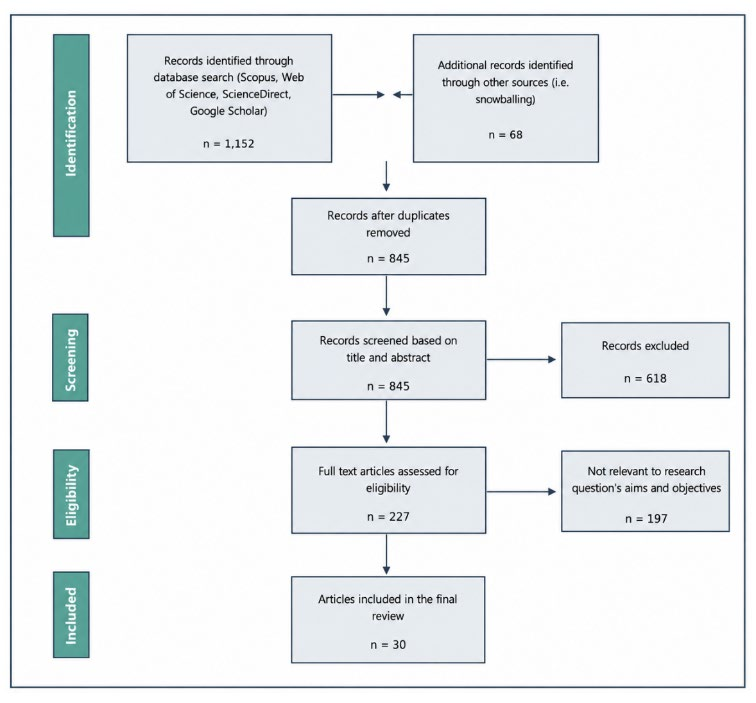
This research followed a structured approach, beginning with a comprehensive literature review, to evaluate the energy recovery potential of textile waste. The review was conducted in accordance with the Preferred Reporting Items for Systematic Reviews and Meta-Analyses (PRISMA) framework, which ensures methodological rigor and transparency in the review process (Figure 1). A systematic search of relevant databases, including Scopus, Web of Science, ScienceDirect, and Google Scholar, was carried out using carefully selected keywords such as "textile waste-to-energy," "textile waste valorization," "Higher Heating Value (HHV) of textile waste," and "thermochemical processes for textile waste." The search was limited to studies published between 2008 and 2026, and only peer-reviewed articles were considered to ensure the inclusion of high-quality, reliable data. The database search identified 1,152 records, while an additional 68 records were identified through manual searches (snowballing), resulting in 845 records after duplicate removal. These records were screened based on title and abstract, after which 618 records were excluded. The remaining 227 full-text articles were assessed for eligibility, of which 197 articles were excluded because they did not satisfy the study objectives or eligibility criteria. Ultimately, 30 studies met all inclusion criteria and were included in the final qualitative review (Figure 1). The inclusion criteria focused on studies that specifically addressed pre-consumer and post-consumer textile waste, explored various WtE technologies (such as pyrolysis, gasification, and incineration), and provided HHV values for different textile waste types. Exclusion criteria were set to eliminate studies that focused solely on recycling or waste management without energy recovery, as well as those that lacked empirical data or clear methodology for HHV estimation.
Once relevant articles were identified, data extraction was performed to gather information on various aspects of textile waste valorization. This included categorizing textile waste types, such as cotton, polyester, wool, and blends, based on their composition and suitability for energy recovery. In addition to this, detailed information about different WTE technologies, including pyrolysis, gasification, and incineration, was extracted. The primary focus was to assess the energy potential of textile waste by reviewing the HHV values reported in the literature. This process also involved analyzing the feasibility and limitations of each energy recovery method, considering factors such as energy efficiency, environmental impact, and cost-effectiveness.
The next phase of the methodology focused on identifying the most suitable WTE technologies for each type of textile waste. This involved conducting a comparative evaluation of technologies such as incineration, which involves burning waste at high temperatures to produce heat or electricity, and pyrolysis, which decomposes textile waste in the absence of oxygen to produce fuel oils, syngas, and solid char. Gasification, another thermochemical process, was also reviewed for its ability to convert organic material into syngas, a valuable energy source. Additionally, anaerobic digestion was considered for its ability to break down organic material through microbial activity, producing biogas. Each of these technologies was assessed based on their energy recovery potential, environmental sustainability, and technical feasibility.
A key element of the study was the estimation of HHV, which represents the energy content of textile waste and determines its suitability for various WtE processes. HHV values were either directly measured through calorimetric methods or estimated from the literature, and these values were categorized based on the fiber composition of the textile waste, such as cotton, synthetic fibers, and wool. This categorization allowed for a clearer understanding of which waste types were best suited for different energy recovery technologies.
The final part of the methodology involved a comparative analysis of the WTE technologies, focusing on parameters such as energy efficiency, economic viability, and environmental impact. This analysis helped identify the most effective energy recovery methods for each type of textile waste, considering both the benefits and limitations of each technology.
While the study provides valuable insights into the energy recovery potential of textile waste, it also acknowledges several limitations. One major limitation is the reliance on secondary data from the literature, which may vary in experimental conditions and data quality. Furthermore, the heterogeneous nature of textile waste, which varies in fiber composition and contamination levels, makes it challenging to generalize the results across all types of textile waste. Despite these limitations, the methodology provides a comprehensive framework for evaluating textile waste valorization and offers a solid foundation for future research in the field of waste-to-energy technologies.
Findings
Waste and its classification
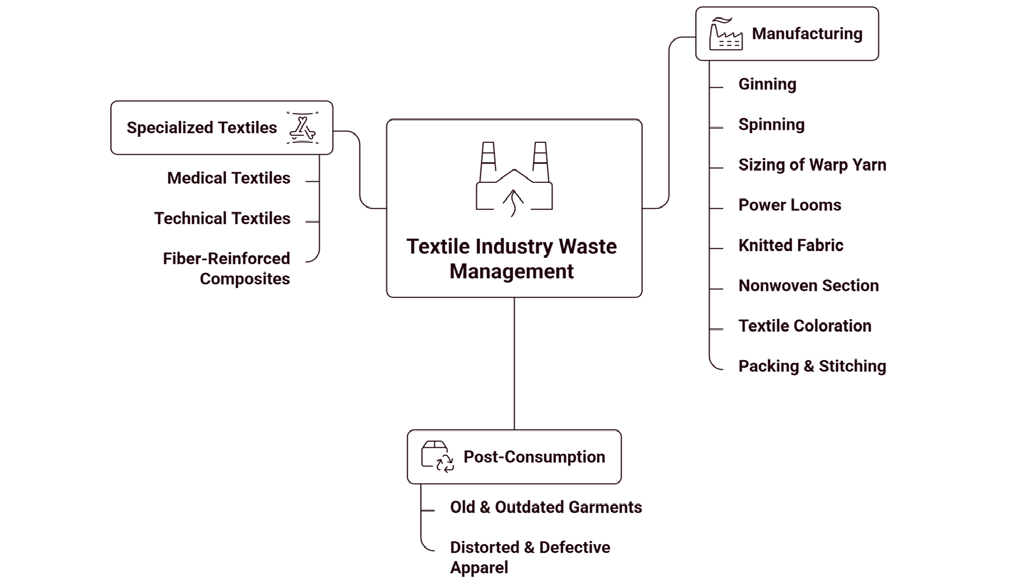
Waste refers to any substance or object that is discarded, considered worthless, defective, or of no further use following its primary purpose [7], or which the holder discards, intends to discard, or is required to discard [8]. For a long time, waste was seen merely as something to get rid of, piling up in landfills and harming the environment. But today, by the contribution of the principles of environmental science and the circular economy, these discarded materials are increasingly viewed as potential resources. When properly managed and redirected, waste can retain significant value, presenting an opportunity for reuse, recycling, or even transforming it into new materials or energy. Waste comes in various types, each with distinct characteristics and examples as presented in Figure 2. Municipal Solid Waste (MSW) includes everyday materials like food scraps, paper, plastics, and post-consumer textiles. Industrial Waste consists of by-products from manufacturing processes, such as fabric scraps and chemical waste. Hazardous Waste is particularly dangerous, including medical waste and toxic chemicals that require special handling. Sewage Sludge includes the residual material left after municipal wastewater treatment and textile effluent treatment plant sludge [9]. Biomass Waste includes organic materials like crop residues, wood, and food waste. Plastic Waste is primarily made up of packaging materials and synthetic textiles. Refuse-Derived Fuel (RDF) is created from processed plastics, paper, and textiles (both pre- and post-consumer waste). Lastly, Post-Consumer Textile Waste refers to discarded clothes and garments, while Pre-Consumer Textile Waste includes waste generated during textile production, such as cutting scraps and factory waste. These waste types not only contribute to pollution but also hold the potential to be managed in ways that can help reduce environmental harm while recovering valuable resources. [10]
Different Types of Processes to Generate Energy from Waste
Waste holds considerable untapped energy potential that can be unlocked through a variety of thermal, biological, and advanced conversion processes. The following outlines each major process in detail.
Pyrolysis
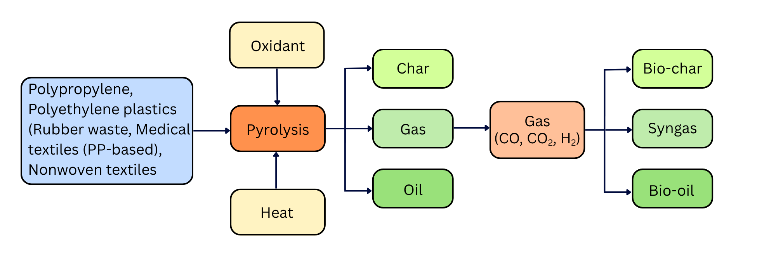
Pyrolysis is the thermal decomposition of textile waste and biomass in a completely inert, oxygen-free atmosphere, producing three main fractions: gas, liquid bio-oil, and solid char as presented in Figure 3 [11]. The overall pyrolysis reaction can be generalized as:
where heat input (Qin) drives the decomposition of the feedstock into char, bio-oil, and gaseous products, along with water and released heat (Qout) [12]. Typical laboratory pyrolysis operates at temperatures of 425–575 °C, with a heating rate of 10 °C per minute and a residence time of 90 minutes [11].
The pyrolysis process occurs in three distinct temperature dependent stages. Initially, at 100–150 °C, moisture evaporation takes place, during which inherent water content is removed in the form of water vapor. As the temperature increases to 180–500 °C, primary decomposition occurs, characterized by the release of volatile compounds such as CO, CO₂, CH₄, and other organic vapors, resulting in the formation of condensable vapors and permanent gases. At temperatures above 500 °C, secondary reactions dominate, including cracking, polymerization, and gasification, leading to the formation of lighter hydrocarbons, syngas, and further transformation of char [12].
Pyrolysis can be classified based on heating rate and resulting product distribution. These variations significantly influence the dominant product yield and reactor configuration, as summarized in Table 1 [5].
| Type of Pyrolysis | Heating Rate | Main Product Yield | Reactor Type |
|---|---|---|---|
| Slow Pyrolysis | Low | Biochar | Fixed bed, auger reactor |
| Medium Pyrolysis | Moderate | Balanced bio-oil and char | Various |
| Fast Pyrolysis | High | Bio-oil | Fluidized bed reactor |
| Flash Pyrolysis | Very high | Maximum bio-oil | Specialized small-scale systems |
| Gasification | Extremely high | Syngas | Fluidized bed with CHP integration |
Pyrolysis products exhibit distinct physicochemical characteristics and applications. The gaseous fraction (syngas), with a heating value of 8–18 MJ/kg depending on feedstock, shows higher calorific value for cotton-derived gas and can be used directly as fuel or for hydrogen production [5]. The liquid fraction (bio-oil) can be refined via distillation into naphtha, kerosene, and gas oils, enabling its use as both fuel and chemical feedstock. Table 2 provides an overview of the technology readiness and industrial implementation of various pyrolysis processes [11], [13].
Pyrolysis is a promising pathway for valorizing non-recyclable textile waste into value-added products while reducing environmental impact. Its flexibility and scalability make it a viable waste-to-energy technology; however, challenges such as high capital costs, pre-treatment needs, energy demand, and product variability limit large-scale commercialization. Further advancements in reactor design and product upgrading are essential to improve efficiency, economic feasibility, and sustainability within a circular economy framework.
| Technology/Application | TRL Level | Development Status | Industrial Example | Reactor Type |
|---|---|---|---|---|
| Slow Pyrolysis (Charcoal Production) | 9 | Fully mature and commercially deployed technology widely used for biomass and textile blends | Carbofex Oy (Finland) | Auger reactor |
| Fast Pyrolysis (Bio-oil Production) | 5–8 | Advancing from pilot to demonstration scale with ongoing optimization for fuel applications | Ensyn Partner–Fibria (Brazil) | Circulating fluidized bed reactor |
| Bio-oil Upgrading (Transport Fuels) | 3–5 | Early-stage research and development focusing on refining bio-oil into aviation and heavy transport fuels | Not yet widely commercialized | Not specified |
| Biomass/Textile Waste Processing Systems | 6–7 | Demonstration-scale implementation showing promising scalability for mixed waste valorization | ABRITech (Canada) | Various reactor configurations |
Incineration / Co-Combustion
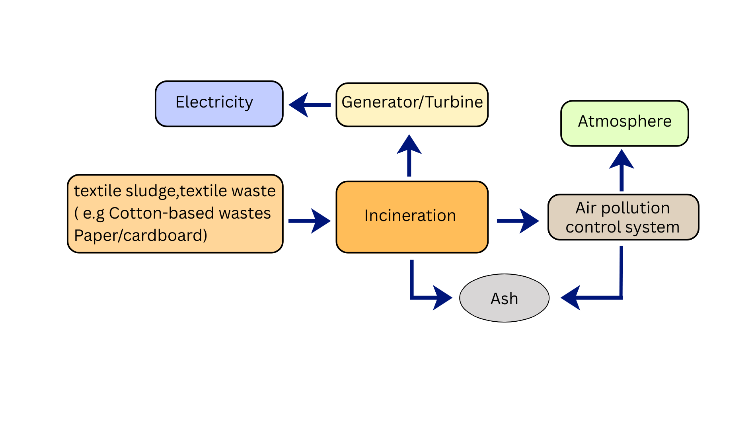
Incineration and co-combustion involve feeding textile sludge and textile waste into a high-temperature furnace operating at 750–1100 °C under a full oxygen supply for complete combustion, generating heat and electricity [14]. Figure 4 presents a schematic diagram of the incineration process, showing the flow of materials and energy through the system. Due to the low gross calorific value (~7.63 MJ/kg) and high ash content of textile sludge, co-combustion with textile waste (e.g., cotton, polyester, nylon, and blends) is commonly applied to enhance combustion stability, burnout performance, and overall energy efficiency [15].
The combustion process proceeds through distinct stages influenced by the composition of textile materials, as summarized in Table 3.
| Combustion Stage | Process Description | Influence of Textile Type |
|---|---|---|
| Light volatile release | Initial release of low molecular weight volatiles | Accelerated by synthetic fibers (e.g., polyester) |
| Heavy volatile release | Decomposition of heavier organic compounds | May be delayed by synthetic fibers |
| Char combustion | Oxidation of remaining carbonaceous residue | Enhanced by cellulose-rich materials (e.g., cotton) |
The gaseous emissions from co-combustion mainly consist of H₂O and CO₂, with smaller amounts of CO, SO₂, and NOₓ. Proper feedstock selection and blending can reduce harmful emissions such as SO₂. Thermogravimetric analysis further simplifies the combustion behavior into two broader thermal stages, presented in Table 4.
Incineration outputs include heat energy, combustible gases, and solid char. Heat energy can be used for steam generation, electricity production, and industrial heating. The gases (H₂O, CO₂, CO, and traces of CH₄) can be recovered for heat utilization or hydrogen production. The solid char is carbon-rich and microporous, and can be used as fuel, activated carbon, or an adsorbent for water and air purification [15]. The process offers key advantages such as converting non-recyclable textile sludge into energy, reducing landfill volume, handling diverse fiber types, and enabling recovery of valuable chemicals like caprolactam from nylon waste. However, challenges include high capital cost for furnaces and flue gas systems, need for pre-treatment, variability in gas and ash composition, strict emission controls for SO₂, NOₓ, and particulates, and additional environmental compliance requirements for ash and flue gas management [15].
| Temperature Range (°C) | Process Description | Mass Loss (%) | Additional Parameter |
|---|---|---|---|
| 30–210 | Moisture removal | 5–6% | — |
| 200–620 | Volatile and organic matter degradation | 34.1–34.5% | Activation energy: 147.31–1027.86 kJ/mol |
Plasma Gasification
Plasma gasification of textile sludge employs a DC non-transferred plasma torch operating under a controlled, limited-oxygen environment. The plasma arc generated by the torch reaches extremely high localized temperatures ranging from approximately 3,000 to 14,000 °C, enabling the rapid decomposition and gasification of organic materials [16]. Prior to treatment, the sludge is pre-dried to reduce moisture content and minimize energy losses and is pelletized with PVC binders to improve feedstock stability during processing. Although the plasma arc generates extremely high temperatures, the reactor operating temperature is typically maintained above 600 °C, which is sufficient to sustain efficient thermochemical gasification reactions. Therefore, the reported temperature range of 3,000–14,000 °C refers to the localized plasma arc temperature, whereas the value of above 600 °C represents the reactor operating temperature within the gasification chamber.
The outputs of plasma gasification include a gas fraction (H₂O, CO₂, CO, and minor hydrocarbons), a solid residue composed of char and minerals (e.g., calcite), recoverable thermal energy from exothermic reactions, and altered particles with reduced heavy metal content for safer disposal. Pre-drying improves energy efficiency, and the correlation coefficient of 0.929 indicates effective energy transfer during the process. The simplicity of the single-chamber reactor used in plasma gasification is a notable advantage over multi-stage gasifiers [16].
Table 5 presents the elemental composition of plasma-treated textile sludge obtained from SEM–EDX analysis, where the dominance of calcium and oxygen suggests the formation of calcite (CaCO₃), while magnesium and silicon indicate minor mineral phases.
| Element | Weight Percent |
|---|---|
| Calcium (Ca) | 29.76% |
| Oxygen (O) | 51.52% |
| Carbon (C) | 8.11% |
| Magnesium (Mg) | 10.19% |
| Silicon (Si) | 0.42% |
Conventional Gasification
Conventional gasification is a thermochemical conversion process in which carbon-based feedstocks such as biomass, coal, or municipal solid waste are partially oxidized at high temperatures (800–1200 °C) under limited oxygen supply to produce synthesis gas (syngas) [14], [17]. Figure 5 illustrates the schematic presentation of the gasification process, highlighting the key components involved in syngas production. The produced syngas mainly consists of hydrogen (H₂), carbon monoxide (CO), and methane (CH₄), which can be used for electricity generation, heat production, or as a feedstock for chemical synthesis (Table 6). Compared to incineration, gasification provides higher energy efficiency and lower emissions.
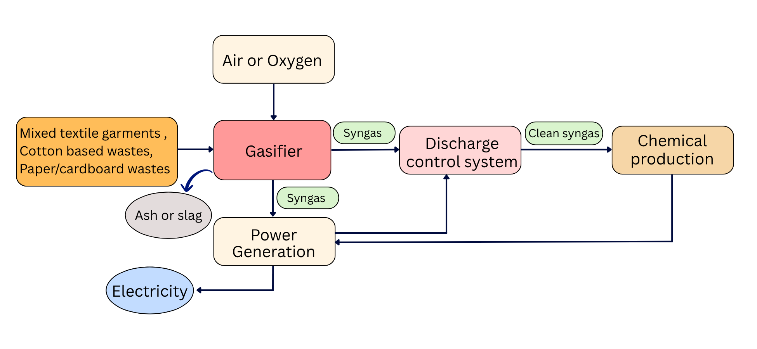
Economic Considerations and Environmental Impacts of Waste-to-Energy Technologies
Economic Considerations of Waste-to-Energy Technologies
Beyond technical performance, the practical implementation of waste-to-energy (WtE) technologies depends largely on their economic feasibility and environmental performance. The investment required for establishing WtE facilities varies considerably depending on reactor design, feedstock pre-treatment requirements, operating conditions, and emission control systems. In developing countries such as Bangladesh, where textile waste generation is increasing rapidly, technologies requiring lower capital investment and simpler operation are generally more attractive for industrial adoption. Conversely, advanced technologies with higher energy efficiency often require greater initial investment, skilled operators, and sophisticated pollution-control infrastructure.
Table 6 summarises the major waste-to-energy processes, highlighting their operating conditions, products, advantages and limitations, whereas the relative strengths and economic considerations of different WTE technologies for textile waste management are summarised in Table 7.
From an economic perspective, incineration remains the most commercially established technology due to its operational maturity and continuous energy production. However, significant expenditures are associated with flue gas treatment systems and environmental compliance. Pyrolysis offers the advantage of producing valuable products such as bio-oil, syngas, and biochar, which may improve long-term economic returns, although its commercialization is constrained by relatively high capital costs and feedstock pre-treatment requirements. Conventional gasification provides higher energy conversion efficiency than incineration but requires more complex reactor systems and process control. Plasma gasification represents the most technologically advanced option and achieves excellent waste destruction efficiency; however, its extremely high energy consumption and capital investment currently limit its large-scale implementation in developing economies.
| Process | Type | Oxygen Condition | Temperature | Main Output | What Happens | Advantages | Disadvantages |
|---|---|---|---|---|---|---|---|
| Incineration /Co-Combustion | Thermal | Full | 750–1100 °C | Heat, Electricity | Complete combustion | High volume reduction, continuous energy | Air pollution, toxic ash |
| Pyrolysis | Thermal | None | 425–500 °C | Bio-oil, Gas, Char | Thermal decomposition | Produces fuels/chemicals, handles mixed textiles | Expensive, complex, requires pre-treatment |
| Plasma Gasification | Thermal | Limited / controlled | 3000–14,000 °C | Syngas, Char, Heat | Rapid decomposition of organics | High energy recovery, reduces heavy metals | High energy input, reactor maintenance |
| Gasification | Thermal | Limited | 800–1200 °C | Syngas | Partial combustion | Cleaner, efficient | Tar formation, costly |
| Technology | Initial Investment | Operating & Utility Cost | Reactor Complexity | Commercial Maturity | Energy Recovery Products | Suitability for Bangladesh Textile Industry | Key Economic Consideration |
|---|---|---|---|---|---|---|---|
| Incineration / Co-combustion | Moderate | Moderate | Low–Moderate | Commercially established | Heat, steam, electricity | High | Existing combustion technology, continuous operation, but requires flue gas treatment systems |
| Pyrolysis | High | Moderate | Moderate–High | Pilot to commercial | Bio-oil, syngas, biochar | Moderate–High | Higher capital investment but multiple value-added products improve long-term economic return |
| Conventional Gasification | High | High | High | Commercial for selected feedstocks | Syngas, electricity, heat | Moderate | Higher efficiency than incineration but requires sophisticated gas-cleaning and process control |
| Plasma Gasification | Very High | Very High | Very High | Emerging | Syngas, vitrified slag | Low (Current Scenario) | High electricity consumption and plasma torch cost limit commercialization in developing countries |
Environmental Impacts of Waste-to-Energy Technologies
The environmental performance of waste-to-energy (WtE) technologies depends on conversion efficiency, emission characteristics, energy recovery potential, and the management of by-products. Each technology presents distinct environmental benefits and challenges that should be considered alongside its technical and economic performance.
Incineration is an established WtE technology capable of reducing waste volume by more than 80% while recovering thermal energy for electricity and steam generation However, the complete combustion of textile waste generates greenhouse gases (primarily CO₂), nitrogen oxides (NOₓ), sulfur oxides (SO₂), particulate matter, and trace organic pollutants. Therefore, modern incineration facilities require advanced flue gas cleaning systems to comply with increasingly stringent environmental regulations [15].
Pyrolysis generally exhibits a lower environmental footprint than direct combustion because the process occurs in an oxygen-deficient atmosphere, reducing direct atmospheric emissions. In addition to producing bio-oil and syngas as renewable energy carriers, pyrolysis generates biochar that can potentially be utilized for carbon sequestration, activated carbon production, or adsorption applications. Nevertheless, condensable organic compounds and process gases require appropriate treatment to prevent secondary environmental pollution [11], [13].
Conventional gasification provides relatively higher energy efficiency than incineration while producing cleaner synthesis gas that can be purified before utilization, thereby reducing overall pollutant emissions. Despite these advantages, tar formation, wastewater generated during gas cleaning, and solid residues remain important environmental challenges that require appropriate treatment and disposal [14], [17].
Plasma gasification demonstrates excellent environmental performance due to its extremely high operating temperatures, which effectively decompose hazardous organic compounds and immobilize heavy metals within a vitrified inert slag. Consequently, the technology significantly reduces hazardous residues requiring disposal. However, the process is highly electricity-intensive, and its overall environmental benefit depends on the carbon intensity of the electricity used to operate the plasma torches [11], [13].
Overall, WtE technologies can substantially reduce landfill disposal while recovering valuable energy from textile waste. Nevertheless, the sustainability of each technology depends on balancing energy recovery efficiency, emission control, resource recovery, and life-cycle environmental impacts. Appropriate feedstock selection, efficient pollution-control systems, and optimized operating conditions remain essential for minimizing environmental impacts while maximizing resource recovery [14], [17].
Introduction to HHV
The Higher Heating Value (HHV), also known as the Gross Calorific Value (GCV), is a fundamental metric in thermodynamics and energy science that represents the total amount of heat energy released when a specified quantity of fuel undergoes complete combustion, with all products of combustion including water vapor cooled back to the initial pre-combustion temperature, allowing the latent heat of vaporization of water to be fully recovered. This stands in contrast to the Lower Heating Value (LHV), which excludes this latent heat by assuming that water vapor exits the system without condensing. A true representation of the actual energy content of a fuel is its HHV, as it accounts for the maximum potential thermal energy obtainable from complete combustion [18]. The calorific value, expressed in kcal/kg or kJ/kg, is experimentally determined using a bomb calorimeter (ASTM D 5865-85), in which the heat generated at a constant temperature of 25 °C from the combustion of a dry sample is measured [19]. Where direct measurement is not feasible, empirical models derived from proximate or ultimate analysis accounting for the mass fractions of carbon, hydrogen, oxygen, nitrogen, and sulfur are widely employed to estimate HHV with acceptable accuracy. Accurate HHV data is vital for energy policy, industrial processes, and cost-benefit analysis in energy-intensive sectors [18], making it an indispensable parameter across both conventional and renewable energy systems.
The Higher Heating Value (HHV) of textile waste is influenced by several physical and chemical characteristics of the feedstock. Among these, moisture content is one of the most important factors, as a significant portion of the released energy is consumed in evaporating water during combustion, thereby reducing the effective energy available. Similarly, high ash content lowers HHV because ash represents the non-combustible inorganic fraction of the material and does not contribute to heat generation. Fiber composition also plays a crucial role, with synthetic fibers such as polyester and polypropylene generally exhibiting higher HHV than natural fibers due to their greater carbon and hydrogen contents. In addition, the presence of dyes, chemical finishes, contaminants, and blended fiber structures may alter combustion behavior and influence the overall calorific value of textile waste. Therefore, accurate characterization of these properties is essential for selecting appropriate waste-to-energy technologies and maximizing energy recovery efficiency.
In the context of Waste-to-Energy (WtE) processes, the significance of HHV becomes especially critical. The heating values of Municipal Solid Waste (MSW) materials play an essential role in the design and operation of energy conversion systems it is vital to possess accurate and valid heating value data for designing, operating, and maintaining a WtE incinerator, as these properties are essential for selecting the appropriate technology, determining the capacity of furnaces and boilers, and designing auxiliary facilities such as flue gas cleanup systems [20]. Beyond design considerations, the HHV directly governs whether combustion within an incinerator can remain self-sustaining: if the combustion process is aimed at waste disposal through incineration, the fuel's heating value must be high enough to sustain combustion without auxiliary fuel input, since the heating value is a strong function of the moisture and ash content of the waste, meaning a maximum tolerable amount of these constituents exists for any given system [18]. Shifting the focus to textile waste specifically, the role of HHV becomes particularly consequential. Textile waste exhibits a higher calorific value than many other waste streams during combustion, and the methane emitted from buried textile can be converted into renewable energy [21], making it a thermally valuable component within mixed MSW streams. Table 8 provides the approximate HHV values for various textile waste types, highlighting their energy potential and suitability for different waste-to-energy processes [22]-[28]. Energy recovery from textile waste via thermochemical processes provides a sustainable management pathway, given the high cellulosic composition of textile waste and its relatively high calorific value [6]. This energy potential, however, is not uniform across all textile types and varies considerably depending on fiber composition, synthetic fibers, owing to their petrochemical origins and elevated carbon content, generally possess a higher calorific value than natural fibers. The high calorific value of polyester wastes makes it an attractive energy feedstock for incineration plants and other combustion processes [18]. These fiber-dependent differences in HHV mean that the energy recovery potential of a textile waste stream is directly tied to its material composition, and accurate characterization of this value is therefore a prerequisite for any informed WtE planning.
Prior to any thermochemical conversion process, elemental analysis and HHV are critical analyses that must be carried out on textile waste, as these serve as indicators of whether a high-quality fuel can be created from the feedstock [6]. Furthermore, the HHV of textile waste is not a fixed property it can be significantly altered by the physical and chemical state of the waste. Moisture content, the presence of dyes and chemical finishes, and blending of fiber types all act to suppress or elevate the effective heating value of a textile feedstock. Traditional disposal methods for textile waste, including incineration and landfilling, pose serious environmental risks due to the release of CO₂, volatile organic compounds, and microplastics [18], underscoring the importance of understanding the HHV not only as an energy metric but also as a parameter that governs the environmental profile of combustion. In this way, the HHV of textile waste functions as a foundational input that determines the feasibility, efficiency, and environmental consequences of integrating textile streams into broader WtE operations.
| Waste Type | Approximate HHV (MJ/kg) | Notes | Reference |
|---|---|---|---|
| Cotton-based wastes (e.g., cotton dust, rags, old garments) | 17.4 | Cellulosic textile residues | [22] |
| Paper/Cardboard wastes (e.g., cones, packaging) | 18.0-18.9 | Includes paper and cardboard packaging | [23] |
| Polypropylene/Polyethylene plastics (e.g., bags, PPE) | 47.1 | Includes PP/PE plastic bags | [24] |
| Rubber wastes (e.g., rubber scrap) | 29–38 | Often clusters around 33–35 | [24] |
| Mixed textile garments/fabric wastes (e.g., used textiles, post-consumer apparel) | 17–22 | Polyester-rich fractions tend to be higher | [6] |
| Medical textiles (e.g., disposable gowns) | 34–47 | If mostly polypropylene, lower if blended with cotton | [23] |
| Nonwoven textiles (e.g., PP-based nonwoven fabrics) | 34–47 | Blended with cellulosic fibers gives lower HHV | [23] |
| Fiber-reinforced composites (e.g., polyester fiberglass) | 9.6 | Composite materials with glass fiber have lower HHV | [25] |
| Petroleum-based and resin-rich wastes | 25–40 | Depending on resin or adhesive content | [26] |
| Metals and non-combustibles (e.g., scrap iron) | ~0 | No fuel value for energy recovery | [27] |
| Dyes and chemicals | Varies | Must be tested separately for precise HHV | [28] |
| Waste Type | Suitable Process | WTE | Why This Process Fits (Reason) | Reference |
|---|---|---|---|---|
| PP/PE Plastics | Incineration, Gasification | High HHV materials; ideal for incineration and gasification, producing syngas (H₂ & CO) for power generation. | [9], [10] | |
| Medical Textiles | Incineration, Gasification | High HHV; suitable for high-temperature breakdown to release syngas and energy efficiently. | [12] | |
| Nonwoven Fabrics | Incineration, Gasification | Synthetic with high HHV, suitable for gasification to produce syngas or incineration for heat and electricity. | [9] | |
| Cotton-Based Textiles | Incineration, Pyrolysis | Moderate HHV; cellulose-rich; fits for incineration and pyrolysis to produce bio-oil, gas, and char; may need blending with higher HHV materials for efficient combustion. | [13] | |
| Paper/Cardboard | Incineration, Pyrolysis | Moderate HHV; suitable for incineration and pyrolysis to produce heat, bio-oil, and gases; low HHV may require blending with higher-HHV materials for better energy recovery. | [9] | |
| Resin-Rich /Synthetic Composites | Gasification | Moderate to high HHV; ideal for gasification to produce syngas for chemical production and energy without excess pollutants and difficult to incinerate. | [12] | |
| Fiber-Reinforced Composites (FRP) | Plasma Gasification, Co-processing | Low HHV, unsuitable for combustion, best for plasma gasification or co-processing in industrial plants that can handle low-HHV fuels. | [16] | |
| Textile Sludge | Co-combustion, Plasma Gasification | Low HHV, requires plasma gasification or co-combustion with higher-HHV materials to ensure efficient energy recovery and reduce emissions. | [15] | |
| Metals (e.g., Scrap Iron) | Landfill | Zero HHV; non-combustible; must be separated from WTE systems and sent to landfill. | [9] |
Discussion
Linking HHV to process suitability
HHV serves as a key benchmark for selecting waste-to-energy (WtE) pathways by identifying energy-rich and biodegradable wastes. Table 9 summarizes the relationship between different textile waste types and their suitable WtE processes, highlighting how HHV and material characteristics influence process selection. For thermochemical processes like incineration, pyrolysis, and gasification, a higher heating value (HHV) of at least 6–7 MJ/kg is necessary for self-combustion, and ideally over 10–12 MJ/kg for optimal performance. Materials with high HHV, such as polypropylene (PP) and polyethylene (PE) (35 - 48 MJ/kg), are perfect for producing syngas (H₂, CO). On the other hand, moderate-HHV materials like cotton and paper (15–19 MJ/kg) might require blending to work effectively [9], [13]. Pyrolysis can generate char with an HHV of 28–33 MJ/kg and, when heated to 900 °C, produces gas with a hydrogen to carbon monoxide ratio of about 2:1. Gasification, however, operates at higher temperatures, between 800 and 1200 °C [12], [16]. Wastes with very low HHV (less than 10 MJ/kg), such as metals and composites (around 0 MJ/kg), are typically not suitable for energy recovery and are instead sent to landfills [9].
Additionally, some processes, like photobiological conversion, don't rely directly on HHV. Instead, they make use of intermediate products that come from earlier treatment stages, rather than tapping into the original waste's inherent energy content [16].
Conclusion and Recommendations
This study highlights the significant potential of thermochemical processes—such as incineration, pyrolysis, and gasification—for the valorization of textile waste into energy. The key findings of this research emphasize the critical role of the higher heating value (HHV) in determining the suitability of various textile wastes for energy recovery technologies. Materials with high HHV, like polypropylene (PP) and polyethylene (PE), are well-suited for processes like gasification and incineration due to their high energy output. In contrast, textile materials with moderate HHV, such as cotton and paper, require blending or pre-treatment to optimize their use in pyrolysis and gasification. The study also identifies gaps in current research, particularly in the optimization of processes for specific textile waste types and a comprehensive evaluation of the environmental impacts associated with these technologies.
The practical implications of this study are far-reaching for both the textile and energy sectors. Textile manufacturers can utilize these findings to better understand the HHV of various textile waste types, which can guide the development of more efficient waste management and energy recovery strategies. For waste-to-energy (WtE) facilities, focusing on materials with higher HHV and adopting suitable blending techniques can significantly improve process efficiency and output, helping to reduce reliance on non-renewable energy sources. These insights contribute to more sustainable waste management practices, aligning with the growing demand for circular economy initiatives that promote waste-to-energy conversion.
In terms of policy and managerial recommendations, governments should consider incentivizing the use of thermochemical processes for textile waste valorization, supporting the development of effective waste sorting and pre-treatment systems. Public and private sector collaboration should be encouraged to fund research and development aimed at optimizing these processes and assessing their environmental impact. Additionally, establishing regulatory frameworks with clear efficiency and emission standards for WtE technologies will promote the adoption of cleaner and more sustainable processes within the textile waste management sector.
However, this study has some limitations. The scope of materials considered was not exhaustive, as it did not cover all potential textile waste types, such as medical textiles or coated fabrics, which may present unique challenges in terms of energy recovery. Moreover, the study did not include a detailed environmental impact assessment of thermochemical processes, particularly in terms of emissions and by-products. The economic feasibility of implementing these technologies on an industrial scale was also not fully explored, leaving room for further investigation into the cost-effectiveness of large-scale adoption.
Future research should address these limitations by focusing on the optimization of thermochemical processes for specific textile waste types, including an exploration of pre-treatment methods and process parameters tailored to particular materials. Comprehensive environmental impact analyses are needed to assess the full lifecycle of textile waste valorization, including emissions, ash residues, and overall sustainability. Additionally, research on the economic viability and scalability of these technologies is essential, with a particular emphasis on cost-benefit analyses for industrial-scale implementation. Finally, investigating the integration of thermochemical processes with circular economy models will provide valuable insights into how textile waste can be not only converted into energy but also contribute to material recovery and reuse efforts.
By addressing these gaps, the textile industry can move toward more sustainable and efficient waste management practices, reducing its environmental footprint while simultaneously contributing to energy production and supporting global sustainability goals.
Ethical Approval
It does not contain any experimental studies involving human participants or animal subjects performed by any of the authors.
Consent to Participate
Not applicable. No human participants or patients were involved in this study.
Consent to Publish
All authors have reviewed the final version of the manuscript and give their explicit consent for publication in the journal. This study does not contain any individual person's personal data, likeness, or private identification.
Declarations
- Author contributions
Nahian Naour Samiha: Conceptualization, Methodology, Formal analysis, Visualization, Writing – draft preparation. Prottay Ganguly: Conceptualization, Methodology, Formal analysis. Mohammad Tahmidul Islam Khan: Investigation, Data curation, Writing – reviewing & editing. Suraiya Binte Reza: Critical revision of the manuscript. Abdullah Shahrier Rafi: Supervision, Validation, Critical revision of the manuscript. All authors read and approved the final manuscript.
- Funding
This research did not receive any specific grant from funding agencies in the public, commercial, or not-for-profit sectors.
- Data availability
Not applicable
- Competing interests
Not applicable
- Acknowledgments
The authors would like to express their gratitude to Bangladesh University of Textiles (Dept. of Environmental Science and Engineering) for providing the academic resources and technical infrastructure necessary to conduct this analysis.
References
- 1.Ghosh, J., Repon, M. R., Rupanty, N. S., Asif, T. R., Tamjid, M. I., and Reukov, V., (2025). Chemical Valorization of Textile Waste: Advancing Sustainable Recycling for a Circular Economy. ACS Omega, 10(12): 11697-11722.
- 2.Shamsuzzaman, M., Islam, M., Mamun, M. A. A., Rayyaan, R., Sowrov, K., Islam, S., and Sayem, A. S. M., (2025). Fashion and textile waste management in the circular economy: A systematic review. Cleaner Waste Systems, 11: 100268.
- 3.Tharmarajah, N., Shahbaz, K., and Baroutian, S., (2024). Anaerobic Digestion for Textile Waste Treatment and Valorization. ChemBioEng Reviews, 11(5): e202400014.
- 4.Sheng, J., Chen, H., Yu, X., Zhao, S., Al-Hazmi, H. E., Xu, X., Li, X., Zou, X., Wang, Q., Li, X., and Xue, G., (2026). A critical review of textile waste recycling: focusing on global policies, recycling approaches, and recovery products application. Environmental Science and Pollution Research, 33(2): 366-383.
- 5.Hasan, M. M., Rasul, M. G., Khan, M. M. K., Ashwath, N., and Jahirul, M. I., (2021). Energy recovery from municipal solid waste using pyrolysis technology: A review on current status and developments. Renewable and Sustainable Energy Reviews, 145: 111073.
- 6.Athanasopoulos, P. and Zabaniotou, A., (2022). Post-consumer textile thermochemical recycling to fuels and biocarbon: A critical review. Science of The Total Environment, 834: 155387.
- 7.Kalkanis, K., Alexakis, D. E., Kyriakis, E., Kiskira, K., Lorenzo-Llanes, J., Themelis, N. J., and Psomopoulos, C. S., (2022). Transforming Waste to Wealth, Achieving Circular Economy. Circular Economy and Sustainability, 2(4): 1541-1559.
- 8.Papastamoulis, V., London, K., Feng, Y., Zhang, P., Crocker, R., and Patias, P. Conceptualising the Circular Economy Potential of Construction and Demolition Waste: An Integrative Literature Review. Recycling, 2021. 6, 61. https://doi.org/10.3390/recycling6030061.
- 9.Brunner, P. H. and Rechberger, H., (2015). Waste to energy – key element for sustainable waste management. Waste Management, 37: 3-12.
- 10.Vukovic, N. and Makogon, E. Waste-to-Energy Generation: Complex Efficiency Analysis of Modern Technologies. Sustainability, 2022. 14, 13814. https://doi.org/10.3390/su142113814.
- 11.Arjona, L., Barrós, I., Montero, Á., Solís, R. R., Pérez, A., Martín-Lara, M. Á., Blázquez, G., and Calero, M., (2024). Pyrolysis of textile waste: A sustainable approach to waste management and resource recovery. Journal of Environmental Chemical Engineering, 12(6): 114730.
- 12.Kappler, G., da Cruz Tarelho, L. A., Hauschild, T., and Moraes, C. A. M. Waste to energy and materials through pyrolysis: a review. in Forum Internacional de Resíduos Sólidos-Anais. 2020.
- 13.Liu, Y., Ran, C., Siyal, A. A., Song, Y., Jiang, Z., Dai, J., Chtaeva, P., Fu, J., Ao, W., Deng, Z., and Zhang, T., (2020). Comparative study for fluidized bed pyrolysis of textile dyeing sludge and municipal sewage sludge. Journal of Hazardous Materials, 396: 122619.
- 14.Beyene, H. D., Werkneh, A. A., and Ambaye, T. G., (2018). Current updates on waste to energy (WtE) technologies: a review. Renewable Energy Focus, 24: 1-11.
- 15.Ali, I., Khan, A., and Naqvi, S. R., (2025). Insight into textile sludge combustion behavior: Kinetic study by thermal analysis and advanced machine learning modeling. Energy Nexus, 19: 100518.
- 16.Rajendran, M., Sivagami, S. M., and Sriram, A., (2024). Analysis on the effect of plasma and pyrolytic degradation in textile sludge. Indian Journal of Chemical Technology, 31(6): 929-940.
- 17.Jayanarasimhan, A., Pathak, R. M., Shivapuji, A. M., and Rao, L., (2024). Tar Formation in Gasification Systems: A Holistic Review of Remediation Approaches and Removal Methods. ACS Omega, 9(2): 2060-2079.
- 18.Khaleel, O. J., Basim Ismail, F., Khalil Ibrahim, T., and bin Abu Hassan, S. H., (2022). Energy and exergy analysis of the steam power plants: A comprehensive review on the Classification, Development, Improvements, and configurations. Ain Shams Engineering Journal, 13(3): 101640.
- 19.Fetene, Y., (2021). Characterization and heating value prediction of municipal solid waste. International Journal of Environmental & Agriculture Research, 7(1): 14-23.
- 20.Dashti, A., Noushabadi, A. S., Asadi, J., Raji, M., Chofreh, A. G., Klemeš, J. J., and Mohammadi, A. H., (2021). Review of higher heating value of municipal solid waste based on analysis and smart modelling. Renewable and Sustainable Energy Reviews, 151: 111591.
- 21.Lee, J., Park, C. H., Yun, C., and Lee, S., (2025). Textile waste management and its sustainability: a review. Journal of Material Cycles and Waste Management, 27(4): 2183-2197.
- 22.Silva, J. E., Deus Junior, J. O., Calixto, G. Q., Melo, D. M. A., Melo, M. A. F., Júnior, V. C. B., Chagas, B. M. E., Medeiros, E. P., and Braga, R. M., (2024). Colored cotton crop wastes valorization through pyrolysis: a study of energetic characterization and analytical Py-GC/MS. Scientific Reports, 14(1): 9359.
- 23.Ioelovich, M., (2018). Energy potential of natural, synthetic polymers and waste materials–A review. Academic Journal of Polymer Science, 1(1): 555553.
- 24.Carmo-Calado, L., Hermoso-Orzáez, M. J., Mota-Panizio, R., Guilherme-Garcia, B., and Brito, P. Co-Combustion of Waste Tires and Plastic-Rubber Wastes with Biomass Technical and Environmental Analysis. Sustainability, 2020. 12, 1036. https://doi.org/10.3390/su12031036.
- 25.López, F. A., Martín, M. I., Alguacil, F. J., Rincón, J. M., Centeno, T. A., and Romero, M., (2012). Thermolysis of fibreglass polyester composite and reutilisation of the glass fibre residue to obtain a glass–ceramic material. Journal of Analytical and Applied Pyrolysis, 93: 104-112.
- 26.Mascarell, J. J., Ruiz-Jorge, F. J., Abelleira-Pereira, J. M., Portela, J. R., and Martínez de la Ossa, E. J., (2023). Production of crude oil from industrial wastes and wastewaters by hydrothermal liquefaction. Journal of Material Cycles and Waste Management, 25(6): 3476-3489.
- 27.Boumanchar, I., Chhiti, Y., M’hamdi Alaoui, F. E., Sahibed-Dine, A., Bentiss, F., Jama, C., and Bensitel, M., (2019). Municipal solid waste higher heating value prediction from ultimate analysis using multiple regression and genetic programming techniques. Waste management & research, 37(6): 578-589.
- 28.Trivedi, K., Marvaniya, K., Dobariya, P., Pathak, K. C., Patel, K., Sutariya, B., Sharma, A., and Kushwaha, S., (2024). Assessment and characterization of solid and hazardous waste from inorganic chemical industry: Potential for energy recovery and environmental sustainability. Journal of Environmental Management, 367: 122036.
Cite this article
Journal
Rafi AS, Samiha NN, Khan MTI, Reza SB, Ganguly P. Valorization of Pre- and Post-Consumer Textile Waste: A Review of Energy Recovery Potential. JoSEP. 2026;3(2):197-206. doi: 10.62275/josep.26.1000029.
Rights and permissions
© 2026
Cited by (0)
Citing works are not available yet.
About this article
- Received
- 9 June 2026
- Revised
- 15 July 2026
- Accepted
- 20 July 2026
- Published
- 23 October 2026
- Journal
- Journal of Science and Engineering Papers
- Volume / Issue
- 3 / 2
- Pages
- 197-206
- DOI
- 10.62275/josep.26.1000029