 Open Access



 Open access
 Check for updates


Abstract
The adsorption process investigates the adsorption kinetic of ciprofloxacin onto banana peels-based activated carbon (BPAC) with a batch process. The pyrolysis method prepared the banana peel-based activated carbon (BPAC). XRD investigated the crystallinity of the BPAC. The effect of shaking time, pH, concentration of BPAC, concentration of ciprofloxacin in aqueous solution, and time duration. The maximum removal percentage of ciprofloxacin from its aqueous solution was 98.7 %. In the kinetic study, the pseudo-first and second-order linear and non-linear equations were fitted with experimental data using the origin LAB program. The pseudo-first-order linear equation R2 values have an R2 of 0.9103. In contrast, the R2 values of the linear equations about pseudo-second-order of types I, II, III, and IV are 0.9982, 0.9968, 0.9986, and 0.9886, respectively. Considering the R2 values, linear pseudo-second-order types III & IV are preferable for ciprofloxacin elimination from its aqueous solution.
Introduction
Fresh water is an important element for living beings to survive and contributes to the quality of our lives. Since surface and groundwater are the primary water sources for home and industrial applications, keeping an eye on their quality is a vital issue. The toxins are currently polluting the water environment. One of the most concerning concerns regarding contamination resulting from the pharmaceutical industry is pharmaceutical effluent; these industries use biologically active substances to treat diseases that negatively influence the ecosystem, human health, and ecology [1]-[2]. Personal care products, which are the leading causes of pharmaceutical contamination in the water environment, include lotions, detergents, hair dyes, lipsticks, cosmetics, creams, bath soaps, dental care products, shampoos, toothpaste, sunscreens, fragrances, and other household items. The goal is to improve the quality of daily life [3]-[4]. Highly clean water is necessary for numerous processes, such as material processing and purification, cooling systems, and production. Water is a crucial raw element in the chemical and pharmaceutical industries. The many different kinds of water that require treatment as part of the water management process include feedwater for utilities, process water, wastewater, water recycling, water from byproduct treatment, water from desalination, and water for agriculture [5]. "Process wastewater" refers to wastewater generated by ongoing industrial activities. Process wastewater is a broad category of water created during the manufacturing process, the purification of raw materials, and the purification of products, byproducts, intermediates, or waste products. Many research articles have been published on treating pharmaceutical wastewater treatment methods. Treatment techniques, however, only allow for the recovery of components from waste; they cannot lower costs or environmental pollution. Several evaluations have been published on the lack of treatment options, the makeup of pharmaceutical wastewater, and research on lowering wastewater treatment costs and minimizing environmental contamination [6]-[11]. But till now no optimized condition or low-cost effective absorbent has not been proposed in the literature.
To observe the scenario of pharmaceutical wastewater treatment, we decide to use low-cost adsorbent materials to treat the wastewater. From the inspiration of our previous works [12]-[14], we used common agricultural waste materials banana peels, usually throughout from bananas. These banana peels are collected locally and made as carbon adsorbent by the pyrolysis process. The carbon materials produced from banana peels were used as adsorbents in the batch adsorption process. The four different conditions were applied: concentration, time duration of the process, temperature, and the pH of the solution. The kinetics studies on the batch adsorption process are the most important steps [15]-[17]. The kinetic theory explains the nature of the adsorption process, the chemical reaction rate, and the adsorbents' physical or chemical properties under system operating circumstances. For this reason, we examine the various linear formulations of the pseudo-first- and pseudo-second-order kinetic equations utilized in the adsorption kinetic models. By calculating the kinetic parameters and comparing our experimental results of the adsorption of ciprofloxacin on banana peel carbon materials, we can address the nonlinear and linear kinetics for pseudo-first and pseudo-second-order kinetic models in this current inquiry.
Materials and methods
Materials
NaOH (Merck, India), KOH (Merck, India), double distilled water, etc.
Preparation of Banana Peels-based Activated Carbon
Banana peel samples were gathered from the neighbourhood. After being cleaned with double-distilled water, the samples were left to dry in the sun for a full day. The banana peels were dried at 90°C for 24 hours in a drying oven. Subsequently, a grinder was used to reduce the samples to an average mesh size of 200. After that, the powdered banana peel was once more dried for a full day to guarantee that any remaining moisture was gone [18]. Instead of KOH, the samples were burned and activated using a 30% NaOH solution. Banana peels were dried for four hours at 140 degrees Celsius in an oven to produce the biochar. Next, the banana peels underwent a two-step pyrolysis process in a calcination furnace. At 700°C, the first-step pyrolysis was carried out. Amorphous coal was produced after operating the first-step pyrolysis for one hour at 700°C and heating at a rate of 3°C/min. Subsequently, the coal underwent a second step of pyrolysis at 800°C for one hour after being treated with NaOH at a weight ratio of 1:3 to eliminate intermediate components [19]. After that, the biochar made from banana peel ash was made, dried in an oven, and cleaned twice with distilled water to achieve a consistent mass.
Characterizations
The banana peel carbon was characterized by the XRD (BRUKER D8 ADVANCE) and SEM (ZEISS EVO-18).
Adsorption studies
The aqueous solution of ciprofloxacin was extracted using the batch adsorption method. Temperature and shaking speed were adjusted while the experiment was conducted in a water bath shaker. One liter of double distilled water was used to dissolve one thousand milligrams of ciprofloxacin hydrochloride monohydrate to create the stock solution. With a pH of 7, an initial ciprofloxacin concentration of 20 mg/L, and an adsorbent dosage of 0.6 g/L, the equilibrium time of adsorption was calculated, with contact times accounting for 10, 30, 50, 70, 90, and 110 minutes. The study focused on adsorption process parameters, including ciprofloxacin starting concentration (50–150 mg/L), contact time (10–110 min), shaking rate (50–200 rpm), pH (0–12), and adsorbents dose (50–200 mg/L), to determine the best operating conditions. The experiment used bath water and a shaker in a 100 mL conical flask at 25°C. Before examination, the mixture was centrifuged at 4000 rpm for 10 minutes and passed through a 0.45μm syringe filter. Several models are used to study the experiment's kinetics to understand the underlying mechanism. According to equation [20], the adsorbent's adsorption capacity and the removal efficiency of ciprofloxacin were ascertained.
The capacity of the adsorbent was measured by using the following equation:
Here, Ci, = initial concentration of ciprofloxacin (mg/L), Cf = final concentration of ciprofloxacin at a given time (min), V = the volume of the solution and M = mass of the adsorbent (g) accordingly.
Result and discussion
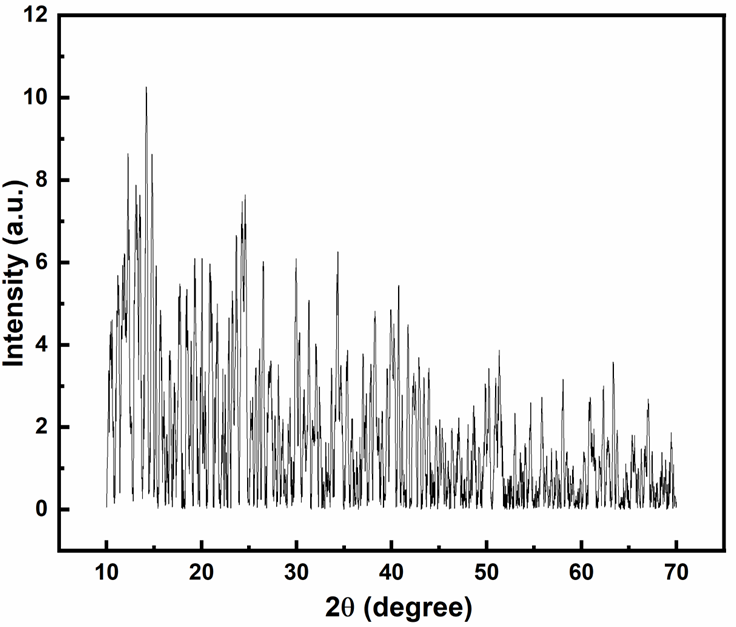
The prepared banana peel-based Activated carbon (BPAC) was characterized by XRD as shown in Fig. 1. The XRD patterns of banana peel-based activated carbon exhibited sharp peaks indicating changes in the activated carbon structure. The XRD figure ensured that the pyrolysis process at 800 ºC prepared banana peel-based activated carbon thermally decomposed to crystalline graphitic form.
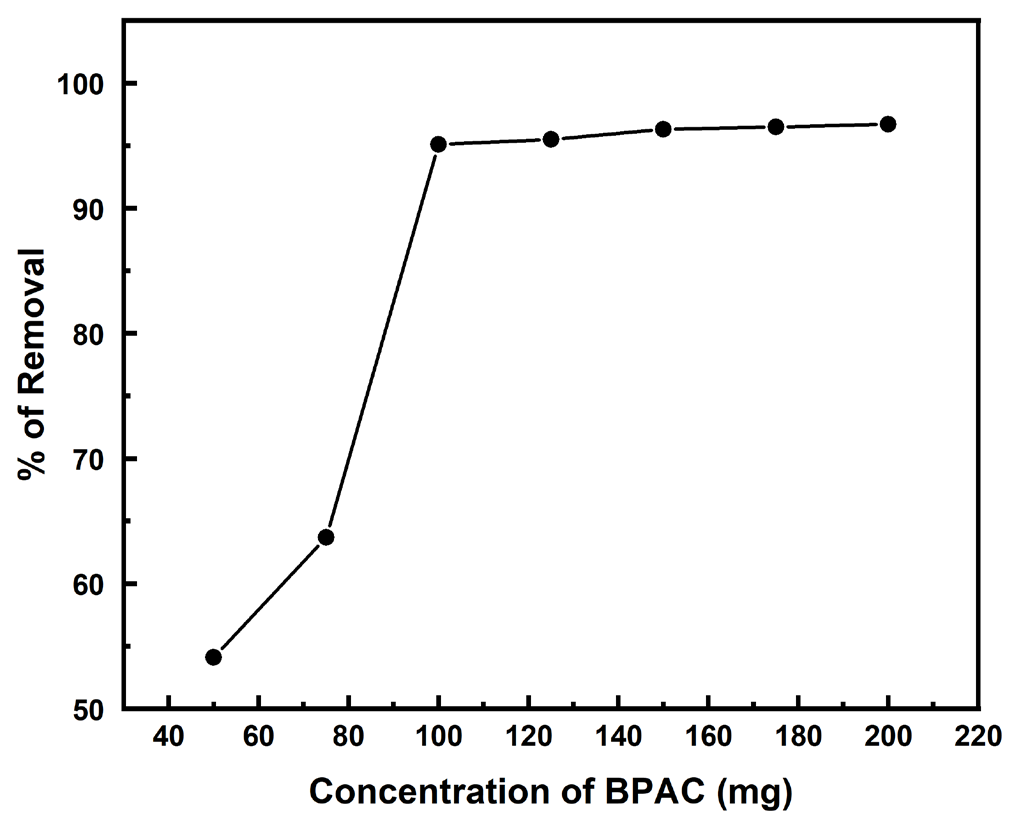
The activated carbon derived from banana peels was used as an adsorbent; the adsorption of ciprofloxacin from its aqueous solution was examined by utilizing the batch technique to optimize the concentration of adsorbate, concentration of adsorbent, contact time, pH, and shaking rate. The parameters were chosen based on the location of the maximal adsorption. The concentration of BPAC vs the percentage of ciprofloxacin removed from its aqueous solution is shown in Figure 2. The figure shows that the percentage of ciprofloxacin removed from its aqueous solution rose with increased BPAC concentration, with 200 mg being the ideal BPAC concentration. A noteworthy 96.7% of the ciprofloxacin was removed with 200 mg of the BPAC.
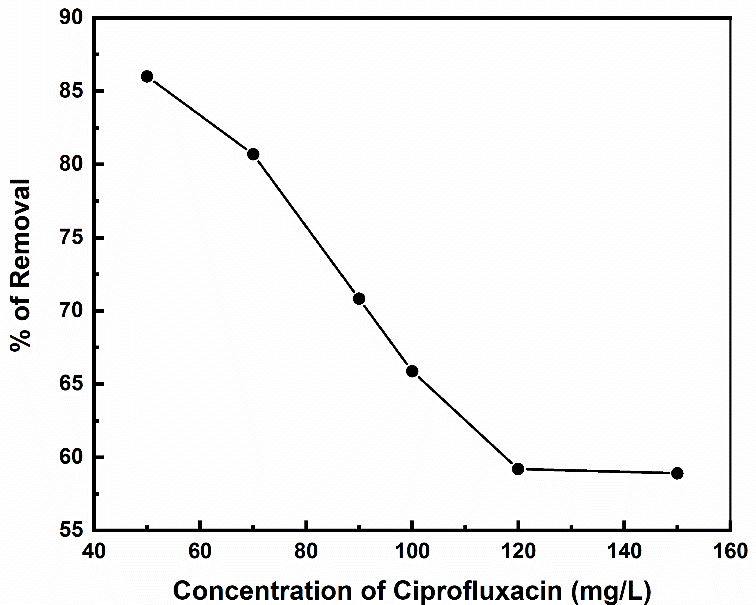
The ciprofloxacin concentration versus the ciprofloxacin aqueous solution clearance percentage is displayed in Figure 3. As the figure illustrates, the percentage of ciprofloxacin removed from its aqueous solution reduces as the concentration of the antibiotic increases. The maximum percentage of ciprofloxacin elimination from its aqueous solution—86%—was seen at the 50 mg/L starting concentration.
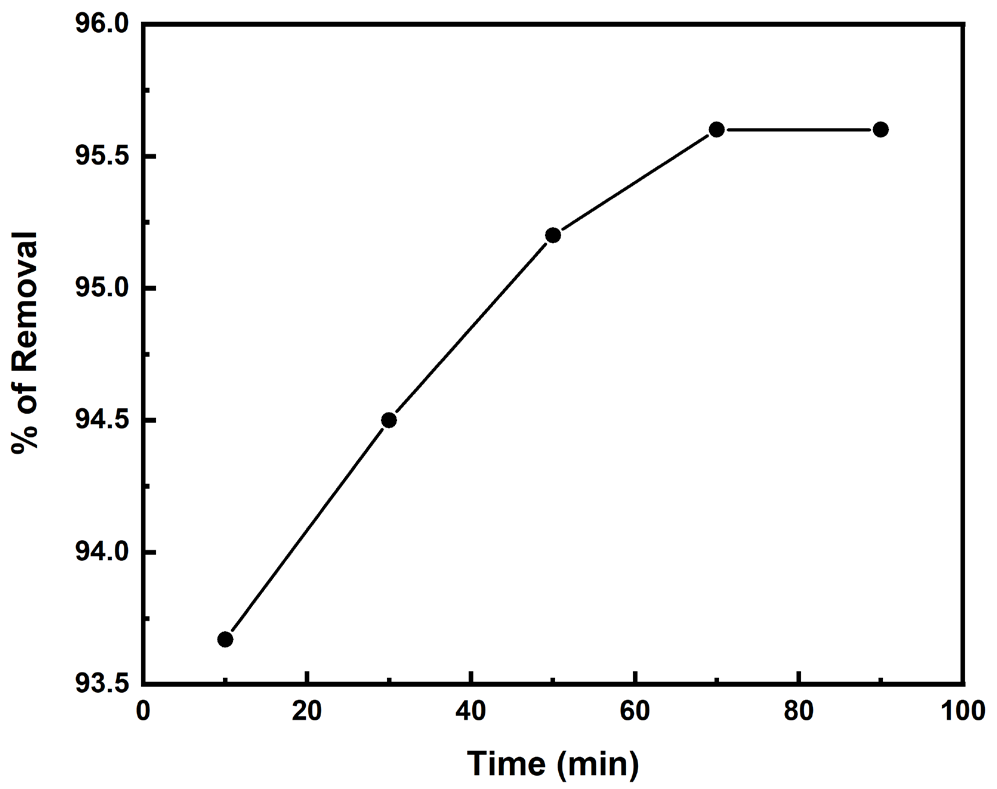
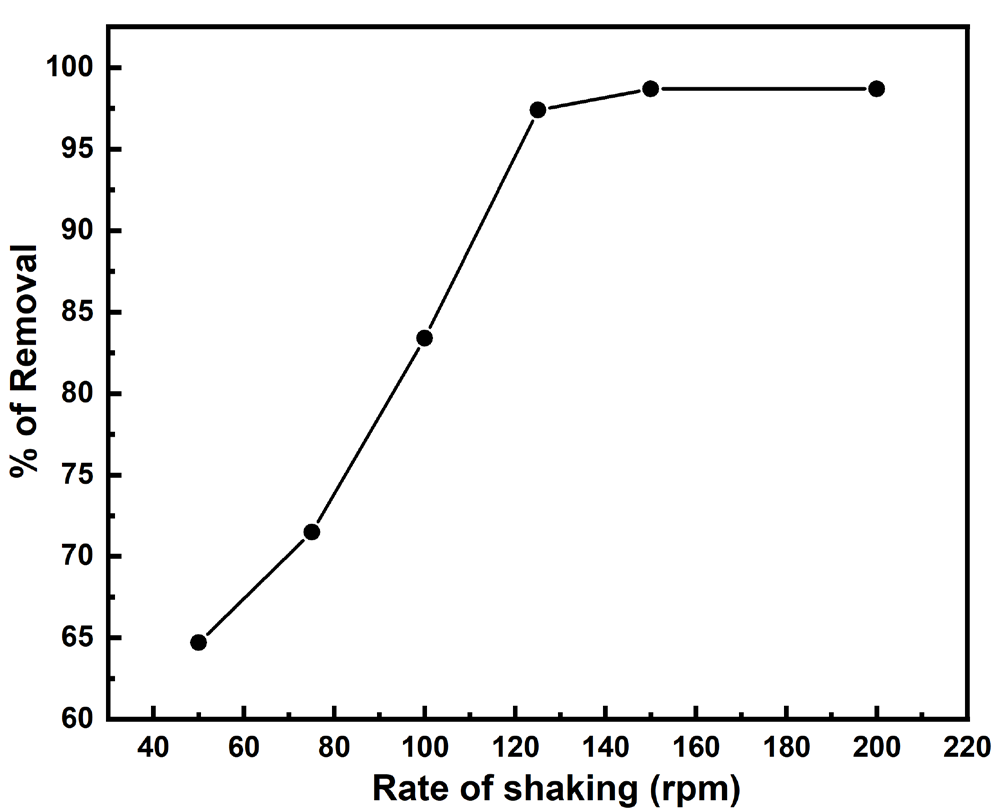
The impact of duration (time) on this elimination process is depicted in Figure 4. As a result, the removal % grew as the period increased. After 70 minutes, 95.6% of the ciprofloxacin in its aqueous solution had been removed. In this adsorption process, the impact of rate shaking was investigated. Figure 5 illustrates how 98.7% more ciprofloxacin was removed when the shaking rate was increased—the rate of shaking at 150 rpm. Ciprofloxacin is known to be partly soluble in water, and the elimination percentage rises with longer shaking times. Additionally, pH impact was examined and depicted in Figure 6. The maximum percentage of ciprofloxacin removed from its aqueous solution was found at pH 7.35.
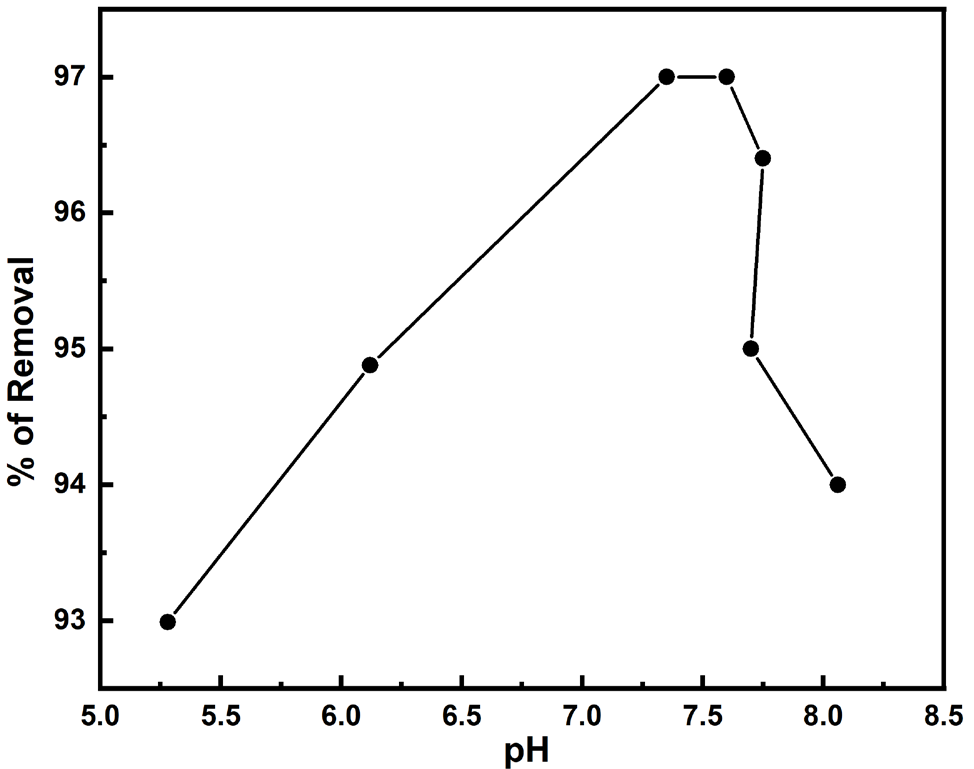
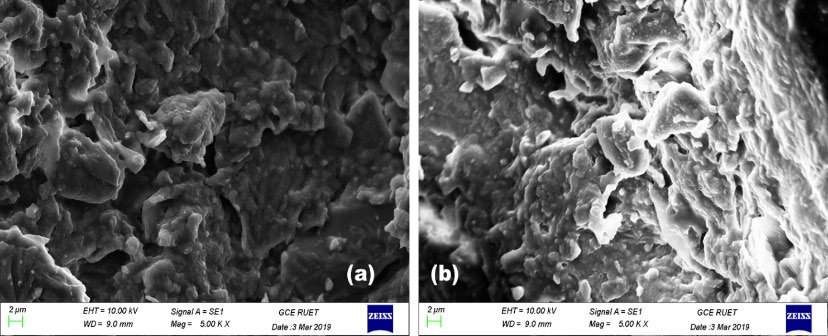
Since ciprofloxacin is acidic and only partially soluble in water, the maximum clearance % is achieved at pH 7.35. The surface shape of the BPAC is shown in Figure 7, both before and after ciprofloxacin was adsorbed. The BPAC's surface was highly rough and full of cavities prior to adsorption, but during adsorption, the surface turned a milky white colour, resembling a blowing mushroom. The BPAC's milky surface validated the adsorption procedure for extracting ciprofloxacin from its aqueous solution.
Several kinetic models were used to analyze the time-dependent batch process adsorption experimental data of ciprofloxacin on BPAC. The elimination of ciprofloxacin through adsorption on BPAC was examined experimentally using various nonlinear and linear forms of pseudo-first- and pseudo-second-order models. The software Origin Lab was utilized to compute the kinetic parameters in nonlinearThe Origin Lab program software was used to calculate kinetic parameters in nonlinear equations. The pseudo-first-order Lagergren’s kinetic equation [21] is as follows:
And the pseudo-second-order equation is as below [22]:
Here, dt = at time t, the amount of ciprofloxacin adsorbed (mg/g), de = at equilibrium, the amount of ciprofloxacin adsorbed (mg/g), t = duration time in minutes, k1 = first-order kinetics model rate constant (min−1), k2 = second-order kinetics model rate constant (g/mg, min).
Integrating the equations (3) and (4), with conditions at t= 0, dt = 0, and dt = dt at t = t, and rearrangements, the equations may be represented to some kinetic models, in nonlinear and linear forms which are shown in Table 1. From the listed equations in Table, pseudo-first-order (PFO) is one nonlinear and one linear equation, on the other hand, there is one nonlinear and four types of linear kinetic equations for pseudo-second-order (PSO).
| Name of the model | The equation used | The plot drawn | Model Parameters |
|---|---|---|---|
| Pseudo-First Order Kinetic | |||
| Pseudo-First order nonlinear | qt = qe(1 − e−kt) | qt vs t | ---------------- |
| Pseudo-First order linear | log(qe − qt) = log qe − (k1/2.303)t | log(qe − qt) vs t | Slope = k1/2.303 Intercept = log qe |
| Pseudo-second-order kinetic | |||
| Pseudo Second Order nonlinear | qt = k2qe2t/(1 + k2qet) | qt vs t | ----------------- |
| Pseudo Second Order linear -I | t/qt = 1/(k2qe2) + t/qe | t/qt vs t | Slope = 1/qt Intercept = 1/k2qe2 |
| Pseudo Second Order linear-II | 1/qt = (1/(k2qe2))(1/t) + t/qe | 1/qt vs 1/t | Slope =1/k2qe2 Intercept = 1/qe |
| Pseudo Second Order linear -III | qt = qe − (1/(k2qet))(qt/t) | qt vs qt/t | Slope = 1/k2qe Intercept = qe |
| Pseudo Second Order linear -IV | qt/t = k2qe2 − k2qeqt | qt/t vs qt | Slope = k2qe Intercept = k2 qe2 |
| Model | Rate constant, k (g/mg min) | qe (mg/g) | Standard error | χ2 | R2 |
|---|---|---|---|---|---|
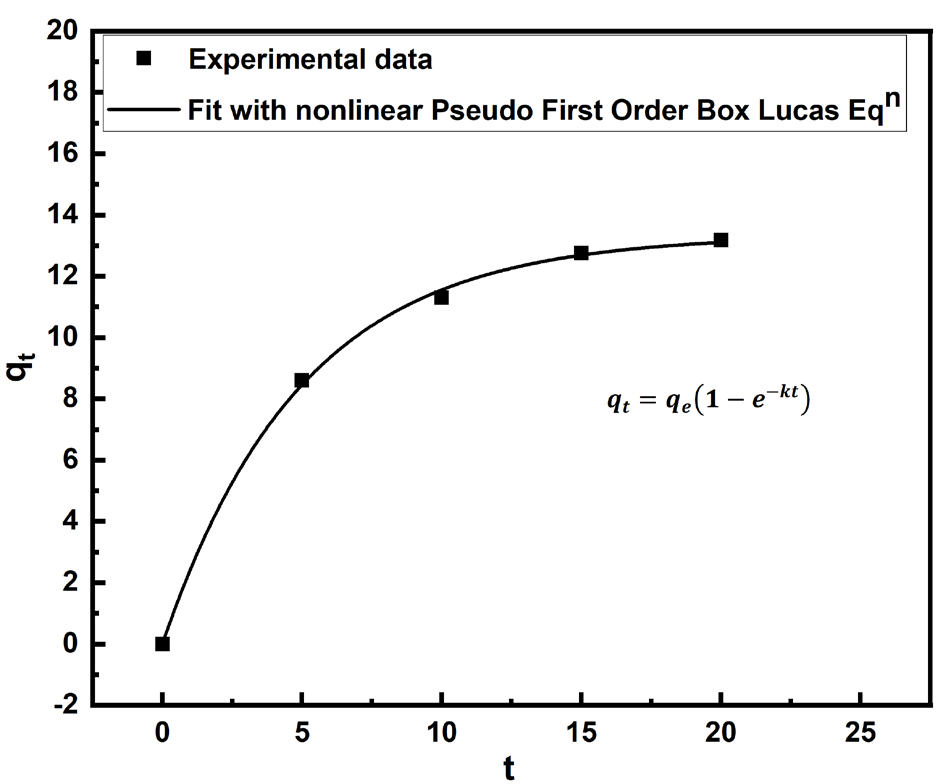
| PFO nonlinear | 0.20078 | 13.345 | 0.1710 | 0.03107 | --------- |
| PFO linear | 0.00102 | 2.8106 | 0.05 | ------- | 0.9103 |
| PSO nonlinear | 0.01402 | 16.245 | 0.29054 | 0.01964 | ------- |
| PSO linear Type -I | 0.23457 | 16.113 | 0.02064 | --------- | 0.9982 |
| PSO linear Type -II | 0.2226 | 16.350 | 0.00108 | --------- | 0.9968 |
| PSO linear Type-III | 0.1375 | 16.299 | 0.318 | --------- | 0.9986 |
| PSO linear Type-IV | 0.01366 | 4.4799 | 0.15977 | ---------- | 0.9886 |
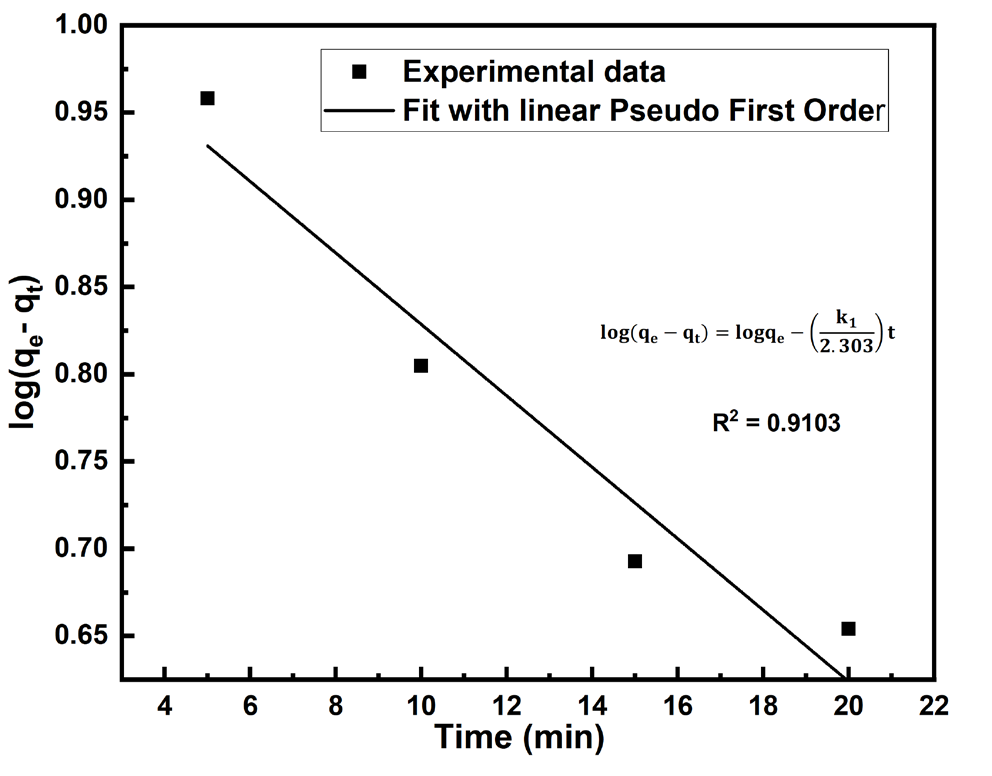
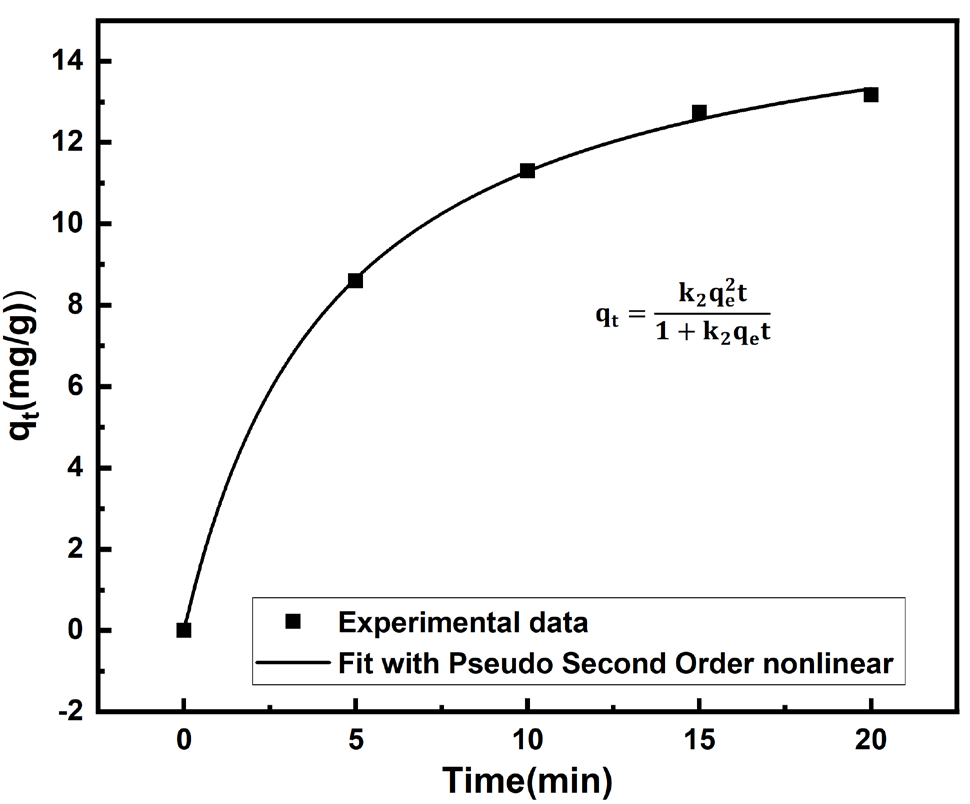
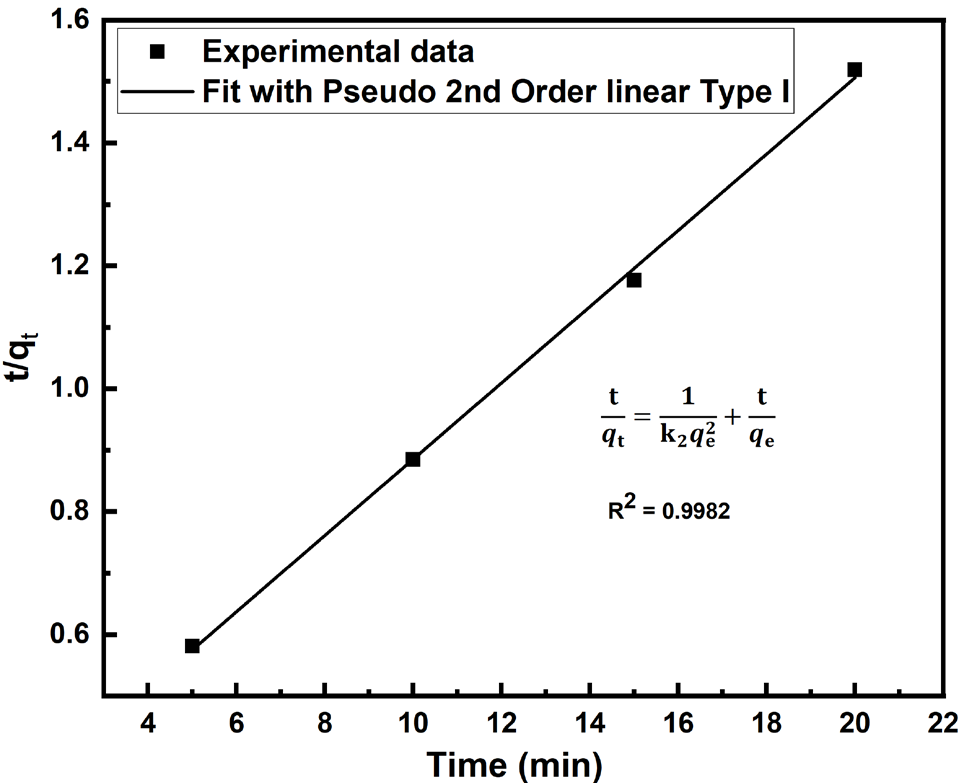
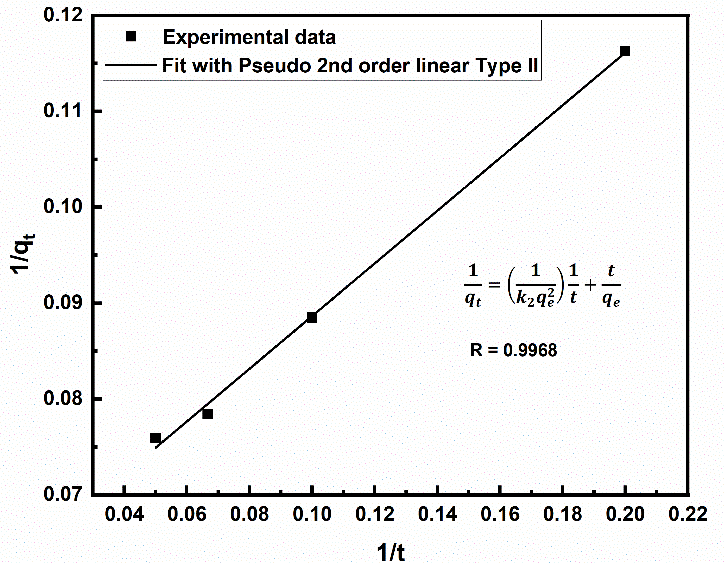
Usually, in the adsorption kinetics study, the linear forms of pseudo-first-order and type I pseudo-second-order equations shown in Table -1 are used. Table 2 presents the non-linear forms of Pseudo-First -order and Pseudo-Second-Order kinetic models for the adsorption information of ciprofloxacin onto banana peel-based activated carbon which was plotted qt vs t shown in figures 8 and the determined constants and theoretically calculated qe. The pseudo-first-order linearized expression kinetic model has been shown in Figure 9 and plotted log(qe-qt) vs t and the determined parameters are reported in Table 2. Similarly, the Pseudo Second-Order kinetic rate constant k2 and theoretical qe were calculated from the linear plots of t/qt vs t, 1/qt vs 1/t, qt vs qt/t, and qt/t vs qt for PSO type I, II, III, and IV expressions, respectively, and are shown in Fig. 10-14, and calculated parameters are summarized in Table 2.
To compare different models, the coefficient of determination R2 and Chi-square test χ2 were used as determining tools for the best-fit kinetic equations which were calculated by the following expressions for linear equations:
and Chi-square for nonlinear equations as below
Here, qt,exp (mg/g) is the experimental value of adsorption at any time t, qt, cal (mg/g) is the calculated value of adsorption at any time t, q̄t,exp (mg/g) is the average of the experimental value of the adsorption at any time t, qe (mg/g) is the calculated equilibrium capacity from the models used. The values of R2 and Chi-square χ2 values for linear and nonlinear equations are presented in Table 2.
The data obtained for a nonlinear model is a smaller number by comparison with the experimental data, i.e.; χ2 would be smaller & vice versa, on the other hand, in the linear models, the value of R2 which is less than 1, is considered a favorable condition.
The values of Chi-square (χ2) analysis for non-linear models of Pseudo-First-Order and Pseudo-Second-Order were found to be 0.03107 and 0.01964, respectively, indicating the PSO model seems to be more plausible for the calculation of kinetic parameters for the adsorption of ciprofloxacin onto BPAC.
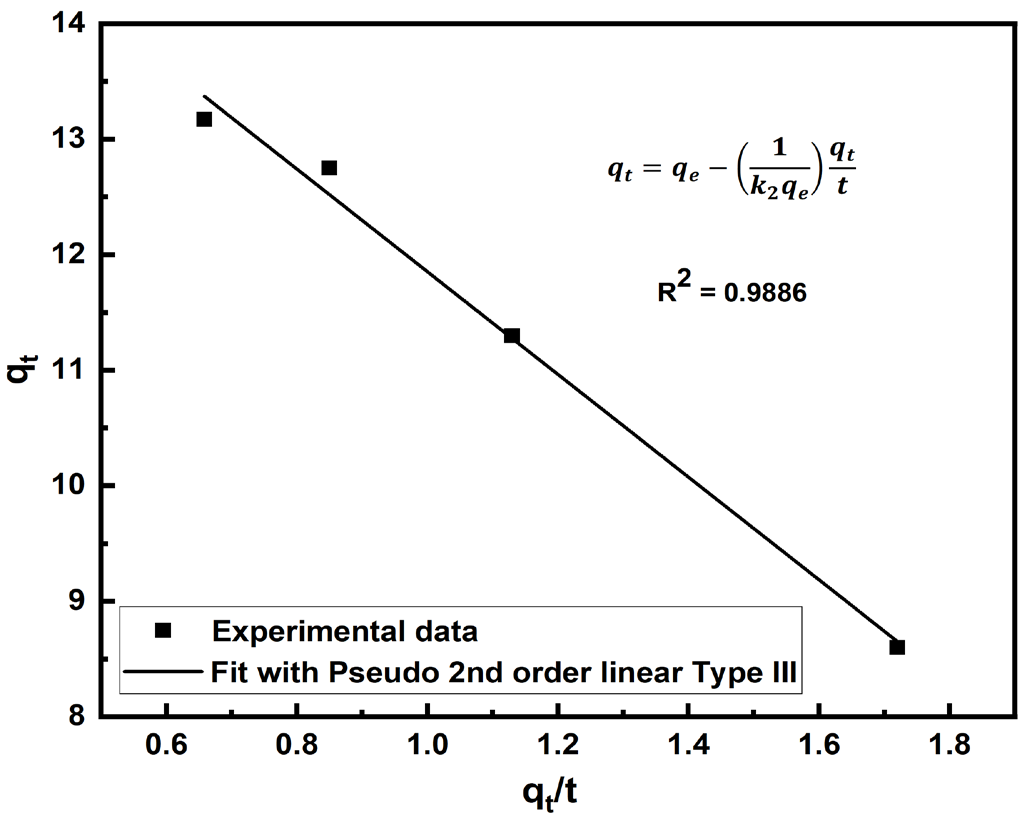
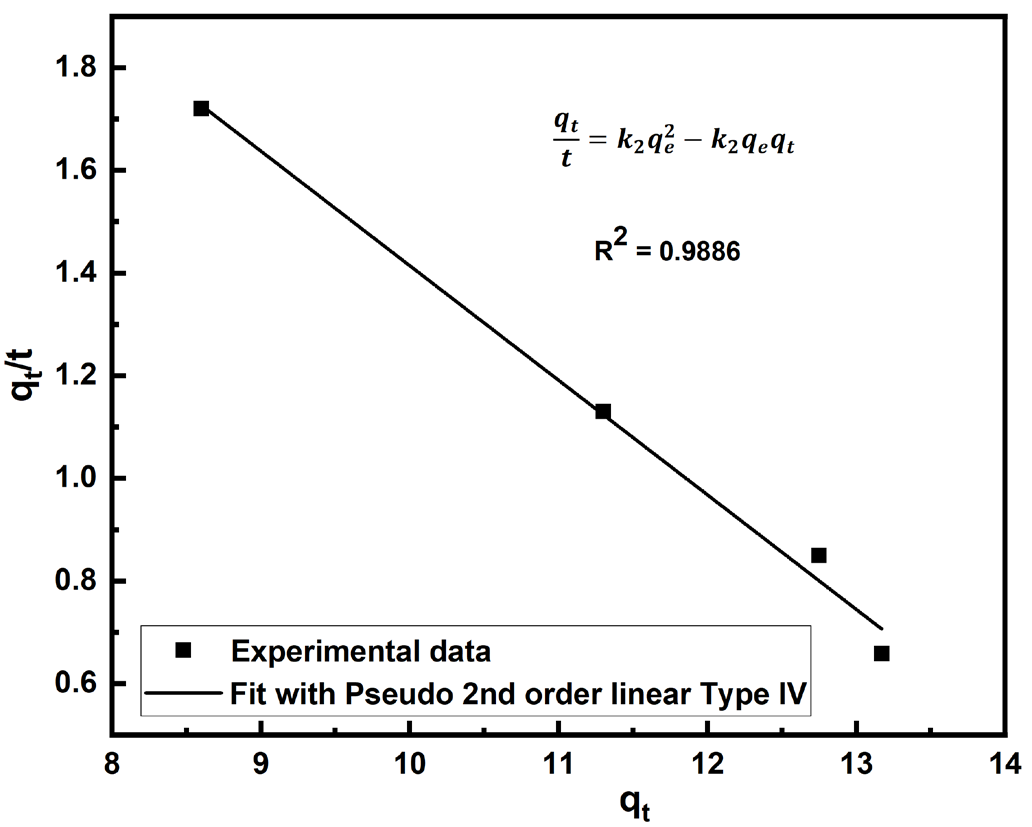
Similarly, the lower R2 value of 0.9103 (Table 2) was determined indicating that the pseudo-first-order kinetic model in linear form is not an appropriate model to explain the sorption kinetic data of the ciprofloxacin on BPAC. The adsorption kinetics data was also explained by one nonlinear and four linear models of the pseudo-second-order equations, parameters, and plotted parameters summarized in Table 1, and results are reported in Table 2. Considering R2 values in Table 2, Pseudo-Second-Order linear Type III & IV is the best-fitted rate expression in terms of maximum R2 value of 0.9986 & 0.9986 respectively. Besides the PSO linear type I, and II have lower R2 values of 0.9982, and 0.9968, respectively, were observed. The PSO type I equation is the most commonly used equation by various researchers for different sorption systems [12]-[13]. The calculated values of the rate constant for Pseudo-Second-Order linear Type III & IV (shown in Table 2) were close to each other. Besides calculating rate constant values for the PSO linear type I, and II were also closer to each other. In the pseudo-first-order kinetic model, the values of qe PFO nonlinear were 4.75 times higher than the PFO linear one. The qe values obtained by PFO non-linear equation were 13.345 mg/g and the linear equation was 2.8106 mg/g, the results indicating the PFO linear model does not apply to the adsorption data of the ciprofloxacin on BPAC. However, the PFO nonlinear model was closer to the experimental value than the linear one and may be an option for its applicability. The experimentally determined value of the qe was in close agreement with the value obtained using the nonlinear PSO model (16.245 mg/g). Methylene blue adsorption on activated carbon was reported to have a similar outcome [6]. Compared to the experimental value, the PSO model type IV linear equations yield noticeably different values (4.4799 mg/g). On the other hand, the values obtained for PSO Type III with the slightest departure from the experiment were nearly identical to those obtained for the other three linear models, namely type I, type II, and type III. While having a lower coefficient of determination (0.9968), the qe value determined by PSO Type II is closer to the experimental value. Thus, the PSO, Type III equation should be a preferable choice for the evaluation of kinetic parameters for the adsorption of ciprofloxacin on BPAC when using linear equations, based on the minimum difference between the theoretically and experimentally determined qe values and the maximum observed value of R2. The pseudo-second-order kinetic model predicts the behavior over the complete adsorption range, which implies that chemical sorption or chemisorption is the rate-limiting phase. Under these circumstances, adsorption capacity rather than adsorbate concentration determines the adsorption rate.
Conclusion
Utilizing experimental data, several linear kinetic models were investigated to resolve intricate issues about the linearization of a non-linear form. The data obtained indicates that using a non-linear expression to ascertain the kinetic parameters was a more suitable approach, given that the error distribution remains constant throughout the execution process. One must optimize specific equation parameters while applying a nonlinear model to minimize the Chi-square value as much as feasible. The pseudo-second-order kinetic model provided a more satisfactory explanation for ciprofloxacin sorption. According to the study, the pseudo-first-order and pseudo-second-order kinetics models non-linear forms performed better than their linear counterparts. Of the four linear forms of pseudo-second order investigated; Type III appears to be a more suitable choice for determining the kinetic parameters involved in the adsorption of ciprofloxacin on BPAC.
Declarations
- Author contributions
All authors contributed to the study's conception and design. Md. Shahnewaj Sajeeb and Sukanto Chandra performed material preparation, data collection, and analysis. Dr. Md. Anwarul Karim wrote the first draft of the manuscript, and all authors commented on previous versions. All authors read and approved the final manuscript.
- Funding
The authors declare that no funds, grants, or other support were received during the preparation of this manuscript. The investigation was not funded by any organization or any sources.
- Data availability
Not applicable
- Competing interests
Not applicable
- Acknowledgments
Department of Applied Chemistry and Chemical Engineering, Dr. Muhammad Qudrat-I-Khuda Academic Building, University of Rajshahi. Motihar, Rajshahi 6205, University of Rajshahi, Bangladesh.
References
- 1.Patel, M., Kumar, R., Kishor, K., Mlsna, T., Pittman, C.U., and Mohan, J.D. (2019). Pharmaceuticals of emerging concern in aquatic systems: chemistry, Occurrence, Effects, and Removal Methods. Chem. Rev., 119, 3510−3673. https://doi.org/10.1021/acs.chemrev.8b00299
- 2.Samal, K., Mahapatra, S., and Ali, M.H. (2022). Pharmaceutical wastewater as Emerging Contaminants (EC): Treatment technologies, impact on the environment and human health, Energy Nexus, 6, 100076. https://doi.org/10.1016/j.nexus.2022.100076
- 3.Ebele, A.J., Abdallah, M.A.E., and Harrad, S. (2017). Pharmaceuticals and personal care products (PPCPs) in the freshwater aquatic environment, Emerging Contaminants, 3, 1-16. https://doi.org/10.1016/j.emcon.2016.12.004
- 4.Samal, K., and Dash, R.R. (2021). Modelling of pollutants removal in integrated vermifilter (IVmF) using response surface methodology, Clean. Eng. Technol., 100060. https://doi.org/10.1016/j.clet.2021.100060
- 5.Gadipelly, C., Gonzalez, A.P.G., Yadav, G.D., Ortiz, I., Ibañez, R., Rathod, V.K., Kumudini V. and Marathe, K.V. (2014). Pharmaceutical industry wastewater: review of the technologies for water treatment and reuse. Ind. Eng. Chem. Res., 53, 11571−11592. https://doi.org/10.1021/ie501210j
- 6.Klavarioti, M., Mantzavinos, D., and Kassinos, D. (2009). Removal of residual pharmaceuticals from aqueous systems by advanced oxidation processes. Environ. Int., 35, 402−417.
- 7.Dalrymple, O.K., Yeh, D.H., and Trotz, M.A. (2007). Removing pharmaceuticals and endocrine-disrupting compounds from wastewater by photocatalysis. J. Chem. Technol. Biotechnol., 134, 121-134.
- 8.Imran, H. (2004). Wastewater monitoring of pharmaceutical industry: treatment and reuse options. Electron. J. Environ., Agric. Food Chem., 4, 994−1004.
- 9.Lawrence, K., Wang, Y.-T.H., Howard, H.L., and Constantine, Y. (2005). Waste water treatment in the process industries; CRS Press: Boca Raton, FL, USA.
- 10.Larsson, D.G.J., and Fick, J. (2009). Transparency throughout the production chain A way to reduce pollution from the manufacturing of pharmaceuticals? Regul. Toxicol. Pharmacol., 53, 161−163.
- 11.Michael, I., Rizzo, L., McArdell, C.S., Manaia, C.M., Merlin, C., Schwartz, T., Dagot, C., and Fatta-Kassinos, D. (2012). Urban wastewater treatment plants as hotspots for the release of antibiotics in the environment: A review. Water Res., 47, 957−995.
- 12.Karim, M.D., Hossain, D., Hossain, M.I., Dipti, S.S., and Azad, M.A.K. (2024), Efficient and cost-effective adsorbent brick sand nanoparticles used for removal of heavy metals, Water Science, 38(1), 109-127. https://doi.org/10.1080/23570008.2024.2307197
- 13.Karim M.A., Ahmed, S., Hossain D., Hossain M.I., Hossain, M.S., Hossain, A., Rahman, M.H., Dipti, S.S,. and Azad, M.A.K. (2024). Adsorption Isotherms and Kinetics Studies on Adsorption of Malachite Green onto Activated Charcoal from Aqueous Solution, Journal of Science and Engineering Papers, 1(1), 18-25. https://doi.org/10.62275/josep.24.1000004
- 14.Hossain, D., Prodhan, M.M.H., Hossain, M.N., Dipti, S.S., Azad, M.A.K., and Karim, M.A. (2024). Brick sand particles as an adsorbent in column chromatography to remove heavy metals from solution. Bangladesh J. Sci. Ind. Res., 59(1), 47-54. https://doi.org/10.3329/bjsir.v59i1.69057
- 15.Zafar, S., Khalid, N., Daud, M., and Mirza, M.L. (2015). Kinetic studies of the adsorption of thorium ions onto rice husk from aqueous media: linear and nonlinear approach. The Nucleus, 52(1), 14-19.
- 16.Kumar, K.V., and Sivanesan, S. (2006). Selection of optimum sorption kinetics: comparison of linear and non-linear method. J. Hazard. Mater., 134, 277-279. https://doi.org/10.1016/j.jhazmat.2005.11.003
- 17.Blanchard, G., Maunaye, M., and Martin, G. (1984). Removal of heavy metals from waters by means of natural zeolites. Water Res., 18(12), 1501-1507. https://doi.org/10.1016/0043-1354(84)90124-6
- 18.Khan, A., Naqvi, H.J., Afzal, S., Jabeen, S., Iqbal, M., and Riaz, I. (2017). Efficiency enhancement of banana peel for wastewater treatment through chemical adsorption. Proceedings of the Pakistan Academy of Sciences, 54(3), 329–335.
- 19.Yang, K., Gao, Q., Tan, Y., Tian, W., Weiqian, T., Zhu, L., and Yang, C. (2016). Biomass-derived porous carbon with micropores and small mesopores for high-performance lithium-sulfur batteries. Chem. A Eur. J., 22, 3239–3244.
- 20.Falyouna, O., Maamoun, I., Bensaida, K., Tahara, A., Sugihara, Y., and Eljamal, O. (2022). Encapsulation of iron nanoparticles with magnesium hydroxide shell for remarkable removal of ciprofloxacin from contaminated water. Journal of Colloid and Interface Science, 605, 813–827.
- 21.Khalid, N., and Daud, M. (2014). Adsorption of arsenic from aqueous media using lateritic minerals: Equilibrium, kinetic and thermodynamic studies. Radiochim Acta, 102(5), 423-431. https://doi.org/10.1515/ract-2013-2129
- 22.Ho, Y.S., and McKay, G. (1999). Pseudo-second order model for sorption processes. Process Biochem., 4, 451-465.
Cite this article
Journal
Karim MA, Sajeeb MS, Chandra S, Dipti SS. Linear and Nonlinear Approach on Kinetic Studies in the Adsorption of Ciprofloxacin onto Banana Peels-base Carbon from Aqueous Solution. JoSEP. 2026;1(2):73-80. doi: 10.62275/josep.24.1000011.
Rights and permissions
© 2026
Cited by (2)
- Assessment of Drinking Water Quality from Groundwater Sources at the University of Rajshahi, Bangladesh with Respect to Bottle Water Available in Local Market
Sakib Rahman Dipu, Md. Anwarul Karim · Journal of Science and Engineering Papers · 2026
- Removal of ciprofloxacin from aqueous solutions using GO/PVA/calcium alginate composite beads as an absorbent
Md. Samrat Hossain, Md. Anwarul Karim, Sharmin Sultana Dipti · RSC Advances · 2026
About this article
- Received
- 28 June 2024
- Revised
- 17 July 2024
- Accepted
- 19 July 2024
- Published
- 21 October 2026
- Journal
- Journal of Science and Engineering Papers
- Volume / Issue
- 1 / 2
- Pages
- 73-80
- DOI
- 10.62275/josep.24.1000011