 Open Access



 Open access
 Check for updates


Abstract
As carbon dioxide (CO₂) emissions continue to drive climate change, Carbon Capture, Utilization and Storage (CCUS) emerges as a transformative technology aimed at managing the carbon cycle sustainably. CCUS encompasses a range of advanced methods to capture CO₂ from both concentrated industrial sources and the ambient atmosphere, convert it into valuable products, and store it securely to prevent its release. This review explores four primary capture pathways: pre combustion systems that separate CO₂ before fuel combustion, post combustion capture from flue gases, oxy fuel combustion in oxygen rich environments, and Direct Air Capture (DAC) that extracts CO₂ directly from the atmosphere. Beyond storage, the utilization aspect of CCUS is equally vital. Captured CO₂ can be converted into construction materials, synthetic fuels and chemical feedstocks, supporting a circular carbon economy. CCUS is particularly crucial for decarbonizing hard to abate sectors such as cement and steel manufacturing, where conventional renewables fall short. However, widespread implementation faces challenges, including high costs (30 to 100 USD per ton of CO₂), the need for global CO₂ transport infrastructure, and complex regulatory frameworks. Addressing these barriers requires collaborative efforts among industries, governments and communities. Ultimately, CCUS offers more than a mitigation tool. It provides a strategic pathway to net negative emissions, turning industrial byproducts into valuable resources. As we advance toward climate resilience, the question is no longer whether we can capture carbon, but whether we can harness its potential for a sustainable future.
Introduction
Comprehensive strategies to reduce anthropogenic greenhouse gas emissions are urgently needed, as evidenced by the clear signs of a rapidly changing climate, including rising sea levels, more frequent extreme weather events, and rising global average temperatures[1]. The primary source of global warming among these is carbon dioxide (CO₂), which is produced when fossil fuels are burned for transportation, industry, and energy production [2]. In addition to drastically reducing current emissions, removing CO₂ from the atmosphere is also necessary to meet the ambitious targets set by international agreements, like those outlined in the Paris Agreement, to limit global warming to well below 2 °C, preferably to 1.5 °C [1], [3].
Carbon Capture, Utilization, and Storage (CCUS) technologies have become an essential set of solutions in this critical context for decarbonizing hard-to-abate sectors like steel, cement, and chemical production, as well as for drastically lowering emissions from large point sources like power plants[4]. First, CO₂ is captured from industrial flues or directly from the air; second, it is transported to appropriate locations; and third, it is used in a variety of applications or stored permanently in safe geological formations [4], [5].
This integrated strategy is widely recognized as a crucial way to achieve net-zero emission targets and ensure environmental sustainability and global energy security by prominent energy and climate organizations, including the International Energy Agency (IEA) and the Global Carbon Capture and Storage Institute (GCCSI) [2], [4]. After decades of research, CCUS is now being adopted more rapidly globally due to advancements in technology, increased policy support, and increased economic viability [6]. This study offers a comprehensive examination of the current status of CCUS, examining the latest advancements in carbon capture, diverse routes of utilisation, and secure storage options. It also covers the present problems and possible advancements of this important tool for climate change mitigation.
Carbon Capture Technologies
The core component of CCUS is carbon capture technologies, which are intended to extract CO₂ from gas streams prior to their release into the atmosphere. Numerous strategies, each with unique benefits, drawbacks, and degrees of technological maturity, have been developed and are presently being studied or implemented.
Pre-combustion Capture
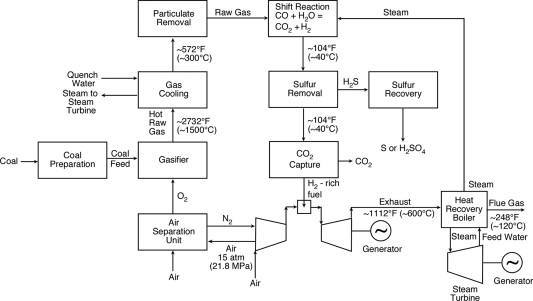
Removing CO₂ from a fuel stream prior to combustion is known as pre-combustion capture (Figure 1). In processes like Integrated Gasification Combined Cycle (IGCC) power plants or hydrogen production facilities, fuel (such as coal, natural gas, or biomass) is gasified or reformed to create a synthesis gas (syngas) that is high in subsequently transforms the carbon monoxide into CO₂ and additional hydrogen, enabling the separation of CO₂ from a concentrated, high-pressure stream hydrogen and carbon monoxide. A water-gas shift reaction [7]. Because of the stronger driving force for separation caused by this high partial pressure of CO₂, pre-combustion capture typically uses less energy than post-combustion techniques [8]. Pre-combustion mature technologies frequently use physical solvents (e.g., Rectisol, Selexol, Amine solvents) for absorption, which works well at high pressures [9]. Novel membranes and adsorbents are the focus of recent developments to further increase efficiency and lower costs [7].
Post-combustion capture
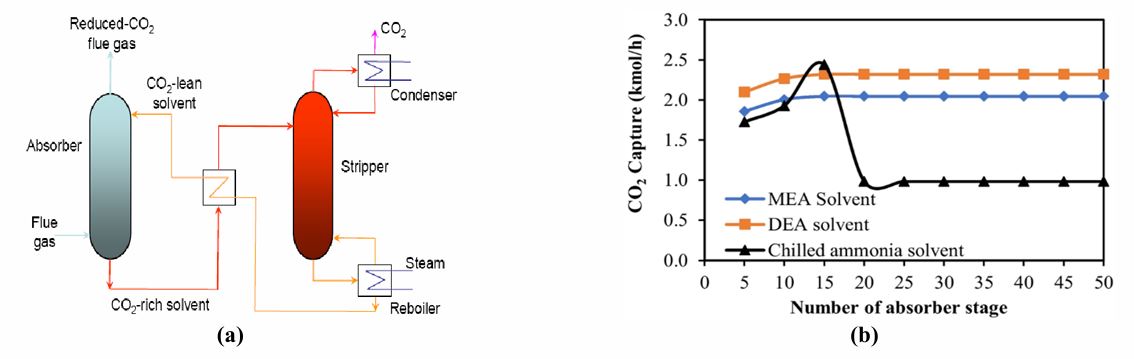
The most established and extensively used carbon capture technology for current power plants and industrial facilities is post-combustion capture (Figure 2(a)) [10]. Following combustion, CO₂ is extracted from the flue gas using this method. Large gas volumes must be treated because the flue gas usually contains diluted CO₂ (e.g., 3-15% by volume) at low pressure [8]. The most popular and widely accessible post-combustion method is chemical absorption, which mostly uses aqueous amine solutions (such as monoethanolamine, or MEA). This process uses a lot of energy, especially for solvent regeneration, even though it is very effective and frequently achieves 85–95% CO₂ capture efficiency (Figure 2(b)) [11]-[14]. Research is being done to create new generations of chemical solvents, like biphasic solvents and advanced amine blends, that have better stability, lower regeneration energy requirements, and slower rates of degradation [7].
Oxy-fuel Combustion
Burning a fuel in an atmosphere of almost pure oxygen as opposed to air is known as “oxy-fuel combustion.” As a result, the flue gas's composition is drastically changed, becoming mostly composed of CO₂ and water vapour with a much lower nitrogen content [15]. The downstream CO₂ separation is made easier by the lack of nitrogen because water vapour is readily extracted by cooling and compression, producing a high-purity CO₂ stream [8], [16]. The production of pure oxygen, usually through cryogenic air separation units (ASUs), has a high energy demand, which entails a significant capital and operating cost [8], [15], even though this method avoids the energy penalty associated with separating CO₂ from a diluted flue gas stream. In spite of this, research is looking into advanced oxy-combustion cycles like the Allam cycle and alternative oxygen production techniques to increase overall efficiency [7], [16]. Oxy-fuel combustion is still regarded as a promising approach for new builds and particular industrial applications.
Direct Air Capture (DAC)
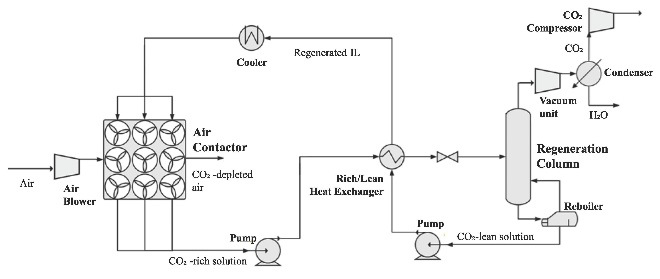
Direct Air Capture (DAC) is a technology that takes CO₂ straight from the air, unlike point-source capture techniques [17]. In DAC systems, large fans are typically employed to draw air across sorbent materials that selectively bind to CO₂ (Figure 3). After reaching saturation, the concentrated CO₂ is extracted from the sorbents through heating or depressurization, facilitating its storage or utilization [18]. To address diffuse or historical emissions that cannot be tracked from specific industrial sources and may lead to net-negative emissions, direct air capture is crucial [17]. Recent developments in DAC technology feature the design of scalable and modular units, the introduction of advanced sorbents that significantly reduce energy requirements for regeneration, and better integration with renewable energy sources aimed at minimizing the overall carbon footprint of the capture process [18], [19]. Organizations like Clime works are developing third- generation technologies aimed at significantly reducing energy consumption and enhancing CO₂ capture capacity [19].
Comparative Analysis of Capture Technologies
Since every carbon capture technology has advantages and disadvantages, selecting one can be challenging. The ideal choice is determined by the fuel type, target capture efficiency, economics, process technological maturity, and application (such as power generation or industrial processes). The key characteristics, advantages, drawbacks, and Technology Readiness Levels (TRLs) of carbon capture techniques according to NASA are contrasted in the Table 1.
| Technology | Description | Advantages | Disadvantages | TRL (Approx.)* | Reference |
|---|---|---|---|---|---|
| Pre-Combustion Capture | Decarbonizing fuel before combustion (e.g., gasification) | High CO₂ capture efficiency, hydrogen byproduct, suitable for large-scale | High capital cost, complex process, fuel processing required | 7-8 | [7-9] |
| Post-Combustion Capture | Removing CO₂ from flue gas after combustion (e.g., amine scrubbing) | Can be retrofitted to existing plants, relatively lower capital cost (some) | Lower capture efficiency (some), high energy for solvent regeneration, solvent issues | 6-7 | [10-12] |
| Oxy-Fuel Combustion | Burning fuel in pure oxygen and recycled flue gas | High CO₂ capture efficiency, simpler CO₂ separation, reduced NOₓ | High energy for O₂ production, capital costs, material challenges | 6-7 | [15-16] |
| Direct Air Capture (DAC) | Capturing CO₂ directly from ambient air | Addresses historical & dispersed emissions, location flexibility | High cost, energy intensive, early stage of development | 4-6 | [17, 18] |
*The key characteristics, advantages, drawbacks, and Technology Readiness Levels (TRLs) of carbon capture techniques according to NASA are contrasted in Table 1.
Transport Infrastructure
An essential component of the CCUS value chain is the safe and effective movement of captured CO₂ from its source to locations for use or storage. Distance, CO₂ volume, terrain, and cost considerations are some of the factors that affect the choice of transport method.
Pipeline Networks
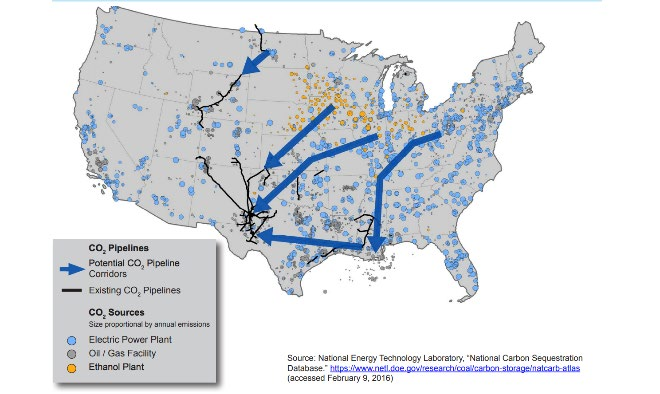
Pipelines transporting significant amounts of CO₂ over long distances are the most cost-effective and energy-efficient (Figure 4) [20], [21]. Although dedicated new pipelines are desired to assure integrity and prevent contamination, existing natural gas pipeline infrastructure may be converted or reused for CO₂ transmission [22]. CO₂ is delivered in its dense phase (supercritical or liquid state) to increase density and decrease compression energy, which requires certain pipeline temperature and pressure parameters [20]. CO₂ pipelines for Enhanced Oil Recovery (EOR) projects have proved technological viability and dependability internationally for decades, providing a firm foundation for CCUS infrastructure [21], [22].
Ship Transport
Ship transport of CO₂ is a potential alternative to pipelines across enormous bodies of water or to connect geographically spread sources to a central storage hub [23], [24]. Liquid CO₂ is transported by ships in L CO₂ carriers at moderate pressures (7–15 bar) and low temperatures (-50°C) [25]. This routing method can serve numerous smaller CO₂ sources without specialised pipeline connections. Although less developed than pipeline transport for large-scale CCUS, the concept draws inspiration from the LNG shipping sector, which has improved ship design and port infrastructure to increase efficiency and scalability [24], [25].
Safety Considerations
Every aspect of CO₂ transport infrastructure must be safe. CO₂ is neither flammable nor hazardous at atmospheric concentrations, but its higher density than air can dislodge oxygen and induce suffocating, especially in enclosed or low-lying environments [26]. Ship and pipeline designs must prioritise safety. Strict material standards to avoid brittle fracture, advanced leak detection systems, emergency shutdown processes, and detailed siting and operating risk assessments are examples [26], [27]. Emergency response planning and public awareness are essential for CO₂ transport network safety [27].
Infrastructure Requirements and Challenges
Building the CO₂ transit infrastructure needed for extensive CCUS implementation is difficult. Large-scale pipeline networks require a lot of money, land, and laws for where to put them, how to gain authorization, and how to run them [28]. Special loading and unloading terminals, liquefaction facilities at capture locations, and regasification units at storage and use stations are needed for transporting [24]. Governments, humankind mesh, and localus must work together to build a powerful and interconnected CO₂ transit network [29]. We require supportive policies, clear economic incentives, and strategic planning to overcome these issues and accelerate global CO₂ transport solutions [28]-[30].
Storage Methods
The final and most critical stage of CCUS involves the long-term containment of captured CO₂ to prevent its release into the atmosphere. Geological storage represents the most widely applied permanent CO₂ storage approach, in which the gas is securely stored within subsurface geological formations of the Earth.
Geological Storage Options
Geological storage involves burying CO₂ in deep, porous rock formations with impenetrable layers. Two types of geological formations are predicted to store a lot of CO₂:
Depleted Oil and Gas Fields
Deep Saline Aquifers
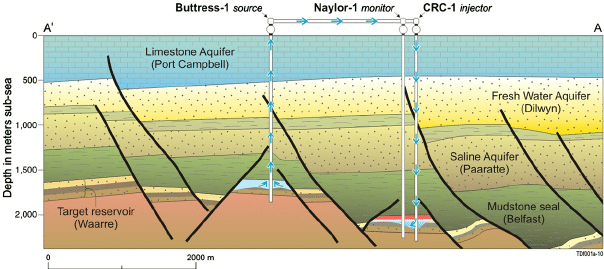
Deep saline aquifers are massive underground rock formations loaded with brine that can't be drunk (Figure 5). Saline aquifers have the most potential storage area and are everywhere, making them ideal for large-scale CO₂ sequestration [31], [34]. Structural trapping (under caprock), residue trapping (in pores), solubility trapping (in brine), and mineral trapping (reacting with rock to create stable carbonates) can trap CO₂ [33], [34].
Monitoring and Verification Systems
Monitoring and verification (M&V) systems are necessary to maintain geological storage sites, verify CO₂ confinement, and detect leaks [35]. Surface, shallow subsurface, and deep subsurface methods are used in M&V programs. Geochemical sampling of groundwater and soil gas, seismic surveys, boreholes with pressure and temperature sensors, and surface CO₂ flux measurements are examples [35], [36]. Satellite remote sensing is augmenting broad-area surveillance. M&V data is essential for regulatory compliance, public assurance, and adaptive storage management across decades to millennia [37].
Long-Term Storage Stability
Geological CO₂ storage relies on multiple trapping mechanisms and long-term geological stability that has persisted for thousands of years. Structural and residual trapping initially immobilize the injected CO₂, while solubility and mineral trapping ensure its retention over extended time scales [6], [33], [38]. Over hundreds to thousands of years, the injected CO₂ gradually dissolves into formation waters and reacts with host minerals to form stable carbonate phases, thereby enhancing the permanence of storage [33]. For long-term safety and effectiveness, suitable storage sites must exhibit stable geological conditions, low seismic activity, and thick, competent caprocks [33].
Carbon Utilization Pathways
Beyond permanent geological storage, captured CO₂ can be converted and utilized as a feedstock for a wide range of products and processes, thereby generating economic opportunities and broadening the CCUS portfolio. Through the application of Carbon Utilization technologies that transform waste into valuable resources, a circular carbon economy can be effectively achieved.
Enhanced Oil Recovery (EOR)
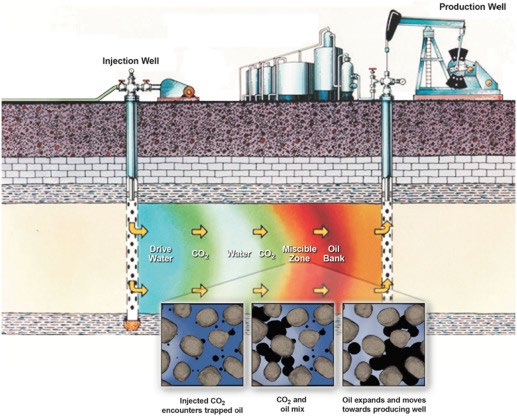
The most well-established commercial use of CO₂ is CO₂-Enhanced Oil Recovery (EOR) [39]. This method involves pumping collected CO₂ into mature oil reservoirs to mix with crude oil, reducing its viscosity and making it easier to extract (Figure 6). The injected CO₂ is trapped in the reservoir, providing geological storage and oil revenue [40]. Although CO₂-EOR can increase recovery factor and prolong oil field life, it also permits the production of fossil fuels; therefore, careful consideration is required to ensure the net climate benefit [39], [41].
Chemical Conversion to Fuels and Materials
The transformation of CO₂ into valuable chemicals, fuels, and materials is a highly promising approach for its utilization. A diverse array of chemicals can be produced with carbon dioxide (CO₂) as a carbon source, including:
Fuels
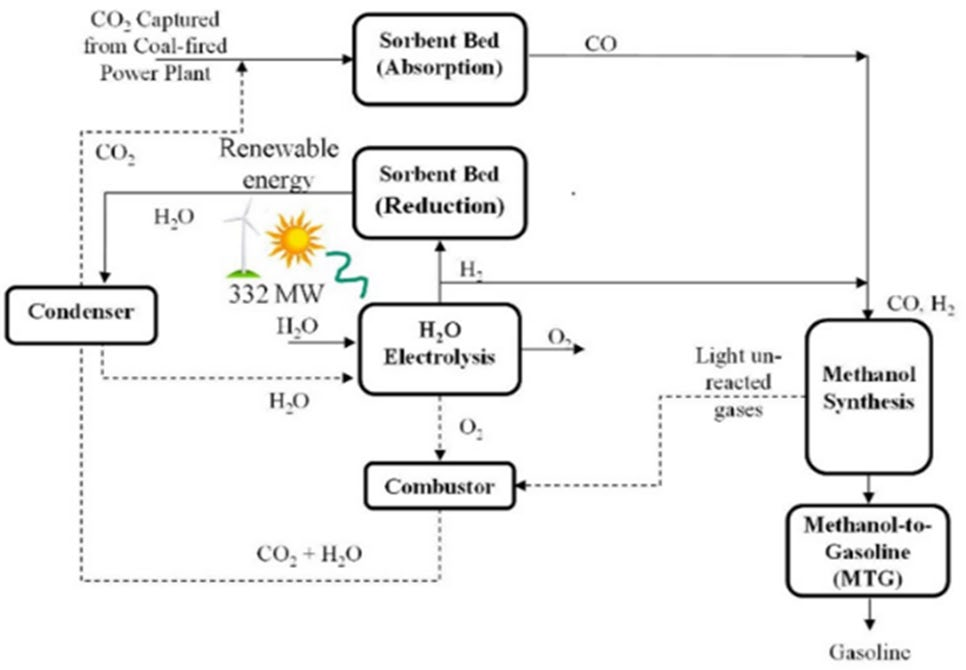
Methanol, methane (synthetic natural gas), and different liquid hydrocarbons, including synthetic gasoline and diesel, are fuels produced using processes such as hydrogenation or Fischer-Tropsch synthesis (Figure 7) [42]-[44]. The “power-to-X” approaches often integrate CO₂ conversion with renewable energy sources to provide carbon-neutral fuels.
Chemicals
Comprising polymers (such as polycarbonates), urea (used in fertilizers), and intermediates for plastics and pharmaceuticals [42]. Research is being conducted on catalytic conversion approaches, including thermo-catalytic and electro-catalytic methods, to enhance selectivity and energy efficiency.
Mineralization
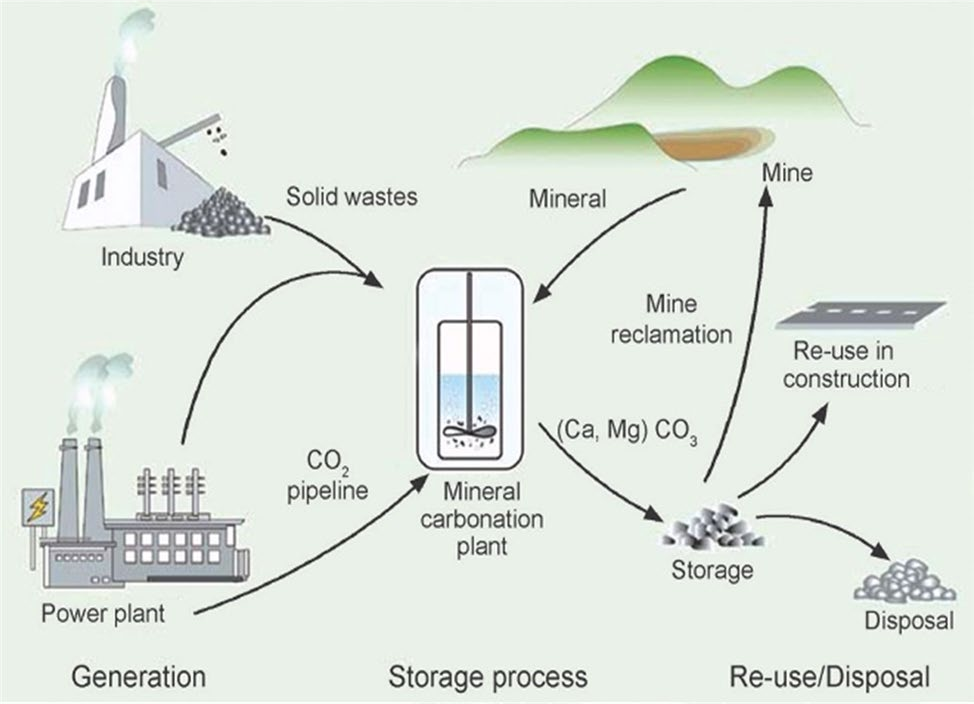
The reaction of CO₂ with metal oxides (such as calcium or magnesium oxides, which are often found in naturally occurring minerals or industrial waste) forms stable carbonate minerals (Figure 8) [46]. Because they are environmentally friendly and thermodynamically stable, solid carbonates can safely and permanently sequester CO₂ [40]. Even though reaction kinetics and energy needs limit direct large-scale implementation, research is focused on generating new reaction routes, catalysts, and ex-situ procedures to make this process more effective and economically possible [40], [46].
Industrial Applications
CO₂ has numerous industrial applications beyond its role as a chemical feedstock. It is widely used in the food and beverage sector (carbonation and refrigeration), agriculture (enhancement of greenhouse plant growth), and manufacturing (metal fabrication and fire suppression). Although these applications consume smaller quantities of CO₂ compared with large-scale capture initiatives, they represent established markets capable of utilizing a portion of the captured CO₂ and thereby contributing to the reduction of overall CCUS costs [2], [47].
Economic Aspects
Cost Analysis of Different CCUS Approaches
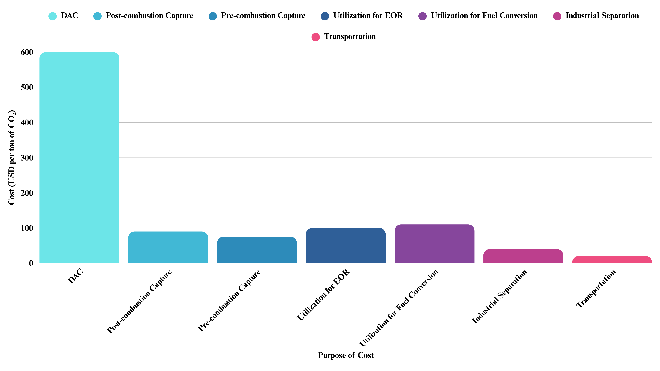
The capture source, technology, flue gas CO₂ concentration, and project scale all have a significant impact on CCUS costs. The majority of the CCUS chain is comprised of capture expenses (Figure 9) [48]. While pre-combustion and oxy-fuel combustion may be more integrated and economical for new power plants or industrial operations, post-combustion capture is more costly for existing facilities due to the diluted CO₂ in flue gases [6], [49]. Transport costs are determined by distance, volume, and mode (pipelines are less expensive for large volumes over long distances). Although storage is less expensive, it necessitates long-term monitoring and verification, drilling, injection, and site characterization [48]. The cost of capturing and storing CO₂ varies from 30 to 100 per ton, depending on the region and application. Efforts are being made to reduce these costs through economies of scale and technological advancements [48].
Carbon Pricing and Market Mechanisms
Strong market mechanisms and efficient carbon pricing are key to CCUS implementation. Carbon taxes and emissions trading systems (ETS) incentivize firms to reduce CO₂ emissions, making CCUS cheaper than paying for emissions [50]. Carbon prices boost CCUS investment. In addition to direct carbon pricing, low-carbon fuel standards, tax credits (like the U.S.'s 45Q tax credit), and carbon abatement contracts-for-difference (CfDs) can de-risk CCUS projects and accelerate their commercialization [51], [52].
Investment Requirements
Scaling CCUS to meet climate targets requires global investment. The construction of capture facilities, transportation networks, and storage sites will require billions of dollars in the upcoming decades [53]. Long lead times and high initial capital expenditures necessitate significant public funding, bank guarantees, and supporting policy frameworks in order to de-risk early projects and draw in capital, even though private investment is essential [54]. Large-scale CCUS infrastructure construction will also be financed through international cooperation and innovative financing techniques like climate funds and green bonds [53].
Future Prospects
Continuous advancements and its critical role in addressing global energy and environmental challenges make the future of this technology highly promising.
Innovations in technology
A constant stream of technology advancements will improve efficiency, lower prices, and expand applicability. This includes creating more durable and energy-dense materials, smarter control systems using AI and machine learning, and manufacturing process advancements that will speed up production and cut unit costs. Miniaturization and mobility may expand use cases.
Scalability Issues
The potential is huge, but scalability issues must be overcome to achieve widespread use. These hurdles include ensuring a reliable and sustainable raw material supply chain, building robust deployment and maintenance infrastructure, and navigating regional regulatory climates. Industry growth will also depend on workforce development and training.
Renewable energy system integration
One of its biggest prospects is seamless integration with renewable energy systems. This technology will stabilise, store, and provide on-demand energy for intermittent renewable sources including solar and wind power. This synergy will improve smart networks, reduce fossil fuel use, and optimize energy delivery.
Promoting Net-Zero Emissions
We need this technology to reach net-zero emissions. It will aid the clean energy economic transition, decarbonizing power generation, transportation, and industry. It can store energy, balance systems, and offer cleaner options to meet ambitious climate targets and prevent climate change.
Case Studies
Existing CCUS Projects Worldwide
Several large-scale CCUS initiatives are operational or under development across sectors. Many initiatives aim to capture CO₂ from power stations, natural gas processing facilities, and industrial operations including cement and steel manufacture.
Sleipner CO2 Storage Project (Norway)
Established in 1996, Sleipner is a highly successful CO₂ storage project worldwide. CO₂ is captured from natural gas production and injected into a salty aquifer in the North Sea [55]. This experiment successfully proved safe and effective long-term geological storage of CO₂.
Boundary Dam Carbon Capture and Storage Project (Canada)
The Boundary Dam Carbon Capture and Storage Project in Canada, operational since 2014, absorbs CO₂ from a coal-fired power station. Carbon dioxide is captured for improved oil recovery (EOR) and geological storage [56].
Petra Nova Carbon Capture Project (US)
In 2017, Petra Nova began capturing CO₂ for EOR at a Texas coal-fired power plant [57]. The project demonstrated large-scale capture, but operational issues forced a shutdown in 2020.
Australian Gorgon CO2 Injection Project
Gorgon, a section of a huge LNG complex, proposes to inject and store CO₂ into a deep underground deposit [58]. Although built for large-scale injection, the project has faced delays and operational challenges, resulting in less CO₂ injection than planned.
Lessons Learned
Utilization Opportunities
Using captured CO₂ for EOR, chemicals, or building materials can improve project economics and create new value chains, even though dedicated storage is essential. Emissions that require capture are rarely matched by utilization paths [62].
Technological Maturity and Integration
Although capture technologies have been proven, it is costly and challenging to integrate them into power plants or industrial processes. Optimizing the capture process and integrating the host facility are essential for dependability and efficiency [59].
Geological Storage Characterization
Cost and Financing
Regulatory Frameworks
Permitting, long-term liability management, and project development all depend on stable and transparent regulatory frameworks. Investment is discouraged by policy uncertainty [60].
Public Acceptance
Public approval and resolving local community concerns regarding safety, environmental impact, and hazards are essential to the project's success [61].
Utilization Opportunities
Using captured CO2 for EOR, chemicals, or building materials can improve project economics and create new value chains, even though dedicated storage is essential. Emissions that require capture are rarely matched by utilization paths [62].
Challenges and Recommendations
Table 2 summarizes the principal challenges and their associated recommendations.
| Challenges | What is the problem? | Recommendations |
|---|---|---|
| Too costly | CCUS projects are not economically viable due to their high construction and operating costs | (i) More Funds & Assistance Governments need to provide more tax breaks, grants, and guaranteed loans to make projects less risky and more affordable for investors. (ii). Create “CCUS hubs” where businesses pool storage and pipelines. Making it affordable for all (iii) Look into ways to make technology more affordable and effective. Divide tasks into smaller, standardized portions to complete them more quickly. |
| An excessive amount of red tape | Projects that require permits, particularly those involving subterranean CO₂ storage, can be postponed indefinitely. Regulations pertaining to long-term CO₂ responsibility are unclear. | (i). Make permit procedures quicker and easier. All CCUS project documents may be managed by a single office. (ii). Explicit Regulations Provide stable, unambiguous rules for the handling, transportation, storage, and accountability of CO₂. Investor confidence is increased as a result. |
| Absence of infrastructure | There are not enough pipelines or storage facilities to move and hold CO₂. No one will build pipelines and storage, and companies won't capture or store CO₂ if there isn't enough for it to travel. | (i). Create areas where multiple factories can use shared pipes and storage to deliver CO₂ to a central location. (ii). To facilitate and lower the cost of connectivity, select CCUS project and infrastructure locations. (iii). Governments ought to provide financial support and incentives for the development of CO₂ pipelines and storage facilities. |
| Public scepticism | Concerns about safety or the environment may cause residents near potential CCUS sites to postpone or abandon the project. | (i). Projects need to interact with local communities, address their concerns, explain the technology, and show how it can benefit them. (ii). Launch campaigns to explain CCUS, its safety, and its importance in the fight against climate change. |
| Technical Difficulties | It is challenging to integrate CCUS technology into already-existing factories, and underground CO₂ storage might not be secure. Potential issues may arise from impurities in captured CO₂. | (i). To guarantee seamless operation, plan and test how the CCUS system will work with factory operations. (ii). To maintain CO₂ in place, secure and keep an eye on subterranean storage facilities. (iii). To stop leaks, use materials that are suitable for CO₂ and make sure that pipelines and equipment are inspected and repaired. |
| Unclear Rules for CO2 Use | There aren't clear standards for whether CO₂ used to make things like plastics or fuels instead of being stored lowers emissions, | (i). Set clear, agreed-upon ways to find out if CO₂ in products lowers carbon emissions compared to current methods. (ii). Give money to research into other useful and large-scale uses for captured CO₂ besides recovering oil. |
| Coordination Issues | Many different companies and groups are involved in a CCUS project (capture, transport, storage). Getting them all to work together smoothly and share risks can be difficult. | (i). Governments and private companies should partner up to share the financial risks and work together on projects. (ii). Establish rules that clearly state who is responsible for what (and who takes on which risks) across the entire CCUS project chain. |
Conclusion
CCUS is a critical technology for achieving global decarbonization targets, particularly in high-emitting industries. However, several major challenges must be addressed to enable its large-scale deployment. Key barriers include high capital and operational costs, lengthy permitting processes, and, most critically, a severe lack of developed infrastructure for CO₂ transport and storage. Additional challenges for industrial integration involve securing public acceptance and addressing technical concerns.
Broad collaboration is essential to overcome these obstacles. The most important recommendations for mitigating investment risk are to offer greater financial incentives and streamline regulatory processes. Planning and developing shared CCUS hubs and pipelines are also vital for realizing economies of scale. Engaging local communities and maintaining research and development efforts to reduce costs and enhance operations are crucial for building trust. Through coordinated efforts and the development of innovative solutions to these challenges, CCUS can achieve its full potential and play a pivotal role in the transition to a low-carbon, sustainable economy.
Ethical Approval
The submitted work is a unique contribution to the field, not published elsewhere in any form or language. Results are presented clearly, honestly, and without fabrication, falsification or inappropriate data manipulation (including image-based manipulation). Authors adhere to discipline-specific rules for acquiring, selecting and processing data.
Consent to Participate
The submitted work is review work. No human subject or living organism/tissue is involved in this investigation.
Consent to Publish
No consent to publish is to be shared.
Declarations
- Author contributions
All authors contributed to the study conception and design. Material preparation, data collection and analysis were performed by Imam Ahmed Raj, and Juli Afrin Ananna. The first draft of the manuscript was written by Imam Ahmed Raj, and Sha Md. Shahan Shahriar and all authors commented on previous versions of the manuscript. All authors read and approved the final manuscript.
- Funding
The authors declare that no funds, grants, or other support were received during the preparation of this manuscript. The investigation was not funded by any organization or any sources.
- Data availability
Not applicable
- Competing interests
Not applicable
- Acknowledgments
The authors express gratitude to the Department of Applied Chemistry and Chemical Engineering, University of Rajshahi, Bangladesh.
References
- 1.IPCC. AR5 Synthesis Report: Climate Change 2014 — IPCC. 2014 [cited 2025; Available from: https://www.ipcc.ch/report/ar5/syr/.
- 2.IEA. Carbon Capture Utilisation and Storage - Energy System. IEA 2023 [cited 2025; Available from: https://www.iea.org/energy-system/carbon-capture-utilisation-and-storage.
- 3.The Paris Agreement | UNFCCC. [cited 2025; Available from: https://unfccc.int/process-and-meetings/the-paris-agreement.
- 4.Duraiswami, R. A., (2025). Global carbon capture and storage efforts: challenges and opportunities. Journal Of The Geological Society Of India, 101(2): 143-148.
- 5.Salem, N., Brar, K. K., Asgarian, A., Kaur, K., Magdouli, S., and Perreault, N. N., (2025). Advancements in Carbon Capture, Utilization, and Storage (CCUS): A Comprehensive Review of Technologies and Prospects. Clean Technologies, 7(4): 109.
- 6.Hanson, E., Nwakile, C., and Hammed, V. O., (2025). Carbon capture, utilization, and storage (CCUS) technologies: Evaluating the effectiveness of advanced CCUS solutions for reducing CO2 emissions. Results in Surfaces and Interfaces, 18: 100381.
- 7.Axens. Carbon Capture: an Introduction to the Mature and Emerging Technologies. 2022 [cited 2025; Available from: https://blog.axens.net/carbon-capture-an-introduction-to-the-mature-and-emerging-technologies.
- 8.9.2. Carbon Dioxide Capture Approaches. netl.doe.gov [cited 2025; Available from: https://netl.doe.gov/research/carbon-management/energy-systems/gasification/gasifipedia/capture-approaches.
- 9.IEA. Timely advances in carbon capture, utilisation and storage – The role of CCUS in low-carbon power systems – Analysis. IEA 2020 [cited 2025 13/10/2025]; Available from: https://www.iea.org/reports/the-role-of-ccus-in-low-carbon-power-systems/timely-advances-in-carbon-capture-utilisation-and-storage.
- 10.Davies, K., Malik, A., Li, J., and Aung, T. N., (2017). A meta-study on the feasibility of the implementation of new clean coal technologies to existing coal-fired power plants in an effort to decrease carbon emissions. PAM Review Energy Science & Technology, 4: 30-45.
- 11.Madejski, P., Chmiel, K., Subramanian, N., and Kuś, T., (2022). Methods and Techniques for CO2 Capture: Review of Potential Solutions and Applications in Modern Energy Technologies. Energies, 15(3): 887.
- 12.Carbon capture technology and how it works | National Grid. 2024 [cited 2025; Available from: https://www.nationalgrid.com/stories/energy-explained/carbon-capture-technology-and-how-it-works.
- 13.Yakub, M. I., Samah, M., and Danladi, S. U., (2014). Technical and economic considerations of post-combustion carbon capture in a coal fired power plant. International Journal of Advances in Engineering & Technology, 7: 1549-1581.
- 14.Hossain, M. S., Kumar, D., Azad, M. A. S., Azam, S. M. S., Amin, M. S. A., and Mozumder, M. S. I., (2024). A Comparative Study on CO2 Capture Efficiency Using Single and Blended Solvent. Process Integration and Optimization for Sustainability, 8(2): 565-576.
- 15.Oxy-Combustion. netl.doe.gov [cited 2025; Available from: https://netl.doe.gov/node/7477.
- 16.Mittal, H., (2025). Carbon Dioxide Emissions: Assessing Global Patterns, Identifying Mitigation Deficits, and Charting the Path to Sustainability. Preprints.
- 17.Lakin, H. and Manley, S. Direct Air Capture in 2025: The End of Hype, the Start of Realism. 2025 [cited 2025; Available from: https://www.sylvera.com/blog/direct-air-capture-dac-2025-progress-challenges-future.
- 18.Saxena, A., Prakash Gupta, J., Tiwary, J. K., Kumar, A., Sharma, S., Pandey, G., Biswas, S., and Raghav Chaturvedi, K., (2024). Innovative Pathways in Carbon Capture: Advancements and Strategic Approaches for Effective Carbon Capture, Utilization, and Storage. Sustainability, 16(22): 10132.
- 19.Bush, T. Direct Air Capture: The Technology Racing to Scale Carbon Removal. decarbonfuse.com 2025 [cited 2025; Available from: https://decarbonfuse.com/posts/direct-air-capture-the-technology-racing-to-scale-carbon-removal.
- 20.Wang, H., Chen, J., and Li, Q., (2019). A Review of Pipeline Transportation Technology of Carbon Dioxide. IOP Conference Series: Earth and Environmental Science, 310(3): 032033.
- 21.Wang, X., Dong, X., Zhang, Z., and Wang, Y., (2024). Transportation carbon reduction technologies: A review of fundamentals, application, and performance. Journal of Traffic and Transportation Engineering (English Edition), 11(6): 1340-1377.
- 22.Daniels. CO2 Transport and Storage Infrastructure. 2025 [cited 2025; Available from: https://status23.globalccsinstitute.com/.
- 23.Simonsen, K. R., Hansen, D. S., and Pedersen, S., (2024). Challenges in CO2 transportation: Trends and perspectives. Renewable and Sustainable Energy Reviews, 191: 114149.
- 24.Orchard, K., Hay, M., Ombudstvedt, I., Skagestad, R., Joos, M., Nysæter, G., Sjøbris, C., Gimnes Jarøy, A., Durusut, E., and Craig, J. The Status and Challenges of CO2 Shipping Infrastructures. in 15th Greenhouse Gas Control Technologies Conference 15-18 March 2021. 2021. SSRN.
- 25.CO2 carriers: The next generation. DNV 2017 [cited 2025; Available from: https://www.dnv.com/publications/dnv-gl-annual-report-2017-118153/.
- 26.Bielka, P., Kuczyński, S., Włodek, T., and Nagy, S., (2024). Risks and Safety of CO2 Pipeline Transport: A Case Study of the Analysis and Modeling of the Risk of Accidental Release of CO2 into the Atmosphere. Energies, 17(16): 3943.
- 27.Hu, Q., Zhang, H., Zhao, X., Meng, L., Li, Y., Zhang, L., Zhu, J., and Wang, W. Carbon Dioxide Pipeline Leakage Risk Assessment Based on Pipeline Failure Probability Correction and CO2 Concentration Dispersion Distance Prediction. SSRN: https://ssrn.com/abstract=5189574, 2025. DOI: https://doi.org/10.2139/ssrn.5189574
- 28.CCUS in Clean Energy Transitions – Analysis. IEA 2020 2020/09/24/ [cited 2025; Available from: https://www.iea.org/reports/ccus-in-clean-energy-transitions.
- 29.CCUS Infrastructure. 2025 [cited 2025; Available from: https://www.gexcon.com/application/ccus-infrastructure/.
- 30.Smith, E., Morris, J., Kheshgi, H., Teletzke, G., Herzog, H., and Paltsev, S., (2021). The cost of CO2 transport and storage in global integrated assessment modeling. International Journal of Greenhouse Gas Control, 109: 103367.
- 31.Holloway, S., (1997). An overview of the underground disposal of carbon dioxide. Energy Conversion and Management, 38: S193-S198.
- 32.Ma, J., Li, L., Wang, H., Du, Y., Ma, J., Zhang, X., and Wang, Z., (2022). Carbon Capture and Storage: History and the Road Ahead. Engineering, 14: 33-43.
- 33.Michael, K., Golab, A., Shulakova, V., Ennis-King, J., Allinson, G., Sharma, S., and Aiken, T., (2010). Geological storage of CO2 in saline aquifers—A review of the experience from existing storage operations. International Journal of Greenhouse Gas Control, 4(4): 659-667.
- 34.Bashir, A., Ali, M., Patil, S., Aljawad, M. S., Mahmoud, M., Al-Shehri, D., Hoteit, H., and Kamal, M. S., (2024). Comprehensive review of CO2 geological storage: Exploring principles, mechanisms, and prospects. Earth-Science Reviews, 249: 104672.
- 35.Freifeld, B. M., Daley, T. M., Hovorka, S. D., Henninges, J., Underschultz, J., and Sharma, S., (2009). Recent advances in well-based monitoring of CO2 sequestration. Energy Procedia, 1(1): 2277-2284.
- 36.Barlow, H., Shahi, S. S. M., Jeddizahed, J., and Kearns, D., STATE OF THE ART: CCS TECHNOLOGIES 2025. 2025, Global CCS Institute.
- 37.Tiwari, P. K., Das, D. P., Patil, P. A., Chidambaram, P., Low, Z., Azahree, A. I., Amir Rashidi, M. R., Mohd Ali, S., Jaafar Azuddin, F., Mhd Shah, S. S., Widyanita, A., Abdul Jalil, M. A., Abu Bakar, Z. A., Abdul Hamid, M. K., Tewari, R. D., and Yaakub, M. A. Monitoring, Measurement and Verification MMV: A Critical Component in Making the CO2 Sequestration Success. in International Petroleum Technology Conference. 2021.
- 38.Bui, M., Adjiman, C. S., Bardow, A., Anthony, E. J., Boston, A., Brown, S., Fennell, P. S., Fuss, S., Galindo, A., Hackett, L. A., Hallett, J. P., Herzog, H. J., Jackson, G., Kemper, J., Krevor, S., Maitland, G. C., Matuszewski, M., Metcalfe, I. S., Petit, C., Puxty, G., Reimer, J., Reiner, D. M., Rubin, E. S., Scott, S. A., Shah, N., Smit, B., Trusler, J. P. M., Webley, P., Wilcox, J., and Mac Dowell, N., (2018). Carbon capture and storage (CCS): the way forward. Energy & Environmental Science, 11(5): 1062-1176.
- 39.9.2. Commercial Carbon Dioxide Uses: Carbon Dioxide Enhanced Oil Recovery. netl.doe.gov [cited 2025; Available from: https://netl.doe.gov/research/coal/energy-systems/gasification/gasifipedia/eor.
- 40.Liu, W., Teng, L., Rohani, S., Qin, Z., Zhao, B., Xu, C. C., Ren, S., Liu, Q., and Liang, B., (2021). CO2 mineral carbonation using industrial solid wastes: A review of recent developments. Chemical Engineering Journal, 416: 129093.
- 41.Kułynycz, V. and Janowski, P., (2017). Comparison of the oil recovery between waterflooding and CO2-EOR method for the JSt oil reservoir. AGH Drilling, Oil, Gas, 34(3): 796.
- 42.Rezaei, F. and Rownaghi, A. A., (2025). Recent Advances in CO2 Conversion to Chemicals and Fuels. Energy & Fuels, 39(5): 2303-2305.
- 43.Kim, C., Yoo, C.-J., Oh, H.-S., Min, B. K., and Lee, U., (2022). Review of carbon dioxide utilization technologies and their potential for industrial application. Journal of CO2 Utilization, 65: 102239.
- 44.Alptekin, G. A New Process For Carbon Dioxide (CO2) Conversion To Fuel. netl.doe.gov 2017 [cited 2025; Available from: https://www.netl.doe.gov/node/190.
- 45.Xie, H., Yue, H., Zhu, J., Liang, B., Li, C., Wang, Y., Xie, L., and Zhou, X., (2015). Scientific and Engineering Progress in CO2 Mineralization Using Industrial Waste and Natural Minerals. Engineering, 1(1): 150-157.
- 46.Uliasz-Bocheńczyk, A., (2024). A Comprehensive Review of CO2 Mineral Sequestration Methods Using Coal Fly Ash for Carbon Capture, Utilisation, and Storage (CCUS) Technology. Energies, 17(22): 5605.
- 47.Aresta, M. and Dibenedetto, A., 14 - Industrial utilization of carbon dioxide (CO2), in Developments and Innovation in Carbon Dioxide (CO2) Capture and Storage Technology, Maroto-Valer, M. M., Editor. 2010, Woodhead Publishing. p. 377-410.
- 48.Hong, W. Y., (2022). A techno-economic review on carbon capture, utilisation and storage systems for achieving a net-zero CO2 emissions future. Carbon Capture Science & Technology, 3: 100044.
- 49.Dubey, A. and Arora, A., (2022). Advancements in carbon capture technologies: A review. Journal of Cleaner Production, 373: 133932.
- 50.Bank, W. Publication: State and Trends of Carbon Pricing 2024. 2024 [cited 2025; Available from: https://openknowledge.worldbank.org/entities/publication/b0d66765-299c-4fb8-921f-61f6bb979087.
- 51.Ighomuaye, E., Annankra, J. A., and Yakin, Z., (2025). A Critical Review of the Regulatory and Policy Landscape Governing Carbon Capture, Utilization, and Storage (CCUS) Technologies in the United States: Challenges, Opportunities, and Future Directions. World Journal of Advanced Research and Reviews, 27(1): 878-883.
- 52.You, C., Do, T. N., Chung, H., Yang, H., and Kim, J., (2025). Beyond storage to value: Barriers, potential and accelerating policies for carbon capture and utilization in energy production. Renewable and Sustainable Energy Reviews, 224: 116117.
- 53.Net Zero by 2050 – Analysis. IEA 2021 2021/05/18/ [cited 2025; Available from: https://www.iea.org/reports/net-zero-by-2050.
- 54.Beetz, E., Hengnsholt, E., Rakhou, E., Clayton, C., Jamal, Z., and Jumani, T. Breaking the Finance Barrier for Hydrogen and Carbon Capture. BCG Global 2023 2023/02/16/T09:22:30.772 [cited 2025; Available from: https://www.bcg.com/publications/2023/breaking-the-barriers-in-financing-hydrogen-and-carbon-capture.
- 55.Furre, A.-K., Eiken, O., Alnes, H., Vevatne, J. N., and Kiær, A. F., (2017). 20 Years of Monitoring CO2-injection at Sleipner. Energy Procedia, 114: 3916-3926.
- 56.Boundary Dam Carbon Capture Project. 2014 [cited 2025; Available from: https://www.saskpower.com/our-power-future/infrastructure-projects/carbon-capture-and-storage/boundary-dam-carbon-capture-project.
- 57.Petra Nova - W.A. Parish Project. 2017 [cited 2025; Available from: https://www.energy.gov/hgeo/petra-nova-wa-parish-project.
- 58.Gorgon carbon dioxide injection project. 2025 2025/07/25/ [cited 2025; Available from: https://www.wa.gov.au/organisation/department-of-mines-petroleum-and-exploration/gorgon-carbon-dioxide-injection-project.
- 59.Gaine, A., Techno-Economic Analysis of Carbon Capture Technologies for Coal-Fired Power Plants. 2025, Research Archive of Rising Scholars.
- 60.Leonzio, G. and Shah, N., (2024). Recent advancements and challenges in carbon capture, utilization and storage. Current Opinion in Green and Sustainable Chemistry, 46: 100895.
- 61.L׳Orange Seigo, S., Dohle, S., and Siegrist, M., (2014). Public perception of carbon capture and storage (CCS): A review. Renewable and Sustainable Energy Reviews, 38: 848-863.
- 62.Mikunda, T., Brunner, L., Skylogianni, E., Monteiro, J., Rycroft, L., and Kemper, J., (2021). Carbon capture and storage and the sustainable development goals. International Journal of Greenhouse Gas Control, 108: 103318.
Cite this article
Journal
Raj IA, Ananna JA, Shahriar SMS. Advanced Carbon Capture, Utilization, and Storage Technologies: A Review for Sustainable Carbon Cycle Management. JoSEP. 2026;3(1):175-184. doi: 10.62275/josep.26.1000027.
Rights and permissions
© 2026
Cited by (0)
Citing works are not available yet.
About this article
- Received
- 9 September 2025
- Revised
- 23 December 2025
- Accepted
- 12 January 2026
- Published
- 1 January 2026
- Journal
- Journal of Science and Engineering Papers
- Volume / Issue
- 3 / 1
- Pages
- 175-184
- DOI
- 10.62275/josep.26.1000027