 Open Access



 Open access
 Check for updates


Abstract
The study focused on the solvent extraction of Cr(III) from sulfate media using Cyanex 302 (bis (2,4,4-trimethylpentyl) monothio-phosphinic acid). Various parameters were systematically evaluated, including phase contact time, initial pH, metal ion concentration, extractant concentration, sulfate ion concentration, temperature, and the type of diluent. Equilibrium was reached within 30 minutes, with the highest extraction efficiency occurring at pH 5.0. Adding more Cyanex 302 improved the extraction efficiency. The study showed that each Cr(III) ion paired with a single dimeric extractant molecule. The presence of sulfate ions was found to hinder extraction by forming non-extractable chromium complexes. The extraction process was endothermic, as indicated by positive enthalpy changes. Among the diluents tested, toluene showed the highest extraction efficiency; however, kerosene was chosen for practical reasons. The maximum loading capacity of Cyanex 302 for Cr(III) was determined to be 2.742 g per 100 g of the extractant. Research found that sulfuric acid was good for stripping, but HCl and HNO3 did not work in the conditions tested. Cyanex 302 had a medium level of extraction efficiency compared to other extractants. These results suggest that Cyanex 302 holds promise for industrial applications in Cr recovery processes, although further optimization may be required to enhance its effectiveness.
Introduction
Chromium and its compounds are used in many industries. These include leather tanning, metal processing, electroplating, making textiles, and producing pigments [1]-[4]. The use of this metal has led to significant amounts of chromium entering water and soil. In these places, chromium is mostly found in two forms: trivalent (Cr(III)) and hexavalent (Cr(VI)) [5]-[8].
Cr(VI) is known to be very toxic, can cause mutations, and may lead to cancer. However, removing Cr(III) is also becoming important to protect the environment [2], [9]-[11]. Cr(III) can bind to proteins in the skin and accumulate in the lungs. In some natural situations, it can change into the more dangerous Cr(VI) form [12], [13]. Therefore, both global and local rules tightly limit how much total chromium can be in factory wastewater.
Several remediation strategies are available to address chromium contamination, including chemical precipitation, ion exchange, adsorption, and membrane separation [5], [14]-[18]. Chemical precipitation is popular because it is simple and cheap. But it often creates a lot of low-density sludge that is hard to recycle. Adsorption and biosorption are favoured for their flexibility and low cost, but they can suffer from efficiency and selectivity issues. Solvent extraction, also called liquid–liquid extraction, is a superior method in hydrometallurgy. It is fast, operates continuously, and effectively purifies and recovers materials [19]-[22].
In solvent extraction, picking the right extractant is very important. It depends on the metals in the waste solution [2], [23]. The range of extractants for Cr(III) includes basic quaternary ammonium salts, such as Aliquat 336, neutral extractants like TBP and TOPO, as well as acidic phosphoric acid extractants [24]-[30]. Acidic extractants such as Cyanex 302 are effective for recovering cationic Cr(III) from water under slightly acidic conditions. These extractants help in selectively recovering chromium, which can be reused. This process saves money and reduces environmental risks.
This study conducts a comprehensive examination of the extraction equilibrium of Cr(III) from sulfate media utilizing Cyanex 302. Furthermore, it offers a comparative analysis with alternative extractants.
Materials and methods
Materials
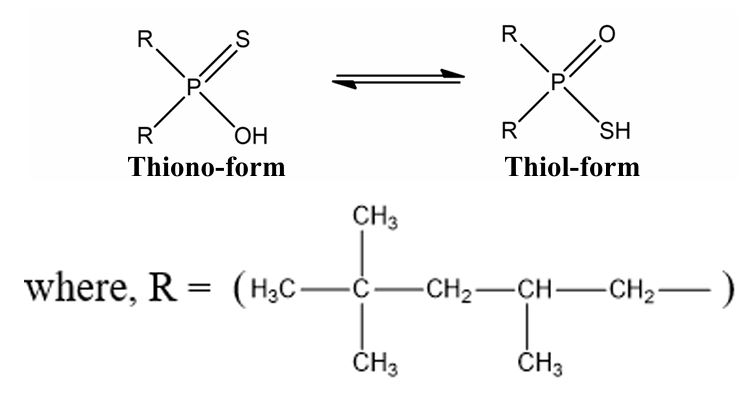
Cyanex 302 (bis (2,4,4-trimethylpentyl) monothio-phosphinic acid; Fig. 1) was provided by Cytec Canada Inc. and used without additional purification. Chromium(III) sulfate basic Cr2(SO4)3·6H2O [21% Cr, Loba (India)], sodium carbonate (Na2CO3) [99.5%, E. Merck (Germany)], sulfuric acid (H2SO4) [98%, E. Merck (India)], potassium chromate (K2CrO4) [99%, E. Merck (India)], sodium hydroxide (NaOH) [97%, E. Merck (India)], and hydrogen peroxide (H2O2) [30%, E. Merck (Germany)] were used as received, without undergoing any purification processes. Additionally, isobutyl methyl ketone, n-heptane, cyclohexane, toluene, benzene, xylene, and carbon tetrachloride were procured from E. Merck (India), with each compound having a purity of 99%. Kerosene was sourced from the local market and distilled at temperatures ranging from 473 to 533 K to obtain the colorless fraction of kerosene.
Analytical
Precisely weighing 0.093 g of A. R. K2CrO4 was dissolved in distilled water to a final volume of 250 mL to yield a standard Cr(VI) solution, with each 1.0 mL containing 0.10 mg of Cr (VI). Consequently, the concentration of Cr(III) in the aqueous solution was determined using a T60 UV–visible spectrophotometer (PG Instruments Limited, UK) by measuring the absorbance at 360 nm [31]. An edge® dedicated pH/ORP meter (HI2002-01, HANNA INSTRUMENTS, USA) was used to measure the pH of the aqueous phase. Buffer solutions with pH values of 4 and 7 were used for calibration. Anhydrous Na2CO3 was added to increase the aqueous pH. Moreover, 0.01 mol/L H2SO4 was used to reduce the pH of the aqueous solutions.
Aqueous and Organic phases preparation
The preparation of the Cr(III) stock solution involved dissolving 23.80 g of basic Cr2(SO4)3.6H2O in a 1000 mL volumetric flask containing distilled water after adding 5 mL of 98% H2SO4. This process yielded a stock solution with a sulfate concentration of 0.24 mol/L. A measured portion of this stock solution was further diluted with distilled water in another volumetric flask to obtain a test solution with the required Cr(III) concentration. As long as the pH was maintained between 3.5 and 7.0, and the Cr(III) concentration was maintained at approximately 0.10 g/L, no precipitation of hydroxide was observed.
Cyanex 302, chemically known as bis-(2,4,4-trimethylpentyl) monothiophosphinic acid (Fig. 1), has a molecular weight of 306 g and exists as a dimer. The density of the provided Cyanex 302 was 0.936 mol/L (83%). To prepare a 500 mL stock solution of Cyanex 302 with a concentration of 0.10 mol/L for experimental purposes, 163.4 mL of Cyanex 302 was measured into a 500 mL volumetric flask and filled to the mark with redistilled kerosene.
Methodology for the extraction equilibrium investigation
For the extraction process, a 20 mL portion of the aqueous phase, which contained Cr(III) at specific concentrations and pH levels, was mixed with an equal volume of the organic phase, which included the extractant in kerosene. This mixture was placed in a reagent bottle and agitated for 45 min to extract Cr(III) using Cyanex 302 at a temperature of 303 ± 1 K. The mixing was carried out efficiently using a Stuart Flask Shaker (220 V, 50 Hz) set at 300 strokes per minute. The temperature was maintained by placing the flasks in a thermostatic water bath. After reaching equilibrium, the phases were allowed to settle in the water bath before separation.
The separated aqueous solutions were analyzed to determine the equilibrium pH values, followed by the measurement of Cr(III) concentrations. The concentration of Cr(III) in the organic phase at equilibrium was calculated using the difference or mass balance method. Subsequently, the extraction or distribution ratio (D) was determined by dividing the concentration of Cr(III) in the organic phase by that in the aqueous phase at equilibrium, as illustrated below [5], [14], [15]:
In this context, Co represents the concentration of Cr(III) in the organic phase, while Caq, (eq) denotes the concentration of Cr(III) in the aqueous phase at equilibrium, and Caq, (ini) indicates the initial concentration of Cr(III) in the aqueous phase.
Methodology for the loading of Cr(III) into the organic phase
In this section, a measured amount of the organic phase underwent repeated equilibration with equal volumes of fresh Cr(III) aqueous solutions, maintained at a pH of 5.0 and a temperature of 303 K. Following each equilibration, the separated aqueous phase was analyzed to determine its Cr(III) content, and the Cr(III) concentration in the organic phase was inferred by difference. This process was repeated until the organic phase reached Cr (III) saturation.
Methodology for the stripping of Cr(III) from the loaded organic phase
To strip Cr(III) from the organic phase, three mineral acids, namely H2SO4, HCl, and HNO3, were employed as stripping agents. In the stripping experiment, 10 mL of an organic phase containing Cr(III) at a specific concentration, with kerosene as the diluent, was equilibrated for 45 min at 303 K. This was done with equal volumes of H2SO4 solutions at concentrations of 0.10 mol/L (1 stage), 1 mol/L (2 stages), 2 mol/L (2 stages), and 3 mol/L (11 stages). Additionally, two other stripping agents, HCl and HNO3, were employed in a single-stage stripping process at a concentration of 0.1 mol/L. The stripping ratio was determined by dividing the concentration of Cr(III) in the aqueous phase by its concentration in the organic phase at equilibrium.
Data Analysis
The progression of a chemical equilibrium reaction is typically influenced by the temperature. An increase in temperature can either promote the formation of product molecules or favor a reverse reaction. In scenarios where product formation is enhanced, the process absorbs heat and is termed endothermic. Conversely, when the reverse reaction is favored, heat is released, and the process is classified as exothermic. To assess the heat involved in a reaction, the van’t Hoff equation is commonly employed, as follows [3], [5]:
In solvent extraction, because the equilibrium constant K is directly related to the extraction ratio D, the equation above can be reformulated for the current scenario as follows:
By keeping other variables unchanged, if D values are recorded at different absolute temperatures (T), the graph of log D versus (1/T), K−1, should show a linear relationship. The slope is equal to -(ΔH/(2.303RT)). From the slope of this line, ΔH can be easily determined.
Result and discussion
Effect of phase contact time on the extraction equilibrium of Cr(III) from sulphate medium by Cyanex 302
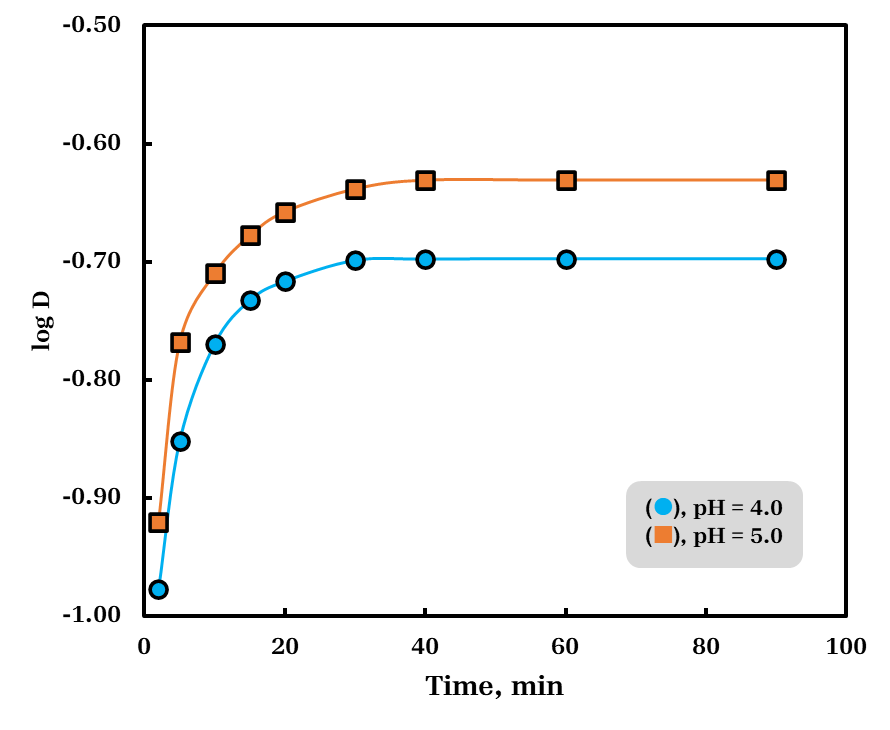
Figure 2 shows a plot of the variation of log D with time in minutes. The log D of Cr(III) increased with the phase contact time up to 30 min, after which it remained constant despite further increases in contact time. Consequently, the equilibration time for the present system was 30 min. In subsequent experiments, a 45-minute phase contact time was adopted to achieve equilibration under a range of experimental conditions.
Effect of pH(ini) on the extraction of Cr(III) from sulphate medium by Cyanex 302
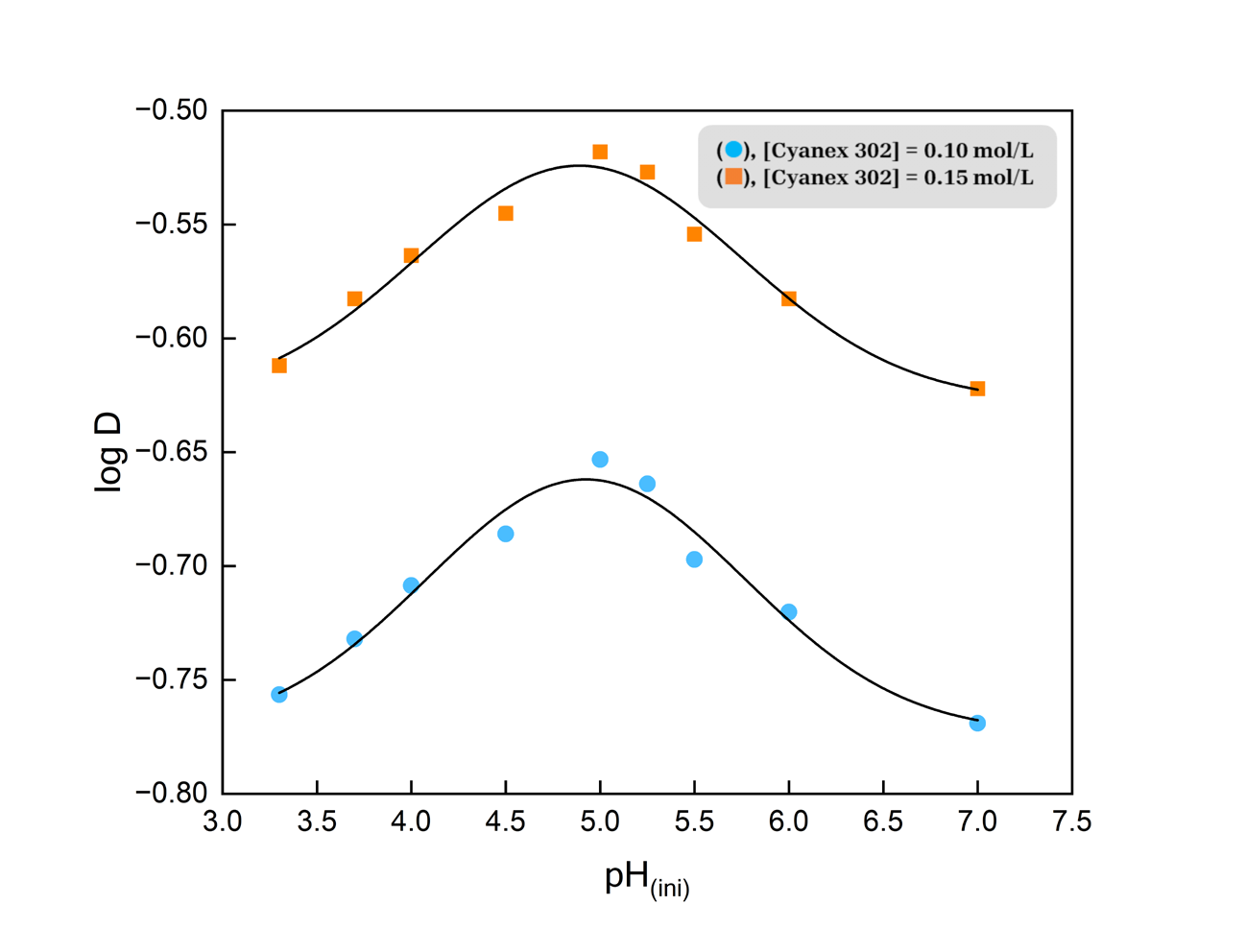
The initial pH (pH(ini)) significantly influenced the extraction efficiency of Cr(III) from the sulfate medium using Cyanex 302. The experimental results demonstrated that the extraction, represented by the distribution ratio (log D), varied with the initial pH of the aqueous phase. Specifically, the extraction efficiency increased as the pH increased, reaching a maximum at pH 5.0. This phenomenon is illustrated in Figure 3. At this optimal pH, Cyanex 302 concentrations of 0.10 mol/L and 0.15 mol/L achieved extraction percentages of 18.20% and 23.30%, respectively. Beyond this pH, the extraction did not improve, indicating that pH 5.0 provided the most favorable conditions for Cr(III) complex formation and subsequent transfer into the organic phase. This behavior underscores the critical role of pH in controlling the speciation and extractability of chromium ions in the system.
Effect of metal ion concentration on the extraction of Cr(III) from sulfate medium by Cyanex 302.
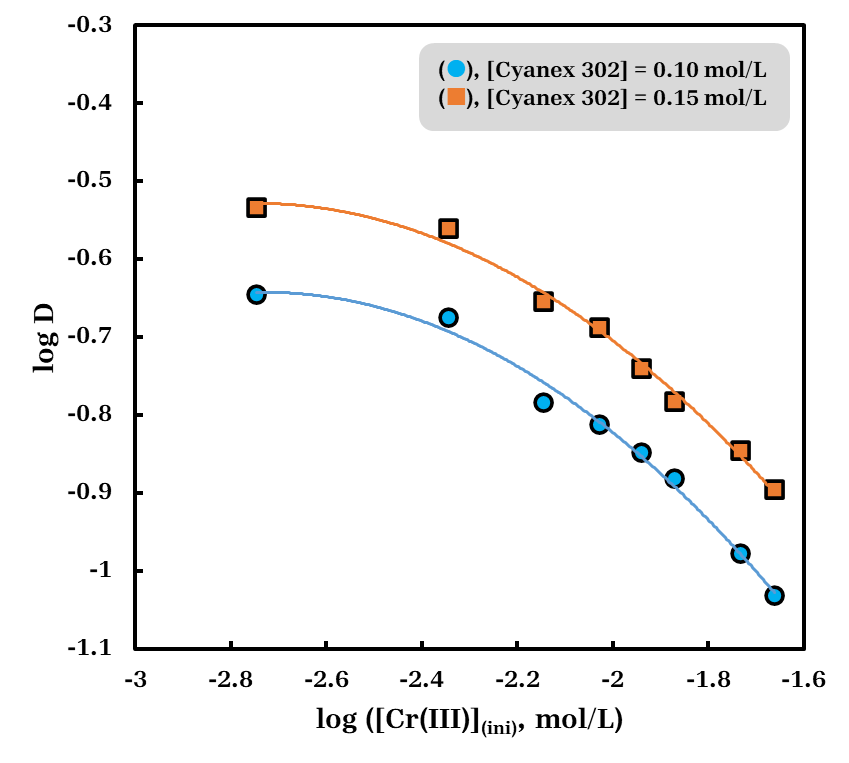
The graph in Fig. 4 illustrates the relationship between log D and log ([Cr(III)](ini), mol/L). It is observed that as the initial concentration of Cr(III) in the aqueous phase increases, the log D value steadily declines. This change was more noticeable at higher Cr(III) concentrations than at lower ones. This finding deviates from the typical principles of solvent extraction. At a Cr(III) concentration of 1.0 g/L, the extraction percentage was merely 8.50% for a Cyanex 302 concentration of 1.0 mol/L and 11.30% for 1.50 mol/L.
Effect of extractant concentration on the extraction of Cr(III) from sulphate medium by Cyanex 302
The extractant functions as the main reactant, interacting with the metal ion to produce extractable, non-ionic species. It has been consistently observed that increasing the extractant concentration in a system results in a higher extraction percentage or extraction ratio. However, this relationship requires experimental validation. The graph illustrating the relationship between the extractant dependencies and distribution ratio should display a straight line, with the slope corresponding to the number of extractant molecules associated with a metal ion.
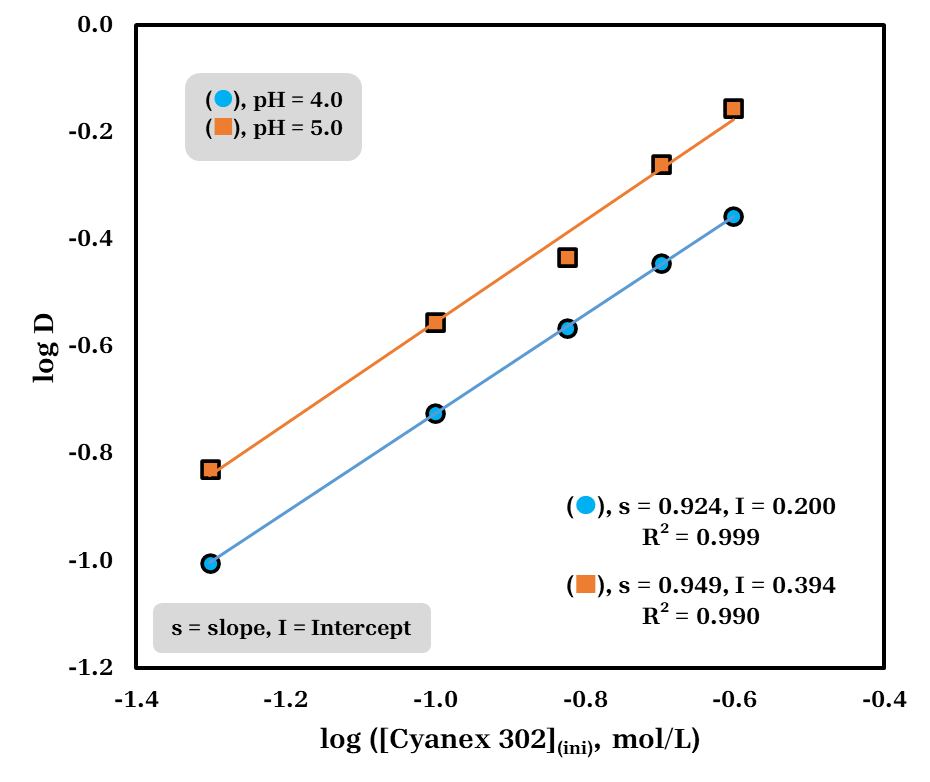
Figure 5 illustrates a graph of log D against log ([Cyanex 302](ini), mol/L) at pH 4.0 and 5.0. The results show two distinct straight lines with slopes of approximately 1. This indicates that the dependence of the extractant in the system is one, meaning that a single dimeric molecule of Cyanex 302 is necessary for each Cr(III) to form the extractable species. The unity in extractant dependence implies that at least mono-hydroxo chromium(III) species are extracted in this system [3], [5], [9], [14].
Effect of sulphate ion concentration on the extraction of Cr(III) from sulphate medium by Cyanex 302
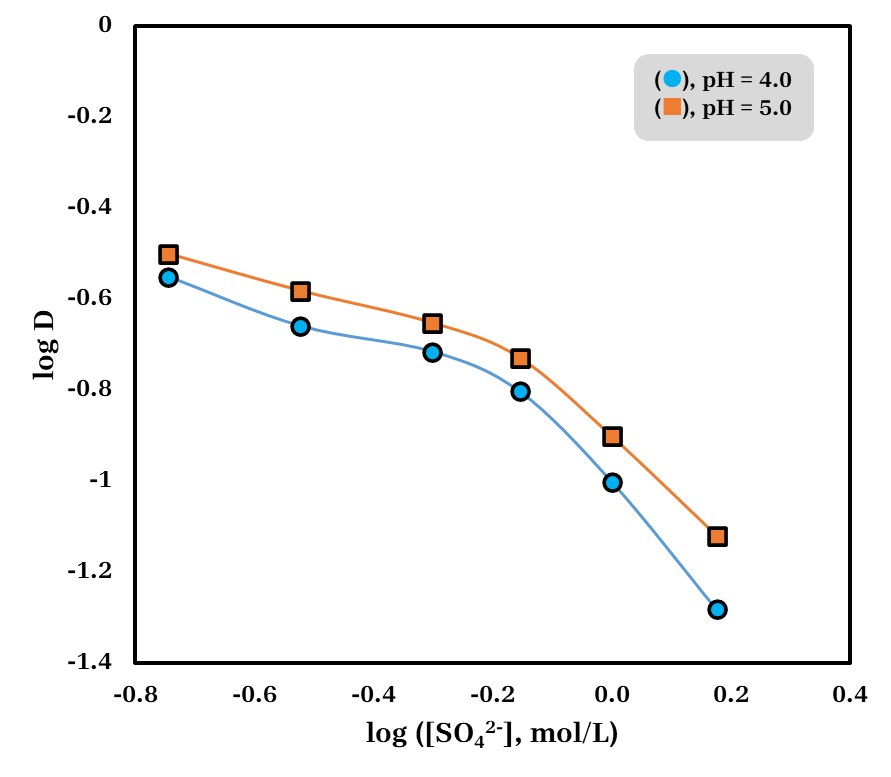
Figure 6 illustrates the relationship between log D and log ([SO42−], mol/L). The study was performed at two pH values: 4.0 and 5.0. It is evident that sulfate ions negatively affect the extraction of Cr(III) using Cyanex 302. At a sulfate concentration of 0.18 mol/L, the extraction rates of Cr(III) were 21.90% at pH 4.0 and 24.00% at pH 5.0. Alternatively, at a sulfate concentration of 1.50 mol/L, the extraction rates of Cr(III) are 4.90% at pH 4.0 and 7.05% at pH 5.0. The results revealed that Cr(H2O)3SO4OH or Cr2(H2O)4(OH)2(SO4)2 was formed in the aqueous phase and was not extractable by Cyanex 302 [1], [5], [7], [9]. This is likely because the monomeric or dimeric anions of Cyanex 302 cannot replace SO42− ions in these aqueous complex species.
Effect of temperature on the extraction of Cr(III) from sulfate medium using Cyanex302.
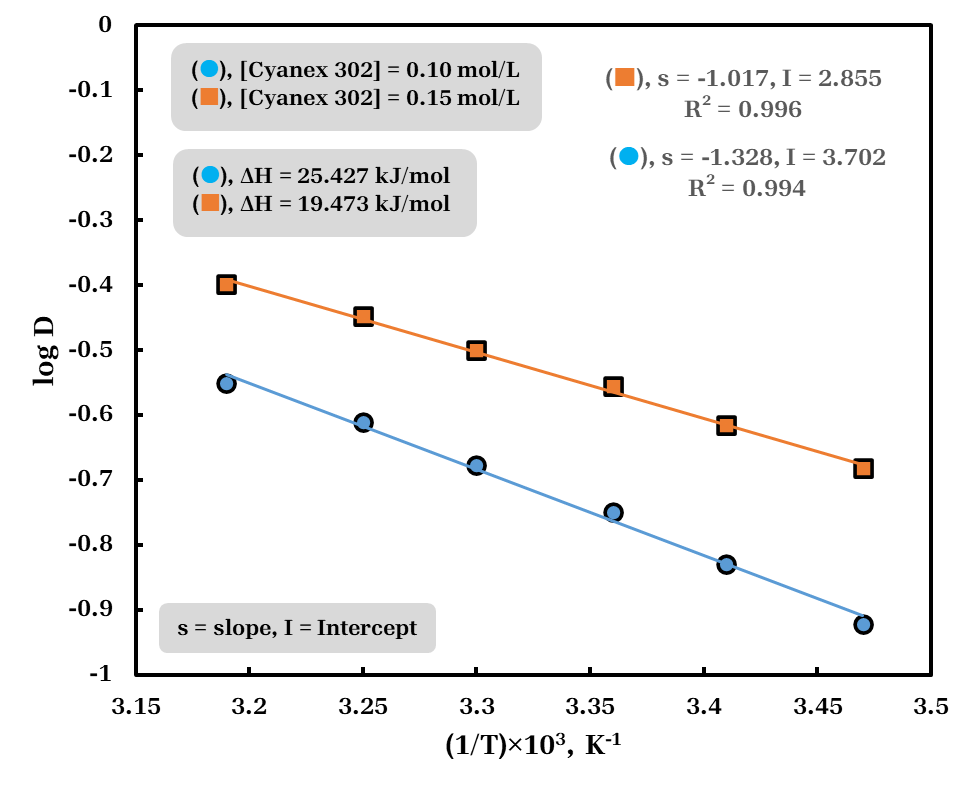
Figure 7 presents a graph of log D against (1/T)×103, K−1. This study included two experimental setups. In both cases, the D values exhibited a pattern similar that to of the temperature changes. The slope and ΔH values are presented in the figure. For the Cyanex 302 system, ΔH values of 25.427 kJ/mol and 19.473 kJ/mol were recorded for concentrations of 0.10 mol/L and 0.15 mol/L, respectively. A positive ΔH indicates that the process is endothermic.
Effect of the nature of the diluent of the organic phase on the extraction of Cr(III) from a sulfate medium using Cyanex 302.
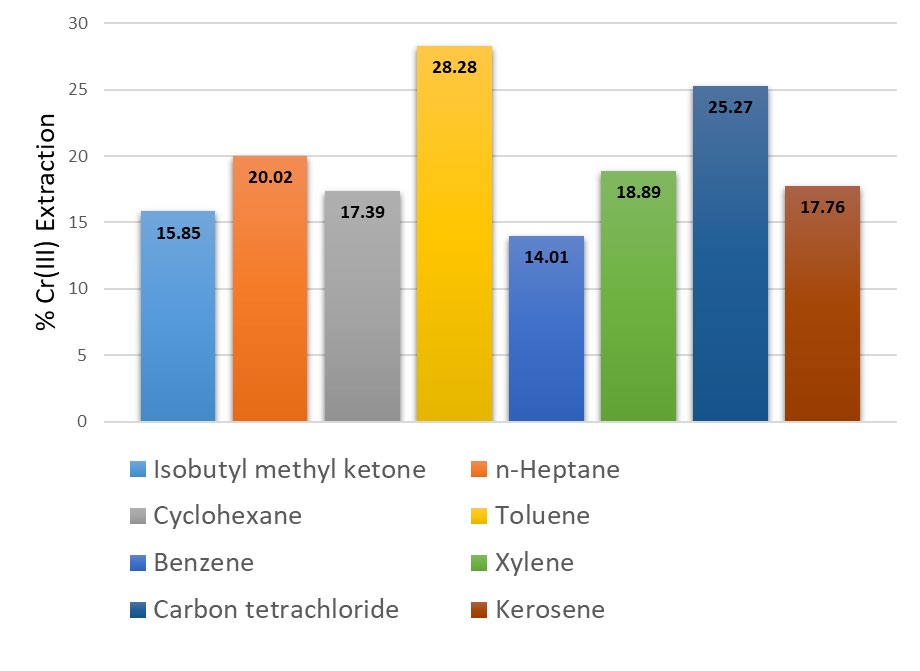
The percentage of Cr (III) extraction by Cyanex 302 using various diluents is depicted in Figure 8. The figure shows that toluene achieved the highest extraction percentage of 28.28%. In contrast, other diluents such as isobutyl methyl ketone, n-heptane, cyclohexane, benzene, xylene, carbon tetrachloride, and kerosene exhibit extraction percentages of 15.85, 20.02, 17.39, 14.01, 18.89, 25.27, and 17.76, respectively, for Cr(III) by Cyanex 302. In this study, kerosene was chosen as a diluent because of its easy availability.
Loading of Cr(III) in the organic phase
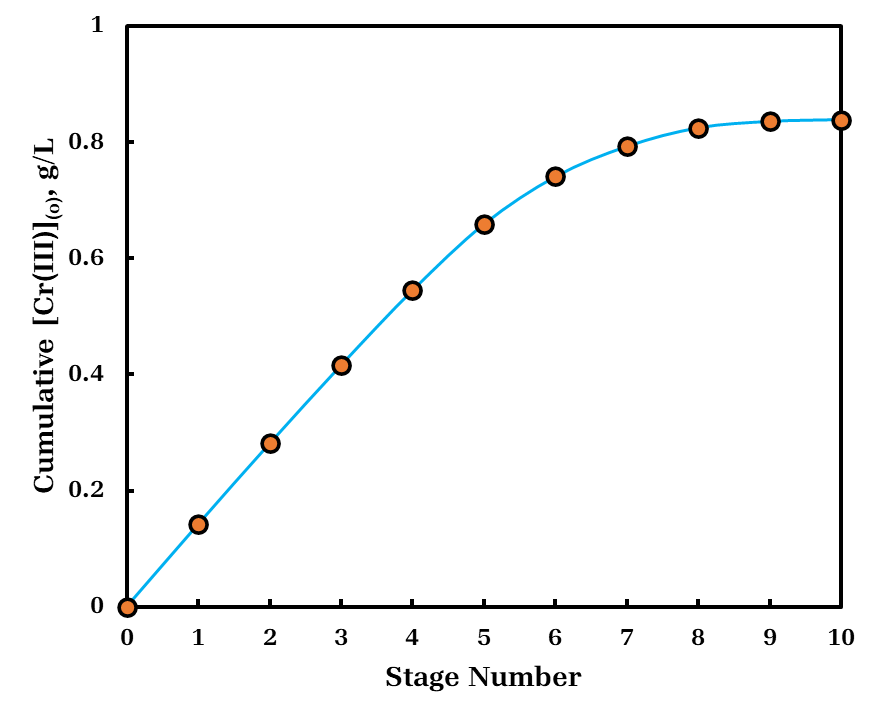
A 100 mL aliquot of a 0.10 mol/L Cyanex 302 solution in kerosene was repeatedly equilibrated with 100 mL portions of fresh aqueous solution. These solutions contained 0.35 g/L Cr(III) and 0.75 mol/L SO42−, and the process was conducted at pH 5.0. The temperature was consistently maintained at 303 K throughout the experiment. The organic phase reached its maximum Cr(III) loading by the 10th contact (Fig. 9). In this study, the highest loading achieved was 0.839 g/L Cr(III). The loading capacity, which refers to the maximum amount of a metal ion, in grams, that can be extracted from 100 g of extractant, is an essential factor when choosing an extractant for a metal-ion extraction system, particularly in industrial applications. Calculations revealed that when Cyanex 302 is dissolved in kerosene, its loading capacity for Cr(III) is 2.742 g of Cr(III) per 100 g of Cyanex 302.
Stripping of Cr(III) loaded organic phase by mineral acids
The stripping experiment used H2SO4, HCl, and HNO3 as stripping agents. Table 1 presents the results of this study in detail. In a single stage, sulfuric acid at a concentration of 0.10 mol/L can strip 2.12%, while concentrations of 1.0 and 2.0 mol/L can achieve stripping of 9.31% and 15.28% in two stages, respectively. Furthermore, a 3.0 mol/L concentration of sulfuric acid achieved a 28.68% strip in 11 stages. Alternatively, at a concentration of 0.10 mol/L, HCl and HNO3 acids can strip 1.38% and 0.37% in a single stage, respectively. It has been observed that HCl and HNO3 acids are unsuitable as stripping agents in the current investigation.
| Stripping agent | [Stripping agent], mol/L | Stage No. | [Cr(III)](aq, eq), g/L | Stripping % |
|---|---|---|---|---|
| H2SO4 | 0.10 | 1 | 0.018 | 2.12 |
| 1.00 | 2 | 0.086 | 9.31 | |
| 2.00 | 2 | 0.151 | 15.28 | |
| 3.00 | 11 | 0.337 | 28.68 | |
| HCl | 0.10 | 1 | 0.012 | 1.38 |
| HNO3 | 0.10 | 1 | 0.003 | 0.37 |
A brief analysis of the solvent extraction process for Cr(III) employing a range of extractants
Table 2 shows how Cr(III) is extracted using different solvents. It highlights the key factors in choosing a solvent for Cr(III), a metal that is difficult to extract from water. Cationic extractants like D2EHPA and Cyanex 272 work best. They use an acid-exchange reaction, which is very sensitive to pH. The process can be over 99% efficient, but only if the pH is between 3.5 and 5.5. Outside this range, efficiency drops significantly because of either insufficient deprotonation at low pH or Cr(III) breakdown and the formation of solids at high pH.
In this study, Cyanex 302, an acidic extractant, only extracted 23% at pH 5. Chelating Extractants like LIX 84-I are better because they can separate Cr(III) from Fe(III) at about pH 6, whereas D2EHPA is less effective. However, they work very slowly, taking hours or even days, which is a big problem for cost and operation. Tri-n-butyl phosphate (TBP) does not extract Cr(III) well unless used with high levels of certain anions to form extractable neutral complexes. Even under tough conditions, it extracted only 28%, indicating it is not suitable for Cr(III).
| Extractant type | Optimal conditions | % Extraction and Conditions | Reference(s) |
|---|---|---|---|
| D2EHPA (di-(2-ethylhexyl) phosphoric acid), cationic/acidic | pH 3.5-5.0; Organic: 0.1-1.0 M D2EHPA in kerosene; Aqueous: Cr3+ in sulfate/nitrate media | 99.2% (0.5 M D2EHPA, pH 4.0, O/A=1:1, 25°C) | [4],[6],[24] |
| Cyanex 272 (bis(2,4,4-trimethylpentyl) phosphinic acid), cationic | pH 5.0-6.0; 0.3-0.5 M in kerosene; Sulfate media preferred | 98.5% (0.3 M Cyanex 272, pH 5.5, 30 min, O/A=1:1) | [5],[7] |
| LIX 84-I (2-hydroxy-5-nonylacetophenone oxime), chelating extractant | pH 5.0-7.0; 0.1-0.3 M in kerosene; Long equilibration time | 85% (uncatalyzed, 24h); 99% (with catalyst, 30 min) (0.2 M LIX 84-I, pH 6.0) | [8],[9],[22] |
| TBP (tributyl phosphate), solvating extractant | High nitrate media (>6 M); High TBP concentration (30-50%); Low pH (<1) | 28% (8 M Ca(NO3)2, 30% TBP, O/A=1:1, 60 min) | [9], [27] |
| Cyanex 302 | pH 5.0-5.5; 0.1-0.15 M in kerosene; Sulfate media preferred | 23.3% (0.15 mol/L Cyanex 302, pH 5, equilibration time 45 min, O/A = 1) | This study |
Conclusion
The research found that Cyanex 302 was able to remove Cr(III) from sulfate solutions when conditions were controlled. The best results were at pH 5.0. It took 30 minutes to reach equilibrium, and using more of the extractant improved the process. Each Cr(III) ion needed one Cyanex 302 dimer. Sulfate ions made it harder to extract because they formed chromium complexes that could not be removed. The process took in heat, as shown by the positive enthalpy changes. The best diluent was Toluene, but kerosene was used because it was more practical. Cyanex 302 could hold up to 2.742 grams of Cr(III) per 100 grams of extractant, and it reached its limit after several uses.
Studies showed that sulfuric acid works well to get Cr(III) back from the organic phase. It works better with more acid and in several steps. On the other hand, HCl and HNO3 did not work well in the tests.
Cyanex 302 is not as effective as some other extractants like D2EHPA and Cyanex 272, which work better but only in certain pH levels. Chelating extractants are very selective but work slowly, which makes them less useful. Solvating extractants like TBP do not work well for extracting Cr(III). Cyanex 302 is a good choice for extracting Cr(III) because it works moderately well, can hold a good amount, and is easy to remove. It could be used in industries where availability and working conditions are important. Improving it could make it better for getting chromium.
Ethical Approval
The submitted work is a unique contribution to the field, not published elsewhere in any form or language. Results are presented clearly, honestly, and without fabrication, falsification or inappropriate data manipulation (including image-based manipulation). Authors adhere to discipline-specific rules for acquiring, selecting and processing data.
Consent of Participate
The submitted work is experimental work performed in the laboratory. No human subject or living organism/tissue is involved in this research.
Consent to Publish
No consent to publish is to be shared.
Declarations
- Author contributions
All authors contributed to the conception and design of the study. Material preparation, data collection, and analysis were conducted by Md. Mohaimunul Islam and Anirban Sreemani. The initial draft of the manuscript was composed by Aneek Krishna Karmakar, Dilip Kumar Sarkar, Md. Mohaimunul Islam, Anirban Sreemani, Md. Sezan Ali, Md. Zahid Hasan Pilot, Safal Chakma, and Eti Rani Pal. All authors provided feedback on previous versions of the manuscript. All authors have read and approved the final manuscript.
- Funding
The authors declare that no funds, grants, or other support were received during the preparation of this manuscript. The investigation was not funded by any organization or any sources.
- Data availability
Not applicable
- Competing interests
Not applicable
- Acknowledgments
Md. Mohaimunul Islam expresses gratitude for the National Science and Technology Fellowship from the Ministry of Science and Technology, Bangladesh.
References
- 1.Luo, J.-h., Li, J., Yang, Z.-p., and Liu, X.-f., (2013). Removal of chromium(III) from aqueous waste solution by predispersed solvent extraction. Transactions of Nonferrous Metals Society of China, 23(2): 524-529.
- 2.Luo, J. H., Li, J., Qi, Y. B., and Cao, Y. Q., (2013). Study on the removal of chromium(III) by solvent extraction. Desalination and Water Treatment, 51(10-12): 2130-2134.
- 3.Mubeena, K. and Muthuraman, G., (2015). Extraction and stripping of Cr(VI) from aqueous solution by solvent extraction. Desalination and Water Treatment, 55(8): 2201-2208.
- 4.Zhang, G., Chen, D., Zhao, W., Zhao, H., Wang, L., Wang, W., and Qi, T., (2016). A novel D2EHPA-based synergistic extraction system for the recovery of chromium (III). Chemical Engineering Journal, 302: 233-238.
- 5.Karmakar, A. K., Biswas, R. K., and Khatun, M. N., (2021). Extraction equilibrium of chromium (III) from sulphate medium by Cyanex 272 dissolved in kerosene. Chemical Papers, 75(8): 3739-3749.
- 6.Konczyk, J., Kozlowski, C., and Walkowiak, W., (2010). Removal of chromium (III) from acidic aqueous solution by polymer inclusion membranes with D2EHPA and Aliquat 336. Desalination, 263(1-3): 211-216.
- 7.Lanagan, M. D. and Ibana, D. C., (2003). The solvent extraction and stripping of chromium with Cyanex® 272. Minerals Engineering, 16(3): 237-245.
- 8.Chilukuri, R., Yang, Z.-F., and Sirkar, K. K., (1998). Batch Extraction Studies of Cationic and Anionic Heavy Metallic Species by a Mixed Solvent Extraction System. Separation Science and Technology, 33: 2559-2578.
- 9.Rao, V. M. and Sastri, M. N., (1980). Solvent extraction of chromium: A review. Talanta, 27(10): 771-777.
- 10.Staszak, K., Kruszelnicka, I., Ginter-Kramarczyk, D., Góra, W., Baraniak, M., Lota, G., and Regel-Rosocka, M., (2022). Advances in the removal of Cr (III) from spent industrial effluents—A review. Materials, 16(1): 378.
- 11.Ma, H.-R., Li, H., Wu, W., and Qiao, X.-R., (2017). Separation of Fe(III) and Cr(III) from tannery sludge bioleachate using organophosphorus acid extractants. Research on Chemical Intermediates, 43(4): 2333-2350.
- 12.Pandey, B. D., Cote, G., and Bauer, D., (1996). Extraction of chromium (III) from spent tanning baths. Hydrometallurgy, 40(3): 343-357.
- 13.Nayl, A. A. and Aly, H. F., (2015). Solvent extraction of V(V) and Cr(III) from acidic leach liquors of ilmenite using Aliquat 336. Transactions of Nonferrous Metals Society of China, 25(12): 4183-4191.
- 14.Islam, F. and Biswas, R. K., (1979). The solvent extraction of chromium(III) with bis-(2-ethyl hexyl) phosphoric acid in benzene and other solvents. Journal of Inorganic and Nuclear Chemistry, 41(2): 229-233.
- 15.Islam, M. F. and Biswas, R. K., (1979). Kinetics of solvent extraction of metal ions with HEDHP. III. The kinetics and mechanism of solvent extraction of Cr(III) from acidic aqueous solutions with bis-(2-ethyl hexyl) phosphoric acid in benzene. Canadian Journal of Chemistry, 57(23): 3011-3016.
- 16.Zaghbani, A., Tayeb, R., and Dhahbi, M., (2009). Studies on the transport of chromium (III) through a supported liquid membrane containing D2EHPA as carrier. Desalination and Water Treatment, 12(1-3): 247-255.
- 17.Sarfraz, S., Abid, A. J., Javed, M., Iqbal, S., Aljazzar, S. O., Zahra, M., Alrbyawi, H., Elkaeed, E. B., Somaily, H. H., Pashameah, R. A., Alzahrani, E., and Farouk, A.-E. Chromium (III) Ions Were Extracted from Wastewater Effluent Using a Synergistic Green Membrane with a BinaryCombination of D2EHPA and Kerosene. Catalysts, 2022. 12, DOI: https://doi.org/10.3390/catal12101220.
- 18.Besharat, F., Ahmadpoor, F., and Nasrollahzadeh, M., (2021). Graphene-based (nano)catalysts for the reduction of Cr(VI): A review. Journal of Molecular Liquids, 334: 116123.
- 19.Sapyen, W., Jirattisak, J., Bhawawet, N., Praphairaksit, N., and Imyim, A., (2024). Dispersive liquid–liquid extraction of Cr(III) by using choline chloride-thymol deep eutectic solvent and its application for chromium speciation analysis. Microchemical Journal, 202: 110841.
- 20.Senol, A., (2004). Amine extraction of chromium(VI) from aqueous acidic solutions. Separation and Purification Technology, 36(1): 63-75.
- 21.Karmakar, A. K., Biswas, R. K., and Hossen, A., (2024). Liquid-liquid extraction equilibrium study of vanadium(V) from nitrate medium by technical grade D2EHPA dissolved in kerosene. Journal of Science and Engineering Papers, 1(2): 59-67.
- 22.Yun, C. H., Prasad, R., Guha, A. K., and Sirkar, K. K., (1993). Hollow fiber solvent extraction removal of toxic heavy metals from aqueous waste streams. Industrial & Engineering Chemistry Research, 32: 1186-1195.
- 23.Wang, Y., Liu, Y., Meng, F., Zhang, J., Zhao, S., Tian, X., Wang, L., Chen, D., and Qi, T., (2025). Efficient separation of vanadium and chromium by the complexation with sulfate ions in solvent extraction using EHEHPA. Separation and Purification Technology, 354: 129281.
- 24.Deep, A., Correia, P. F., and Carvalho, J. M., (2006). Selective recoveries of Fe (III) and Cr (III) from a tannery filtrate using Cyanex 923. Analytica chimica acta, 558(1-2): 254-260.
- 25.Deep, A., Correia, P. F., and Carvalho, J. M., (2006). Separation and recovery of Fe (III) and Cr (III) from a tannery filtrate using Cyanex 272. Industrial & engineering chemistry research, 45(9): 3200-3206.
- 26.Garcia, M. G., Acosta, A., and Marchese, J., (2013). Emulsion liquid membrane pertraction of Cr (III) from aqueous solutions using PC-88A as carrier. Desalination, 318: 88-96.
- 27.He, L., Zhou, Y., Zhu, Z., and Luo, J., (2023). Research on extraction of Cr(III) by D2EHPA/n-octanol/sulphonated kerosene. The Canadian Journal of Chemical Engineering, 101(4): 2212-2229.
- 28.Wionczyk, B., Apostoluk, W., and Charewicz, W. A., (2006). Solvent extraction of chromium (III) from spent tanning liquors with Aliquat 336. Hydrometallurgy, 82(1): 83-92.
- 29.Wionczyk, B., Cierpiszewski, R., Mól, A., and Prochaska, K., (2011). Studies on the kinetics and equilibrium of the solvent extraction of chromium(III) from alkaline aqueous solutions of different composition in the system with Aliquat 336. Journal of Hazardous Materials, 198: 257-268.
- 30.Zhang, W., Liu, J., Ren, Z., Du, C., and Ma, J., (2007). Solvent Extraction of Chromium(VI) with Tri-n-butyl Phosphate from Aqueous Acidic Solutions. Journal of Chemical & Engineering Data, 52(6): 2220-2223.
- 31.Dawra, N. and Dabas, N., (2024). Advances in spectrophotometric determination of Chromium (III) and Chromium (VI) in water: a review. International Journal of Environmental Analytical Chemistry, 104(13): 2994-3015.
Cite this article
Journal
Karmakar AK, Sarkar DK, Islam MM, Sreemani A, Ali MS, Pilot MZH, Chakma S, Pal ER. Solvent Extraction of Chromium(III) from Sulphate Medium: A Comprehensive Liquid-Liquid Extraction Study Using Cyanex 302. JoSEP. 2026;3(1):168-174. doi: 10.62275/josep.26.1000026.
Rights and permissions
© 2026
Cited by (0)
Citing works are not available yet.
About this article
- Received
- 30 December 2025
- Revised
- 17 January 2026
- Accepted
- 18 January 2026
- Published
- 22 October 2026
- Journal
- Journal of Science and Engineering Papers
- Volume / Issue
- 3 / 1
- Pages
- 168-174
- DOI
- 10.62275/josep.26.1000026