


 JoSEPVolume 2 · Issue 2
Issue 2
Jul 2025July 2025 · 4 articles
 Open AccesseISSN 3094-1182 · pISSN 3079-8175
eISSN 3094-1182 · pISSN 3079-8175
Open AccessVolume 2 of JoSEP: 2 issues published between January 2025 and July 2025.
 2 issues
 9 articles
 18 views
 0 downloadsJoSEPVolume 2 · Issue 2
Jul 2025July 2025 · 4 articles
 JoSEPVolume 2 · Issue 1
Jan 2025January 2025 · 5 articles

S. Khatun, N. Masud, M. Shahrier
Body image satisfaction is an important psychological construct that influences mental health and well-being, yet culturally adapted and validated tools are limited in Bangladesh. This study aimed to evaluate the psychometric properties of the Bangla Body Image States Scale (B-BISS) for measuring momentary body image states. A total of 579 young adults aged between 19 and 28 years, primarily university students of Bangladesh, were recruited through convenience sampling. Exploratory factor analysis (EFA) supported a unidimensional structure, with a single factor explaining 82.5% of the variance. This structure was further confirmed by confirmatory factor analysis (CFA), which demonstrated excellent model fit (CFI = 0.99, TLI = 0.99, SRMR = 0.03, RMSEA = 0.10). Internal consistency was excellent, with Cronbach’s α = 0.97 and McDonald’s ω = 0.97. Measurement invariance indicated that the scale can be applied in the same way across gender. Additionally, convergent validity was established through significant correlations with related constructs, including psychological distress and self-compassion. B-BISS had positive association with self-compassion ( r = 0.13, p <.001) and negative with psychological distress, including depression ( r = -0.16, p <.001), anxiety ( r = -0.09, p <.05), and stress ( r = -0.12, p <.01). Overall, the B-BISS demonstrated robust psychometric properties, confirming its suitability as a sound measure for assessing body image states among young adults in Bangladesh. Measuring body image states can offer psychologists, psychotherapists, and researchers a better understanding of body image concerns and the targeted interventions to have better momentary body image states in young adults of Bangladesh.
J. Sci. Eng. Pap. 2026, 2(2), 135-144 · doi:10.62275/josep.25.1000022 · Published 22 Oct 2026
N. Nayeem, M. Hossain, M. Rana, M. Ferdous
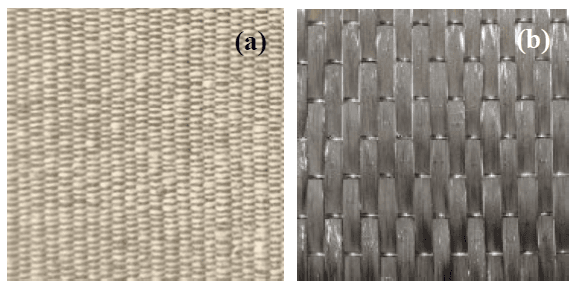
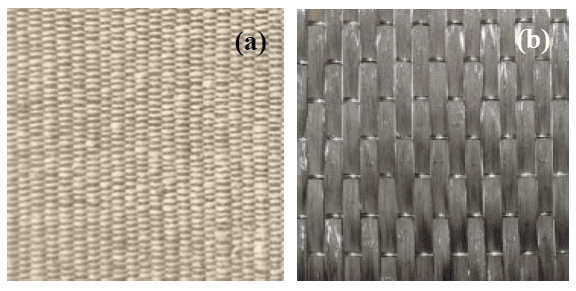
In this current study, five types of strong, stiff, and lightweight composites were developed utilizing hand lay-up and cold press methods by the hybridization of JUCO and carbon fabrics. Before the fabrication of the composites, the surfaces of the JUCO fabrics were treated with a 5% NaOH aqueous solution. To evaluate and compare the mechanical characteristics of the fabricated composites, tensile, flexural, impact, and hardness tests were conducted. Specimens were also aged in artificial seawater (pH 8) for 150 days to explore the effects of seawater aging on the mechanical characteristics of the composites. Numerical analysis of the tensile and flexural properties was also done by the finite element method ( FEM ). The findings from the current study showed that hybridization with carbon fibers considerably enhanced the mechanical properties of the natural fiber-reinforced composites. On the other hand, a decrement in tensile strength, flexural strength, and hardness, and an improvement in impact strength were noticed due to fiber degradation as a result of aging in seawater. Results obtained from the numerical analysis also displayed good alignment with the experimental findings.
J. Sci. Eng. Pap. 2026, 2(2), 125-130 · doi:10.62275/josep.25.1000020 · Published 22 Oct 2026
S. Hossain, S. Ahmed
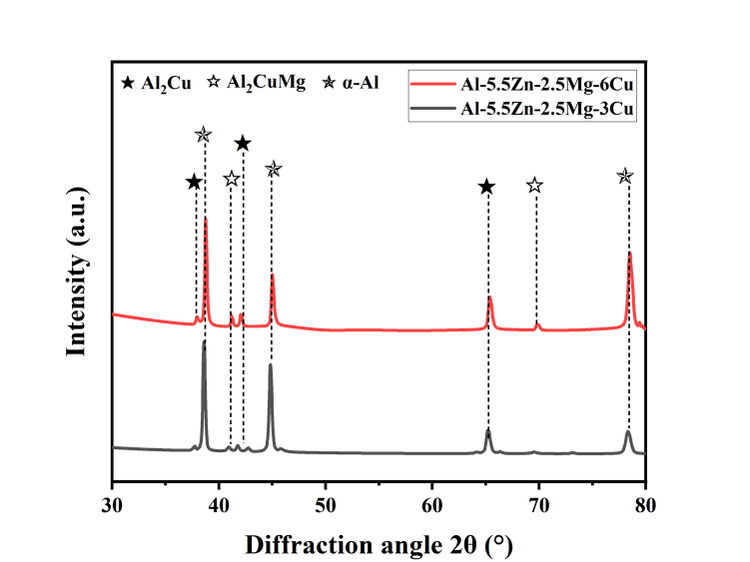
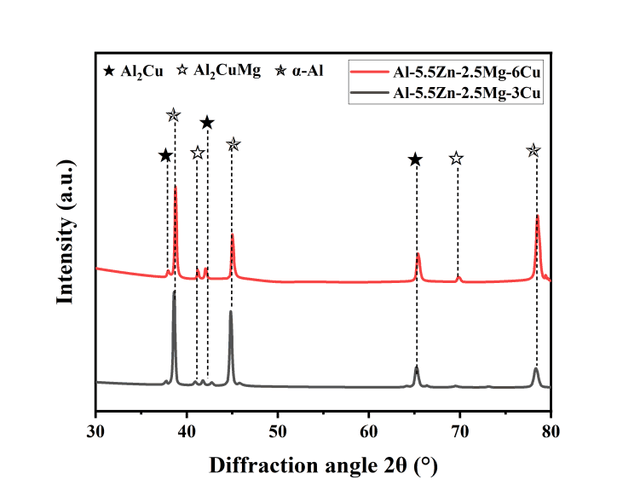
This study is devoted to the development of lightweight Aluminum alloy to reduce energy consumption and environment pollution in automobile sector. Aluminum alloy shows impressive strength though they are lightweight. The effect of Cu on Al-5.5Zn-2.5Mg-xCu alloy has been studied and improvement in mechanical properties within a range has been observed. The optical microstructure confirmed the formation of Cu enriched brittle phase by solid solution strengthening and it accelerates the hardness and tensile strength. After certain limit strength followed the opposite trend so the material can be used as high strength material when the Cu content will be in a certain limit. In automobile sector vehicle parts made with this alloy material has less weight than commonly used steel. The total weight reduction of a vehicle will reduce the energy consumption which will ultimately eliminate the emission of environment pollutant gas.
J. Sci. Eng. Pap. 2026, 2(1), 109-112 · doi:10.62275/josep.25.1000017 · Published 22 Oct 2026
E. Rafi, H. Gharamy, A. Molla, H. Robin
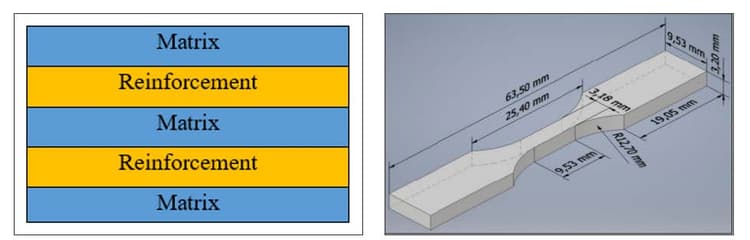
Carbon fibre-reinforced polymer composites (CFRPCs) have drawn considerable interest, highlighting their exceptional mechanical properties, including high strength-to-weight ratio, corrosion resistance, and fatigue performance. Carbon fibers serve as the primary load-bearing element, while polymer matrices such as PVC, polyester, and epoxy distribute loads and protect the fibers. The optimization of the mechanical performance of these CFRPCs is highly essential to ensure their suitable application in the automotive industry. Therefore, the study focuses on improving safety through the evaluation of tensile properties and energy absorption capabilities across different configurations. The study introduced three CFRP composites—CF-PVC, CF-Epoxy, and CF-Polyester—at various fiber orientations, such as 0,15, 30, 45, 60, and 75 degrees. The effect of different fiber orientations on the Tensile stress-strain behaviour was investigated. The study indicates that the effect of fiber orientation was quite similar for all the proposed CFRPCs. The tensile stress is relatively higher at 0° arrangement, while the tensile stress decreases along with the elevation of the angle of fiber orientation. The exhibited tensile stress was quite low regarding the lower angle. The study also shed light on the energy density of CFRPCs and the influence of orientation angle. It is shown that at lower fibre orientations, especially 0° and 15°, the composites demonstrate higher energy density and greater elastic deformation before failure. Beyond 15°, a significant drop in energy density and non-linearity is observed across all composites. It should be noted that CF-Epoxy outcompetes the other composite regarding both tensile stress and energy density behaviour.
J. Sci. Eng. Pap. 2026, 2(2), 131-134 · doi:10.62275/josep.25.1000021 · Published 22 Oct 2026
A. Alim, M. Hossain
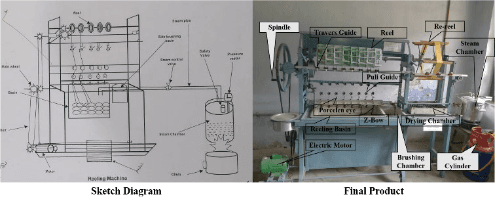
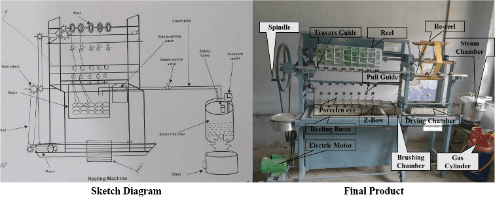
The reeling machines and technologies commonly utilized in Bangladesh are inadequate for producing quality and quantity raw silk. Therefore, there was an urgent need to replace the current reeling machines and technologies to enhance the quality and volume of raw silk production. Considering these factors, this experiment was carried out, leading to the development of an improved modern reeling machine at BSRTI. The raw silk generated by this machine outperformed the silk produced by conventional multi-end reeling machines in both quality and quantity. This experiment was conducted to enhance the quality of raw silk while reducing reeling costs by developing a modern reeling machine. This experiment was undertaken to improve the quality of raw silk and to minimize the reeling cost by fabricating a modern reeling machine. The result of this study revealed that the fabricated modern reeling machine showed the highest reelability% 69.72 with the lowest renditta 9.83 compared to the multi-end reeling machine with reelability% 65.94 and renditta 11.24. A significant difference was also recorded for that the average size (d), size deviation, maximum size deviation, wending breaks, tenacity (g/d), elongation %, and cohesion between fabricated modern reeling machine and multi-end reeling machine. Considering the reeling performances and raw silk quality, the fabricated modern reeling machine showed better performance compared to the multi-end reeling machine.
J. Sci. Eng. Pap. 2025, 2(2), 118-124 · doi:10.62275/josep.25.1000019 · Published 19 Feb 2025
Showing 1–5 of 9 articlesShowing 1–3 of 9 articles
 8 views
 0 downloads